
-
Články
- Časopisy
- Kurzy
- Témy
- Kongresy
- Videa
- Podcasty
Analyzing linguistic variation and change using gamification web apps: The case of German-speaking Europe
Authors: Adrian Leemann aff001; Curdin Derungs aff002; Stephan Elspaß aff003
Authors place of work: Center for the Study of Language and Society, University of Bern, Bern, Switzerland aff001; Department of Geography, University of Zurich, Zurich, Switzerland aff002; Fachbereich Germanistik, University of Salzburg, Salzburg, Austria aff003
Published in the journal: PLoS ONE 14(12)
Category: Research Article
doi: https://doi.org/10.1371/journal.pone.0225399Summary
Research on regional linguistic variation typically involves data collection in the field. This process itself can take up several months if not years. In the present study we demonstrate how we can use web interactives in collaboration with media outlets for a fast gathering of regional, sociolinguistic data. In collaboration with SPIEGEL ONLINE and Tagesanzeiger, we developed a web interactive that predicts users’ regional backgrounds from within German-speaking Europe. More than 1.9M people have participated in the interactive, more than 770K users have provided metadata. Said metadata allowed us to capture regional variation in language as of today, which we can compare to historical survey data–enabling us to track the evolution of German in Europe over the past 40 years. We report on regional levelling of lexical variants, a process which appears to be particularly prevalent in the northern parts of German-speaking Europe. We further found an effect of (former) national and regional borders on language use. This innovative paradigm allows us to collect sociolinguistic data of an unprecedented scale–at the same time it presents significant challenges, both of which–benefits and challenges–will be discussed in this contribution.
Keywords:
Europe – Germany – Language – Switzerland – Metadata – Beef – Natural language – Austria
1. Introduction
German is one of the world’s major languages and is spoken in many regions across Europe and other parts of the world [1,2]. With 91 million speakers, it is the most widely spoken first language in Europe (ibid.) and the most widespread official language in Germany, Austria, and Switzerland. German has been characterized as the ‘probably most diverse language in Europe’ [3]. The linguistic situation in the German-speaking countries is complex: the spectrum of spoken varieties includes standard varieties on the one hand (e.g. Standard Swiss High German and more than just one standard variety each in Germany and in Austria), and local dialects and supralocal regional varieties on the other hand. In the north of Germany, dialects are situated furthest away from the standard; speakers who still master a Low German dialect switch from dialect to a more supraregional or a standard variety [4,5]. In Austria and in the central and southern parts of Germany, we find a continuum between dialect and standard, where the choice of the register depends on the situation, emotional engagement, and other factors. In Switzerland, the situation is even more different: supralocal regional varieties do not exist, but we find a functional diglossia between standard and dialect–where the standard variety is primarily used in writing, in formal speeches, and in school, whereas dialect is spoken otherwise [6] and even used in informal writing, such as private text messages. One level of language in which these varieties of German are particularly different from one another is the lexicon: for ‘bread roll’, for example, speakers in northern Germany say Brötchen, people in Baden-Württemberg call it Weck(er)le, in Bavaria and most of Austria Semme(r)l, and in German-speaking Switzerland one typically hears Mütschli or Brötli.
This type of regional variation in the lexicon has been thoroughly studied in the Wortatlas der deutschen Umgangssprachen (WDU) [7], i.e. ‘Word Atlas of German Regional Varieties’ (Eichhoff 1977–2000), launched in the early 1970s. Eichhoff sent questionnaires by post mail to local residents in 402 localities from across the Federal Republic of Germany, the German Democratic Republic, Austria, German-speaking Switzerland, and South Tyrol. East Belgium, Luxembourg, and Liechtenstein, where German is an official language, were not sampled in the WDU. In about one third of the localities, he and his collaborators were able to interview their informants so that in these cases, it was actually the interviewer, not the interviewees who completed the questionnaire. The questionnaire used a mainly onomasiological approach: the informants were asked to provide the local expression for a certain concept, e.g. the local word for ‘the boy’, for ‘to chat’, or for ‘wallet’. The questionnaire also included images, for example a clock showing the time ‘8 : 15’, a ‘carrot’, or items in which the informants were asked to translate short phrases or choose between a short list of variants. Unlike traditional dialect surveys, Eichhoff focused on participants from the younger and middle generation in urban areas, and the participants were asked not about their own language use, but to report variants they believed are typically in use in the respective locality. In the case of Germany and Austria he thus targeted more regional, supralocal varieties, whereas in the case of German-speaking Switzerland, he elicited dialects. He surveyed, for example, the regional variants of the Standard German word der Junge (‘the boy’). He retrieved the following regional distribution: in the north of Germany, Junge was reported most dominantly, while Bub, Bu(e)(b) or Bua(b) were particularly prevalent in central Germany, Switzerland, and Austria. Knabe was reported in northern Bavaria and Baden-Württemberg and Bersch (/Bursch) in the Austrian state of Styria (cf. WDU [7] vol. 1, map 1). Maps from this survey were published in four volumes between 1977 and 2000. [8] replicated Eichhoff’s method for the eastern German-speaking part of Belgium, the results were published in a supplementary volume to the WDU. Other projects in the same vein, but focusing on certain regions of Germany, include the WSAH (‘Word geography of urban colloquial language in Hessia’, published 1988, [9]), the ALRH (‘Word atlas on colloquial language in rural Hessia’, published 2010, [10]), and the WSU (‘Word atlas of urban colloquial language’ in the eastern states of Germany, originally planned as an atlas on urban colloquial lexis in the German Democratic Republic, but only published in 1997 [11], seven years after its dissolution).
The second survey of central importance to the current study is the Atlas zur Alltagssprache, short AdA (‘Atlas of everyday language’, [12,13]) by Elspaß and Möller. In the early 2000s, Elspaß & Möller began sending out online questionnaires which–like Eichhoff–aimed at eliciting everyday language. The AdA is particularly geared at capturing lexical variation, but also includes questions on morphosyntax, phonetics, and pragmatic features (like routine formulae). One AdA survey from 2006 was directed at perceptual data [14]. Initially, Elspaß & Möller targeted localities’ participants from the original 402 original WDU localities. This first survey attracted 1,763 participants, and it was followed by new surveys at regular intervals. Over the years, the number of participants snowballed so that in the tenth survey over 20,000 people provided data. The AdA is still ongoing and is now in its 12th survey round.
It is reasonable to assume that the distribution of lexical variants in space has changed since the time of the WDU, the data of which was mainly collected in the 1970s –i.e. c. 40–50 years ago. This is plausible because (a) the lexicon is typically more prone to change compared to phonetic / phonological domains [15–17] and (b) because WDU specifically asked for variants of a form of language which is spoken everyday–thus more likely (but not necessarily) non-standard–and which is regionally-colored, i.e. a form of language which is less stable and more in flux than traditional local dialects on the one end or standard varieties on the other end [18].
The hypothesis that the regional distribution of these variants has changed over the past decades was tested by [19] using a change in real-time framework [20]. He compared the regional distribution of eleven WDU maps (nine lexical variables, two syntactic variables) from the first two volumes of the WDU, published in 1977 and 1978, to eleven equivalent maps from an online survey conducted in 2002 –thus studying language change across a time span of c. 25–30 years. The online survey, a pilot study for the subsequent AdA, provided data from roughly 1,500 respondents across Germany, Austria, German-speaking Switzerland and northern Italy. [19] reports three main trends that emerged from the study: (i) On the one hand, there are variants that show tendencies of diatopic convergence, i.e. a levelling of lexical variants–where small-scale variants are receding while large-scale, more supralocal variants are spreading. This pattern applied to five of the eleven cases and to variants used in Germany only. (ii) On the other hand, but to a lesser degree, there is a trend of what he refers to as ‘divergence’, i.e. the effect of national and political borders: in two notable instances (regional forms for the temporal concepts ‘Saturday’ and ‘5 : 45’), variants appear to follow political borders relatively closely–or, more precisely, what used to be the political border between West and East Germany, even thirteen years after the effective fall of the Iron Curtain. On a side note: the WDU maps based on data from the 1970s displayed only first signs of the divergence process. German-speaking Switzerland and to some extent also Austria often maintain their own variants, with isoglosses typically following along the border to Germany. (iii) Thirdly, in two other instances (the word for ‘carrot’ and the modal particles halt and eben), formerly southern variants (Karotte and halt) had spread to the northern parts of Germany. This is all the more striking as the general trend in other linguistic domains, notably in the phonetic-phonological domain, is that northern German forms have spread to southern Germany; [21] claimed that northern German variants were more prestigious than southern variants. In two other instances the overall pattern hardly changed; both of them were cases of grammatical variation (diminutive suffixes and the use of the auxiliaries sein ‘to be’ and haben ‘to have’ in analytical forms of the perfect tense of the position verb sitzen ‘to sit’).
In the present contribution we follow suit with the line of research conducted by [19]–albeit with substantially more data and more variables. Like [12], we also used an online tool to crowdsource data. However, we did not opt for a traditional survey interface, but rather for a new paradigm of collecting data via a web interactive. Over the past couple of years, Leemann et al. began developing mobile and web-apps which enable crowdsourcing of regional language data from speakers through a quiz [16,22]. The users go through this quiz on regional language use and, at the end of the quiz, the app tells them where they are from, based on their linguistic features. In the quiz for German-speaking Europe, which this paper is about, we asked users, for example, what their local word is for ‘non-professional soccer playing’ or for ‘(second) breakfast that people have at their workplace’, thus adopting the onomasiological approach employed for the WDU and the AdA. After 24 such questions, the web interactive tells the individual participant, depending on which variants they indicated, where they are from within German-speaking Europe. The user can then evaluate the quiz result, provide metadata on age and gender, and submit this data. This enables us to collect regional language data on a large scale, which we can subsequently use to compare to historical data, in this case Eichhoff’s data, thus enabling the study of linguistic change (for more details see section 2 Methods). The web interactive that collected the data which the present study is based on was developed by Adrian Leemann, Marie-José Kolly, Timo Grossenbacher, Marc Brupbacher, Daniel Wanitsch, and colleagues from the online edition of the news magazine SPIEGEL ONLINE and the Zurich-based newspaper Tagesanzeiger [23].
Going into the study, we have the following prediction:
We expect substantial lexical change to have occurred since the 1970s, the time Eichhoff’s survey was conducted. We will examine this by performing analyses of real-time change (i.e. comparing historical WDU data from the 1970s to contemporary data we crowdsourced in 2015) and analyses of apparent-time change (i.e. comparing the spatial distributions of different age groups in our contemporary data). If the older generation speakers in our apparent analyses show less change when compared to WDU than the younger generation does, we can be fairly certain, that actual language change has taken place. We suspect that both analyses will point in a very similar direction, as crowdsourcing methodology has been shown to indicate very similar diffusion patterns, similar to those found in more traditional paradigms [16].
The article is structured as follows: section 2 will present the methods to study the above prediction. Given that Eichhoff’s WDU plays such a central role as a benchmark for our analyses of linguistic change, we will also highlight Eichhoff’s methodological procedures in the methods section where appropriate. In Section 3 we will present the main findings, followed by a discussion thereof in Section 4. A large part of the Discussion Section will also be devoted to a critical reflection on the limitations and benefits of this new paradigm of data collection.
2. Methods
2.1 Web interactive: Grüezi, Moin, Servus
The process of collecting the data for the current study is based on a quiz we developed with SPIEGEL ONLINE and Zurich-based Tagesanzeiger [23]. Analogous to smartphone apps we had previously developed [16], we developed a web interactive–called Grüezi, Moin, Servus–that prompts users to click on their regional variant for 24 variables. One of the questions was, for example, to indicate their regional word for ‘non-professional soccer playing’–do they say bolzen, Fussball spielen, fussballen, kicken, tschutten, schutten, pöhlen, or bäbbeln? Or we asked users, what word they use for the ‘(second) breakfast that people have at their workplace’–i.e. Frühstückspause, Pause, Frühstück, Brotzeit, Jause, or Vesper. This user interface (UI) is shown in Fig 1, examples for ‘non-professional soccer playing’ and ‘(second) breakfast that people have at their workplace’ are shown on the left and on the right respectively.
Fig. 1. UI showing regional variants for ‘non-professional soccer playing’ (left) and ‘(second) breakfast that people have at their workplace’ (right). To trigger the user’s linguistic intuition, we asked them to click on the word that they would typically use if they spoke to friends at their location. Once the user had completed the quiz, the web interactive prompted them to indicate metadata on age and gender. Finally, the web interface showed the result of the quiz: a heatmap and the top five localities as pins on a map. The ‘hotter’ (i.e. the redder) the area, the more likely it is that the user speaks like someone from that region–the ‘colder’ (i.e. the bluer), the less likely it is that they are from that region. Once the result has been presented, we then asked users to ‘validate’ this prediction. We asked them to rate the result on a scale from one (very inaccurate) to seven (very accurate). Further, we asked the users to click the point on the map where they believe they, i.e. the people from this locality with the pin, spoke most like they do. Once the user has evaluated the result, they click on ‘submit’. This geotagged data is sent to our servers along with the 24 variants the users selected and metadata on their age and gender.
None of these pieces of information individually or in combination allow for identification of users in the database. Users always had the opportunity to opt out of providing us with their metadata on age, gender, regional variants, and place of origin. This procedure of collecting anonymous user data conforms to the regulations of the Zurich cantonal ethics committee (http://www.kek.zh.ch/internet/gesundheitsdirektion/kek/de/home.html) and the accompanying federal laws on experimentation on humans in Switzerland (http://www.admin.ch/opc/de/classified-compilation/20061313/index.html). We therefore did not seek further ethical approval from cantonal or federal institutional bodies. This new, crowdsourced data can then be compared to the maps provided by Eichhoff, which allows us to track change in language over time.
This method of data collection and user engagement is not new. In the early 2010s, [24] developed a dialect prediction app just for German-speaking Switzerland. Half a year after the release, [25] developed a dialect predictor for American English. Here, participants were asked, for example, which regional word they use for ‘sweetened carbonated beverage’–coke, pop, soda, or other (see also [26]). After 25 such questions, the web interactive tells the American user, which region they are from. This web interactive was largely based on [27]’s Harvard Dialect Survey. Both apps were highly successful: the American web interactive was the most visited content on the New York Times site in 2013 [28]. The Swiss app was the most downloaded app in the iOS App Store for a number of weeks [29].
When comparing the data from the web interactive with Eichhoff’s data, it has to be remembered that Eichhoff used paper questionnaires and asked one to two informants per locality on their notion of the local word or expression for a certain concept. To account for local variation, the informants could provide more than one variant, but if they did so they were requested to highlight the more frequent of the two (or more) variants. In contrast, the web interactive asked for the user’s own language use and allowed for one variant per variable only. The different methods of data elicitation may put a certain caveat on the comparability of the data sets. However, both methods aimed primarily at the representation of language use at particular localities. In Eichhoff’s data, this was achieved by the informants assuming the role of experts of the local colloquial language, whereas the web interactive collected data per locality to arrive at one (two or three) variant(s) which are inter-individually used at this locality.
2.2 Variables
To develop the prediction, we needed a set of maps (i.e. variables) that allowed for a geographical partitioning of German-speaking Europe. We chose variables with different geographical distributions so that very small areas could be distinguished from each other on the basis of unique answer combinations. The variables (and variants) were selected from AdA, rather than WDU because we wanted to ensure that prediction accuracy was relatively high–which may have been problematic had we used historical data, such as WDU, for the prediction. Table 1 shows the 24 variables we selected for the prediction, cf. Table 1.
Tab. 1. Variables chosen for the prediction of the users’ regional background. The phonetic variable ‘Pronunciation of ‘15”, for instance, featured four variants in AdA: fuffzehn, fuffzeh, fünfzehn/füfzäh, and fuchzehn. The vast majority of variables in the quiz are lexical in nature (21/24), only two were phonetic variables, and only one (3rd p. pl. haben wir) can be categorized as morphological. An overlay of these 24 maps revealed a fine-grained regional partitioning of German-speaking Europe.
Using this material, the web interactive is able to estimate the user’s regional origin: underlying the prediction is a table which has one row for each locality and one column for each regional variant. The algorithm aggregates all the hits (i.e. when a locality features a specific variant) and identifies the locality with the most hits. As a result, the user is presented with the top five from a total of 487 AdA localities (cf. [22,30] for a more detailed description of the prediction algorithm used in the apps developed).
2.3 Participants
The quiz garnered widespread participation, particularly so in the first days following its release on 25 April 2015. Until today, more than 1.91 million users participated, of which 46% were females, 54% were males. The largest segments of participants come from the age bracket 25–34, with a share of 33.5% of all participants. This is roughly the age bracket which Eichhoff aimed at in the survey for WDU. Participants 65+ only made up 5.5%. Of these 1.91M participants, 774,524 evaluated the result and submitted their metadata (cf. 2.1). Fig 2 shows the density plot for these 774,524 participants by age and gender.
Fig. 2. Density distribution of users by age and gender. In Fig 2, the full area below the density line equals 1, i.e. 100% of the participants. As is evident from the density distribution shown in Fig 2, our data shows a substantial sampling bias towards participants between c. 18 and 45 years of age, while users <18 and >45 are heavily under-sampled. Gender is also not sampled representatively: women between 20 and 28 are sampled more substantially, while men are sampled more than women for the age bracket of 35 to 75. Interestingly, though, the sampling obtained aligns well with the one in Eichhoff’s studies, who was aiming for the ‘younger’ generation [7]. Eichhoff was targeting two representative speakers for each locality. The parents of these two speakers, too, should have come from this locality. Often, however, he was able to collect data only from one person per locality. Eichhoff does not specify gender distribution in his sampling. From the individual metadata it appears that there were twice as many male participants than females.
2.4 Localities
While Eichhoff sent questionnaires to residents in 402 localities across German-speaking Europe, our web interactive sampled users from more than 22,000 localities. Fig 3 shows the distribution of localities in WDU on the left, and localities that were crowdsourced in our contemporary data (right)–the latter shows counts of localities in the current data that were aggregated for each locality in WDU cf. Fig 3.
Fig. 3. Distribution of localities in the historic WDU survey (A) and contemporary data (B). Counts of localities in the contemporary data are aggregated for each WDU locality. Our users clicked on 22,828 unique localities (see 2.1), which we retrieved via Google reverse geocoding API. Fig 3 shows these as Thiessen polygons, aggregated for each locality in WDU. The Thiessen polygons often comprise urban regions, such as around Vienna, Berlin or Zurich. For most localities our data features 100–1000 participants. More urban regions and regions with major city hubs typically feature between 1000 and >5000 participants. As an example, cities like Zurich, Berlin, or Vienna along with their urban regions show the following areal (as represented by the respective polygon) and user distributions: Zurich (1,690km^2): 6,659, Berlin (890km^2): 22,711, and Vienna (460km^2): 11,758.
2.5 Processing of historical material
For the present study, we compared 14 variables from our contemporary data (2015) to those found in WDU. The other ten variables were not comparable as they were not elicited in WDU but only in AdA. These 14 variables include: ‘(second) breakfast that people have at their workplace’, ‘non-professional soccer playing’, ‘pancakes’, ‘breadman’, ‘beef patty’, ‘chatting’, ‘slippers’, ‘10 : 45’, ‘slingshot’, ‘hiccups’, ‘wallet’, ‘heel end’, ‘pencil case’, and ‘mashed potatoes’. This comparison allows us to perform analyses of language change in real and apparent time [20]. Depending on when the WDU volumes were published, we performed analyses of real-time change between 23 and 44 years. For us to perform the comparison, the original 14 WDU maps–printed on paper–were scanned and georeferenced, using standard GIS software, and manually converted into vector format. All digitized maps are available as shapefiles from a GitHub repository [31].
2.6 Comparison to historical material
The comparison of the current data, collected through the web application, with the historical WDU maps is aggravated by the different spatial granularity of the two datasets, i.e. 22,828 localities vs. 402 WDU localities. The comparison results in a measure of degree of change between the historical and the current data. The degree of change is computed for each of the 402 WDU localities and for each variable individually. The methodology for computing the degree of change for one WDU locality is sketched in Fig 4 and includes the following steps:
For each WDU locality in question (black dot with red outline), the area which is closest to the respective locality–relative to the neighboring WDU localities–is identified, using voronoi tessellation (grey dashed line), i.e. without creating overlaps or gaps between the localities. Voronoi polygons for all WDU localities are shown in Fig 3, right panel.
Within this area, N localities from the web app (grey dots) are drawn at random, with localities closer to the WDU locality in question having a higher probability to be selected. These are called selected localities (red dots). This step of selecting N places is explained in further detail below.
The linguistic information aggregated over all selected localities (red dots) is compared to the single linguistic information available for the WDU locality in question (black dot with red outline). Step 3 is not covered in Fig 4.
Fig. 4. Sketch for computing the degree of change for each WDU locality. The aggregated information from the selected N Web App places results in a frequency of use for each variant, for each linguistic variable. This frequency distribution enables the computation of the degree of change measure. If the variant used at the WDU locality in question is not used at any of the N selected places from the web app, change for the respective variable is 100%. Accordingly, if all N selected places use the same variant as used at the WDU locality in question, change is 0%. Degree of change is thus identical to the conditional probability of observing a variant at the WDU locality in question, given the distribution in the selected, and proximate, web app localities. In the infrequent case where WDU indicates two variants in use for one locality, both historical variants are compared to the contemporary data; yet our maps then only show the change that was smaller. The same methodology as described above is used to compute degree of change for different age groups (see section 3.2), the only difference being that prior to the first step, the web app data is filtered, such that only information from the respective age group is retained and used in the computation.
A few more details concerning step (2): the number of selected web app localities N is chosen to be 100, if 100 or more places are available for comparison. The rationale for considering ‘only’ 100 randomly selected, nearby localities is twofold. One, subsampling leads to manageable computing times. Two–and probably more importantly–subsampling warrants that the unbalanced distribution of web app localities (cf. Fig 3, right panel) does not impact the computation of degree of change values, such that some localities show a higher degree of change simply because more and richer input information is available. In the case where less than 20 web app localities are available for step (2), we consider a calculation of degree of change not meaningful–and thus no degree of change is computed. Fig 3 (right panel) reveals that only one WDU locality exhibits less than 100 nearby web app localities, namely 35 (shown as a dark blue polygon in western Austria). Hence, this threshold value of N ≥ 20 localities only comes into effect for the computations of degree of change for different age groups (cf. section 3.2), which requires additional stratification of the input data and thus leads to smaller sample sizes. Note that we can only draw comparisons to the original WDU localities, which, unfortunately, do not include datapoints in East Belgium, Luxembourg, and Liechtenstein (cf. Introduction). The data underlying this study can be retrieved from here: https://osf.io/49tcj/.
3. Results
Following up on the prediction stated in section 1, we show findings of the current study in three domains: (i) change in real-time–i.e. comparing our contemporary data to the historical data provided in [7] and (ii) change in apparent-time–i.e. comparing different age groups between each other in our contemporary dataset only, as a means of ‘validating’ the trends found in (i). Section (i) will be the main focus of our findings as three broad patterns appear to emerge from our data: (a) regional levelling (convergence), i.e. what have been dominant variants in the past appear to have become even more dominant today and, as a result, push aside variants with localized distributions only; (b) the north and center of German-speaking Europe appear to have changed more than southern parts (e.g. southern Germany, Austria, and especially German-speaking Switzerland); (c) substantial change in Eastern Germany. The reporting of results was thus structured accordingly; we present findings of variables that show representative trends of the 14-variable set a whole.
3.1 Change in real-time
3.1.1 Regional levelling
Fig 5 shows the distribution for ‘non-professional soccer playing’ and how it has changed over the past decades when compared to the WDU. The maps can be read as follows: the left-hand map shows the contemporary and historical distribution of variants. Contemporary data is aggregated into 1000 hexagons. We only show the mode, i.e. the most frequent response for each hexagon. The more dominant the variant, the more intense the color of the hexagon. On top of these hexagons we placed the localities from Eichhoff, i.e. the historical data–shown as dots. If the dots are small and, consequently, show the same color as the hexagons in the backdrop, no change has taken place. If the dots are large and show a different color, a change has taken place. The larger the dot, the less we find this historical variant in this locality in the contemporary data. Orange outlines indicate different types of missing data. Orange outlines with black filling represent localities for which there were no responses in the WDU. Orange outlines with grey filling highlight rare and particular variants which were not included in the study. Orange outlines with white filling means that users or WDU participants did not have a word for the object in question. On the right hand-side we show a map illustrating the degree of change (for computation thereof see section 2.6). Using Thiessen polygons, we demonstrate where and to what degree change has taken place–comparing contemporary data to historical data–light grey means <20% of the nearby selected localities in the web app exhibit a different dominant variant from [7]; black (e.g. >80%) suggests that more than 80% of the localities have a different variant from the one in WDU. Red indicates that there are not enough responses (i.e. <20) for that polygon; blue is used for polygons for which the historic Atlas used another variant that we did not query in the quiz; and green is used for polygons where participants from the historic Atlas did not have a word for the item in question. In all these cases–red, blue, and green–we cannot calculate a comparison score.
Fig. 5. Variant and degree of change maps for ‘non-professional soccer playing’. The left-hand panel shows contemporary data as hexagons with historical data superimposed as dots. The right-hand panel indicates change (black: substantial change, bright grey: very little change). The trend we observe for the variable ‘non-professional soccer playing’ is one of regional levelling–i.e. the reduction of variants, particularly marked, minority variants, because already widespread forms are becoming even more dominant [32,33]. Regional levelling is particularly evident in the north of Germany, and Germany more generally. To give an example, relatively localized forms such as bäbbeln (green on the left panel)–typical for the region of Saxony–or pöhlen (pink) in Westphalia appear to have lost ground due to the more generic bolzen (light brown)–a trend which is also observable on the corresponding AdA map from 2006/2007 (round 4, question 1a). A comparability of WDU and AdA is clearly possible, since AdA has adopted the basic concept of WDU, i.e. collecting data at a given locality by asking informants not about their personal language use but the language use which is ‘typical’ for the everyday language at the locality. See Fig 5.
The opposite, i.e. little or hardly any change in lexical variants, is evident for much of the southern regions of German-speaking Europe, in particular German-speaking Switzerland, but also in the eastern part of Austria. In the latter case, kicken (dark purple) is still the most dominant form, and in German-speaking Switzerland, tschutten (red) and schutten (dark brown)–derived from English ‘to shoot’, cf. [34]–are still very much in use. These patterns of change are also evident in the right-hand map shown in Fig 5: some amount of black areas–areas with high degree of change–can be found throughout Germany. German-speaking Switzerland, in particular remains largely unaffected by change in this variable–as indicated by the bright grey polygons in this region. Most of eastern Germany, South Tyrol, but also Upper Austria are green or blue, meaning that (a) a comparison to historical material was not possible as WDU respondents reported to not have a variant for the object in question and (b) WDU used a variant that was not used in our quiz.
We find somewhat similar patterns of levelling and change when looking at the regional variants for ‘slippers’, see Fig 6.
Fig. 6. Variant and degree of change maps for ‘slippers’. Fig 6 shows the regional distribution for variants of slippers. As can be seen in the two maps shown here, substantial change appears to have occurred over the past 40 years. In the west of Germany, for example, the now dominant form Pantoffeln (pink) appears to have gained ground at the expense of Schluppen / Schluffen (light green). Similar patterns of supralocal forms emerging are found in Bavaria, where our current data shows predominantly Pantoffeln (pink)–while the historic data also showed a more regional variant including Hausschuhe (grey) and Schlapfen (dark green). In short–forms which had already been dominant have become even more widespread and have pushed aside more small-scale variants. The right-hand map in Fig 6 suggests that in German-speaking Switzerland and also in South Tyrol, in Austria, and in (north-)eastern Germany, the change found is much less dramatic than in the north, the west or the southeast of Germany. Interestingly, much of the change found for this variable follows the German border in the south: north of German-speaking Switzerland, Vorarlberg, Tyrol, Salzburg, and Upper Austria, substantial change is visible; south of this border, however, regions remained largely unaffected by the change, cf. Swiss German Finken (orange-red, left panel), Patschen (light brown) in Vorarlberg, Tyrol, Salzburg and Styria and Schlapfen in Upper Austria, Lower Austria and Vienna (dark green). This stability in the south is already evident when looking at 2009/2010 data from the AdA for this variable (round 7, question 9a).
The changes we observe for ‘breadman’ are shown in Fig 7. Most interesting, here, is that many of the respondents did not have a word for this pastry–shown in white circles with orange outlines (contemporary data). The ‘word unknown’ responses in the west of Germany and in most of Austria may be due to the fact that there are regionally different types of preparation of this pastry and that the WDU specifically asked for a yeasty breadman with raisins which may not correspond to the traditional preparation in some regions.
Fig. 7. Variant and degree of change maps for ‘breadman’. While for much of the eastern part of Germany this pastry used to be unknown in WDU (white circles with orange outlines), today we find a substantial proportion of Lebkuchenmann (light brown) and Pfefferkuchenmann (pink) in these regions (see also AdA data from 2009/2010, which already shows substantial mentioning of Lebkuchenmann in Eastern Germany, round 7 question 1b). Here, again, the different traditions of preparing the breadman may be taken into account (Lebkuchenmann and Pfefferkuchenmann are made from gingerbread). In the southwest of Germany (north of Basel), however, we observe some trends of levelling: near Lake Constance we find that regionalized variants such as Klausenmann (dark purple) have become less known by the users in our contemporary data, as shown by the larger dots in that region–indicating that this variant is receding and being replaced by ‘word unknown’. The right-hand map in Fig 7 confirms these trends: very little change has occurred in German-speaking Switzerland and in western Germany. It has to be conceded, however, that some of the changes observed for the variants for ‘breadman’ may be attributed to a changed knowledge of the object or even to slightly altered concepts, due to changing traditions.
3.1.2 Unstable center and north, stable south
In the three exemplary variables introduced so far, it became evident that substantial regional levelling occurred for a number of variants. It further emerged that this regional levelling is particularly prevalent in the center and the north of Germany. In German-speaking Switzerland, on the other hand, little change has taken place, as seen for example in ‘breadman’. In this section, we explore further how regions differ in terms of degree of change that has taken place: we illustrate this by examining the variants for ‘(second) breakfast that people have at their workplace’ and ‘pencil case’. One variable that shows how regions differ in degrees of change is ‘(second) breakfast that people have at their workplace’, see Fig 8.
Fig. 8. Variant and degree of change maps for ‘(second) breakfast that people have at their workplace’. According to WDU, north of the river Main–an isogloss which German dialectologists refer to as Speyerer Line, separating Upper German in the south from Central German north of it [4,35]–speakers used to say (zweites) Frühstück (blue, left-hand panel) (i.e. ‘second breakfast’). Today, however, virtually all of these localities have changed to Frühstückspause / Pause / Kaffeepause today (light brown). There are some exceptions in Rhineland-Palatinate and Saarland, where Vesper (grey) used to be dominant, which is now being pushed aside by Frühstückspause / Pause / Kaffeepause. For the rest of German-speaking Europe, however, very little has changed: Vesper, the typical variant of Baden-Württemberg, the Bavarian Brotzeit (pink), the Swiss Znüni (dark green) and the Austrian Jause (purple) have remained largely unaffected by this change. On the right-hand side map in Fig 8 it is evident that much of the north of Germany is colored in dark grey, illustrating that more than 75% of the localities reported a different use from the WDU.
The map for ‘pencil case’ shows similarly interesting patterns in terms how regions differ with regard to where change has taken place the most:
Fig 9 shows levelling for many regions in the north of Germany, but also in eastern Austria. In the northwest of Germany, variants such as (Schul)-Etui (purple) appear to be pushed aside by more widespread variants such as Federmappe (light green). Similarly, Federtasche (brown) is losing ground in Thüringen at the cost of Federmappe. In Lower Austria, Federpennal (dark yellow) appears to be gaining ground at the cost of the more localized Federschachtel (salmon). In Saxony, Schiefermappe and Schieferkästl were in use back at the time of the WDU, which we did not query. Similarly, for South Tyrol, Griffelschachtel was in use, which we also did not query (hence, these areas are colored in dark blue in the right-hand map in Fig 9). In German-speaking Switzerland and much of southern and central Germany, however, very little has changed in the past decades. The right-hand panel in Fig 9 confirms this pattern, albeit hot spots of change (i.e. dark spots) are much more scattered here compared to ‘(second) breakfast that people have at their workplace’ (cf. Fig 8). The Swiss German (Schul)-Etui (purple) and the central and southwestern German variant Mäppchen/Mäpple (turquois) are virtually unaffected by the change–as reflected in the bright grey polygons on the right-hand map in Fig 9. This lack of change in the south is already present when comparing the corresponding AdA map from 2006/2007 (round 4, question 12a) to our current data.
Fig. 9. Variant and degree of change maps for ‘pencil case’. 3.1.3 Changes in East Germany and along the former German-German border
As mentioned in section 1, [19] compared data from WDU from the 1970s to the results of a pilot study for the AdA [12], with data collected in 2002. The study had indicated a divergence effect at the political border(s) between west and east Germany. Historically (until 1990), the present-day borders between the eastern German states Mecklenburg-Western Pomerania, Brandenburg, Saxony-Anhalt, Thuringia, Saxony and the west German states Schleswig-Holstein, Lower Saxony, Hesse and Bavaria correspond to the border between the former Federal Republic of Germany (FRG) and the German Democratic Republic (GDR). In two notable instances, the expressions for the temporal concepts ‘Saturday’ and ‘5 : 45’, this political border had more or less developed into an isogloss between western and eastern variants. Sonnabend (‘Saturday’) used to be distributed in the entire north and eastern parts of Germany. Some 25 years later, in the west this variant was largely replaced by Samstag, whereas Sonnabend was still the dominant variant in the east and so developed into one of the lexical shibboleths of the east of Germany. Similarly, the isogloss between Viertel vor sechs and Dreiviertel sechs (‘5 : 45’) had shifted eastwards so that it then corresponded to said political border (except for the southern border of Thuringia, Saxony and Bavaria, which also has Dreiviertel sechs, cf. http://www.atlas-alltagssprache.de/wp-content/uploads/2012/05/17_45.jpg).
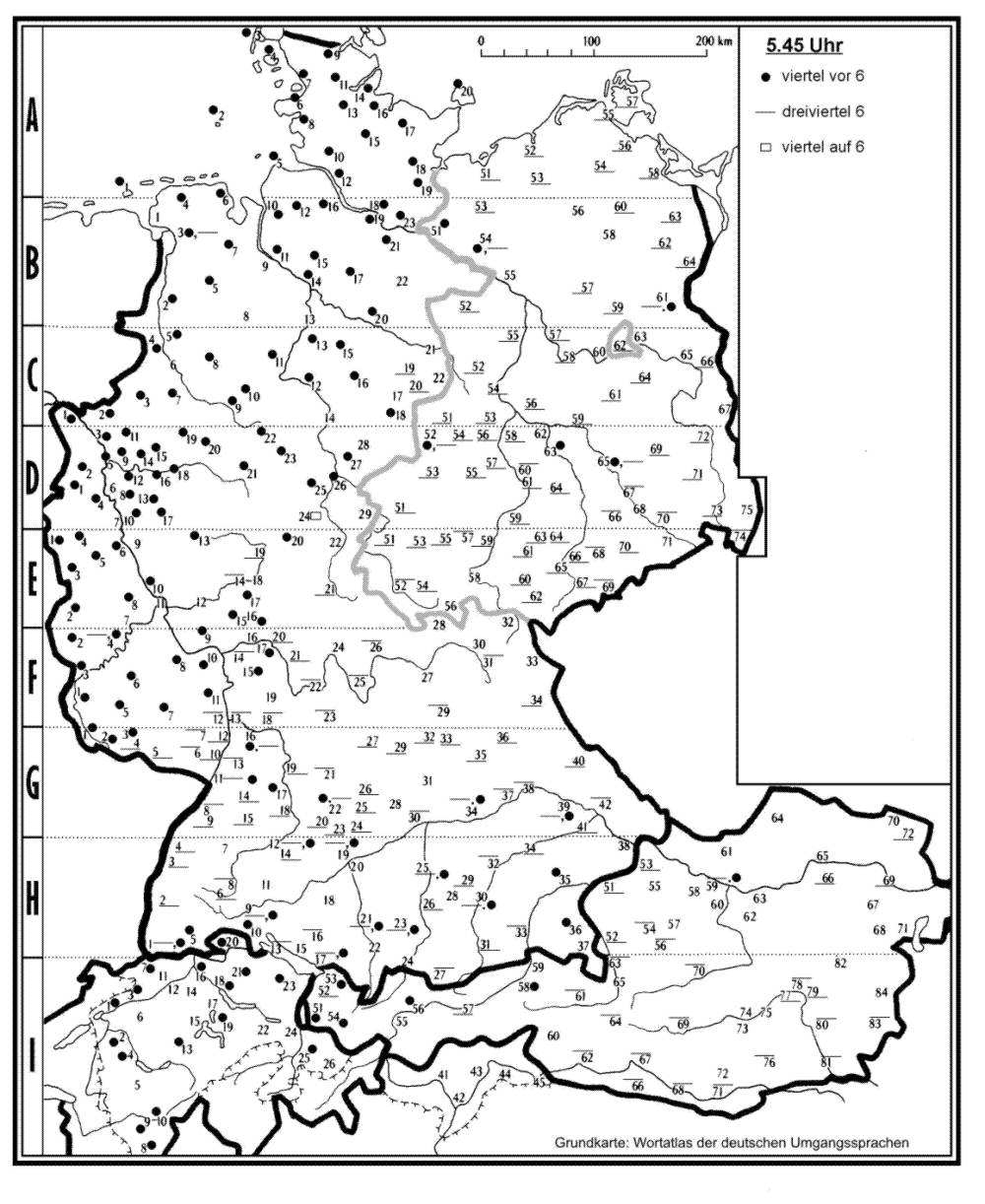
Similar real-time changes are observable in the results of a comparison of WDU and our contemporary data. Fig 10 shows the development of the variants for ‘pancake’. On the west German side of the border between the former FRG and the former GDR, Pfannkuchen (dark green, left-hand panel) has gained ground at the expense of Eierkuchen (grey) (a trend already observable in the corresponding AdA map from 2009/2010 (round 7, question 1a)). At the same time, the variant Plinse (salmon) has lost ground in Saxony and it appears to have been pushed back to its central area of distribution in the far-eastern bilingual Sorbian-German regions. As a consequence, both developments have resulted in a consolidation of Eierkuchen as the dominant east German variant.
Fig. 10. Variant and degree of change maps for ‘pancake’. Fig 11 shows the variants for ‘10 : 15’ (the corresponding WDU map (vol. 1, map 40) elicited ‘6 : 15’). The regional distributions have not changed considerably over the past 40 years. However, we can observe a shift of the isogloss which runs across the northern and central parts of Germany and which separates the areas with Viertel nach zehn (purple, left-hand panel) and Viertel elf (turquois)–with the northwestern variant Viertel nach zehn gaining ground and pushing aside Viertel elf (the map on ‘10 : 15’ (round 7, question 11e) from AdA 2009/2010 already shows how viertel nach zehn is gaining ground in these regions).
Fig. 11. Variant and degree of change maps for ‘10:15’. These patterns of change are again reflected in the right-hand panel in Fig 11. There is a dark grey corridor following the isogloss between the Viertel nach zehn and Viertel elf areas, where substantial change appears to have occurred. A look at the corresponding map from the AdA, which features the political borders, reveals that a divergence has taken place right along the border between the former FRG and the former GDR by way of an ‘exchange’ of variants.
Not in all cases, however, East German variants have been maintained. The most dramatic changes become apparent in the east of Germany when looking at the map for ‘hiccups’, cf. Fig 12. The panel on the left shows that the word Schlucken (light yellowish grey) has been largely abandoned in favor of the more supraregional (and indeed standard) variant Schluckauf (dark yellow) (in 2013, AdA, too, shows how Schlucken has largely been replaced by Schluckauf in these regions (round 10, question 3c)). The panel on the right reveals the extent of the change. Most of the polygons in the eastern part of Germany are dark grey or even black, indicating substantial change.
Fig. 12. Variant and degree of change maps for ‘hiccups’. Similarly, most changes on the map for ‘beef patty (made from ground beef, sometimes also pork)’, cf. Fig 13, appear to have occurred in the east of Germany. Particularly in Saxony-Anhalt and Thuringia, the use of Kloß (light purple) and its diminutive variant Klößchen (ibid.) seems to have been largely abandoned in favor of Klops (light blue). In Saxony and also in Mecklenburg-Western Pomerania, Beefsteak (green) has lost ground in favor of Klops or of Bulette (bright blue) (this same trend of Beefsteak losing ground to Klops is already observable in the AdA data from 2009/2010 (round 7, question 1f)). Again, the right-hand panel shows that most of the changes, to be recognized by the dark coloring of the hexagons, are concentrated in the east of Germany. Strikingly, these leveling processes are limited to the territory of the eastern German states. In the end, we are still dealing with variants that can be considered genuine east German shibboleths, i.e. Klops and Bulette.
Fig. 13. Variant and degree of change maps for ‘beef patty’. 3.1.4 Aggregated change
We can now aggregate these degrees of change across the 14 variables, cf. Fig 14.
Fig. 14. Median degree of change aggregated across 14 variables. Fig 14 reveals a relatively clear picture with regard to which regions changed the most (dark grey) and the least (light grey) over the past decades. The regions which are most affected by change are in the central west, the central east and the north east of Germany, but also in South Tyrol. Most of these regions of substantial change are north of the so-called Main line. This line, following for the most part the course of the river Main, has been identified as the most notable isogloss for lexis of colloquial German; it divides the northern and southern regions of German-speaking Europe considerably further south of the famous Benrath line, which in German dialectology serves as the traditional isogloss between Low German dialects in the north and High German dialects in the south [14,36,37]. Some parts of Austria, too, demonstrate substantial change across the 14 variables. Regions such as German-speaking Switzerland (especially central and eastern Switzerland), the northwest and the southeast of Germany (parts of Bavaria), on the other hand, appear to have undergone relatively little change in these 14 variables.
3.2 Change in apparent-time
Section 3.1 provided a real-time analysis of language change, where the distribution of variants are compared at different moments in time (WDU vs. contemporary data). One way to test the validity of this real-time paradigm is to perform analyses in apparent-time–where, in our contemporary dataset, the degrees of change of different age groups are compared amongst each other [38]. To validate the real-time analyses, one would expect the older section of the population in our sample to exhibit less change when compared to WDU, while the younger users demonstrate more change. For this purpose, we subset the data set into users <25 years of age (N approx. 167,000) and >60 years of age (N approx. 42,000), i.e. with c. 35 years, i.e. one generation, between the cohorts. Overall, we found the younger cohorts to demonstrate more change compared to WDU than the older cohorts. By way of example, Fig 15 shows the degree of change maps for ‘10 : 15’ for the young cohort (left-hand side) and the old cohort (right-hand side).
Fig. 15. Degree of change maps for ‘10:15’. Users <25 years old are shown on the left, users >60 are shown on the right. Fig 15 reveals–overall–less obvious change for the older users, as shown by the lighter grey coloring of the map on the right-hand side. This is particularly evident in the corridor following the isogloss of Viertel nach zehn and Viertel elf variants, where change has been substantial. This corridor is considerably more distinct, i.e. darker, for the younger generation. Analogous to Fig 14, we aggregated the degrees of change values across the 14 variables for the two age brackets, see Fig 16.
Fig. 16. Aggregated change for users <25 years old (left) and users >60 years old (right). Fig 16 perhaps shows–overall–darker polygons for the <25 cohort, which suggest more substantial change for the younger group when compared to the WDU. As a means of comparing the two age groups in relation to degree of change quantitatively, we performed a t-test to explore whether the difference between the two age groups in relation to degree of change was significant. <25 has a median of .39 (SD = .33), >60 a median of .37 (SD = .30). The t-test was significant (t = 3.049, p-value = .002).
4. Discussion
In this study we examined lexical variation in everyday language using web interactives as a new methodology of data collection. Going into the study we predicted that we would find substantial lexical change since the 1970s. In what follows, we want to explore potential reasons for this change in greater detail: 4.1.1 discusses reasons for levelling and 4.1.2. explores the role of political borders in the process of change. Finally, we discuss methodological limitations (4.2) and potential ways of validating this new paradigm of data collection (4.3).
4.1 Reasons for language change
4.1.1 Leveling
In sections 3.1.1 and 3.1.2, we reported that variants with geographically broader usage are becoming more dominant at the cost of more localized, regional variants. As an example, this is the case for Pantoffeln, a both colloquial and standard variant for ‘slippers’ which is spreading and gaining ground at the expense of Schluppen / Schluffen and Schlapfen, which are all considered to be less standard than Pantoffeln. This phenomenon, typical of language change in progress, is often referred to as levelling. There are different reasons for regional levelling and for supralocal norms to emerge. In this context, a principle of frugality may play a role, where speakers move away from linguistic diversity as a means of being more frugal and at the same time wanting to become supralocally understood [39]. This principle can lead to a replacement of more small-scale variants by either wide-spread supraregional variants or standard forms (with or without a national distribution). One critical factor in lexical change, in this context, is increased geographical and social mobility of the speakers [40]:
Social mobility may lead to levelling as a result of an orientation towards standard varieties [41]. This, however, only applies to areas where the standard variety has gained high prestige in colloquial registers, such as in the central regions in Germany, whereas e.g. in Switzerland (and Liechtenstein) and large parts of Bavaria (and Austria) more local/dialectal varieties still enjoy a high (covert) prestige in everyday conversation. This may explain why in the latter regions the use of lexical variants has remained relatively stable and why these regions have not experienced such a considerable lexical change.
Geographical mobility is known to be a significant driver of language change [42,43]. It may lead to levelling as a result of contact between regional varieties. Contact between regional varieties, however, “does not necessarily lead to convergence towards the standard language” [44]; speakers may decide to give up more localized variants in favor of supralocally used variants which have high “indexical potential” [45] e.g. variants associated with major conurbations or with a regional identity.
The effect of these two sometimes conflicting processes can be seen on the map for ‘slippers’ (cf. Fig 6 above). Whereas in the central west region of Germany, speakers have replaced more localized variants such as Schluffen and Schluppen (at least the latter one is considered non-standard, cf. [46]) by Pantoffeln, a supraregional standard variant, in the northwest, the regional variant Puschen has become the dominant variant and has pushed aside not only the non-standard variant Latschen, but also the standard forms Pantoffeln and Hausschuhe. Puschen has developed into a popular regional marker in the north, not least because it is supported by the widespread idiom in die Puschen kommen (‘to get one’s act together’). Another example is the spread of the variant Bulette for ‘beef patty’ from the Berlin area to large parts of east of Germany, pushing aside more localized variants such as Beefsteak, (Fleisch-/Gehacktes-) Kloß/Klößchen and (Brat-) Klops (cf. Fig 13). The map for ‘(second) breakfast that people have at their workplace’ showed a high degree of levelling in north and central Germany where the word Pause (‘break’) and its relatively transparent compounds Frühstückspause (literally ‘breakfeast break’) and Kaffeepause (‘coffee break’), have become the dominant variants, whereas in most other areas, regionally salient variants (Vesper, Brotzeit, Jause, Neuner, Znüni), some of which are also quite opaque (e.g. Vesper, from Latin vespera ‘evening’, and Jause, from Slovenian júžina ‘lunch’), have remained relatively stable. There are also instances, however, where regional, relatively localized non-dominant variants have actually spread: Fig 7 revealed, for example, that Weck(en)mann (in the northwest of Germany) and Krampus (in the east of Austria) are extending into regions where previously respondents did not have a word for this variant. It has been observed elsewhere that the spread of regional lexical variants, in particular, can be attributed to the fact that they have become indices of regional identity and thus helped to “enregister” regional varieties, thus–to use the terminology of traditional sociolinguistics–turning from being associated with covert prestige to overt prestige [47]. While most of these studies focus on phonological variation, our study demonstrates the indexical potential of lexical variants. The overall trends of language change reported here through real-time analyses were corroborated by analyses of apparent-time change: older generation speakers (>60) overall exhibit less change than their younger (<25) peers.
4.1.2 Divergence at political borders
What was also striking for a number of variables was the effect of national borders and political borders within nations on language use. Whereas the variants for ‘pencil case’ have seen considerable change within Germany, the formerly dominant variants in Switzerland ((Schul-) Etui) and Austria (Federpennal) seem to have been consolidated. Whereas Federpennal can be regarded as an Austriacism, (Schul-) Etui is not a ‘pure’ Helvetism, as it is also used in northwestern regions of Germany. South Tyrol, however, has seen considerable change. Here, Federschachtel has spread and has become the dominant variant. Again, it is not an exclusive variant of this region, as it is also used in some parts of Austria. Similarly, the maps for ‘slippers’, ‘beef patty’ and ‘(second) breakfast that people have at their workplace’ show a substantial degree of variation and change in Germany, and, in contrast, a spread and consolidation of variants within the national borders of German-speaking Switzerland, Austria, Liechtenstein and German-speaking Italy. Here, these variants have become dominant but not necessarily specific for the respective country or region (‘slippers’: Switzerland Finken, Austria: Schlapfen or Patschen; ‘beef patty’: Switzerland Hacktätschli, Austria: Flaischla(i)berl, South Tyrol: Fleischkrapfen/-krapferl; ‘(second) breakfast that people have at their workplace’: Switzerland Znüni, Austria: Jause). In some cases, a clear process of divergence along national borders has taken place. Certain variants which were attested in the WDU as being used in border regions of neighboring countries have virtually disappeared, e.g. the southwestern German variant Fleischküchle from Switzerland, the Austrian Fleischla(i)ber(l) (both ‘beef patty’) from South Tyrol, or Austrian Geldbörse(rl) (‘wallet’) from Bavaria. In some cases, processes of consolidation can be explained with the conventionalization of lexemes in administrative contexts, such as Schul - (Etui), Federpennal or Federschachtel having become the ‘official’ word for ‘pencil case’ at school, or Probe (in the canton of Bern–as opposed to Prüfung/Prüefig in the rest of German-speaking Switzerland) and Schulaufgabe (in the German state of Bavaria–as opposed to Klassenarbeit in most other German counties) as the specific term for ‘school exam’.
The most striking processes of divergence, however, seem to have taken place at a former political border, i.e. the border between West and East Germany (or Federal Republic of Germany, FRG, and German Democratic Republic, GDR, as they existed until 1990; see Section 3.1.3). The maps for ‘pancake’, ‘10 : 15’ and ‘beef patty’ demonstrate, firstly, a consolidation of (north - and/or central-) western and (north-/central) eastern German variants, and secondly, a divergence of such variants along the former Iron Curtain in Germany: Pfannkuchen vs. Eierkuchen, Viertel nach zehn vs. Viertel elf, and Frikadelle vs. (Brat-/Fleisch-) Klops or Bulette. The latter variants may have been regarded as ‘national variants’ towards the end of the GDR; over the twenty-eight years after the fall of the Iron Curtain, some of them have essentially become regional markers of East-German identity.
4.2 Methodological considerations
Finally, we want to reflect the methods chosen. This section will be structured in three subsections: (i) we explore the benefits of this new paradigm of collecting data, we (ii) point to some of the limitations of this paradigm of data collection, and finally, (iii) we discuss a way of validating the method selected.
4.2.1 Advantages of using web-interactives as a data collection tool
This new method of data collection for the purposes of studying language variation and change brings with it a number of key benefits: (a) a collection and analysis of datasets of unprecedented scale; (b) wide engagement with the public, thereby creating broad, public impact; and, (c) more generally, pushing methodological boundaries using technological advancements that interface with a traditional field such as dialectology.
As for (a), studies in dialectology typically examine speakers that have been carefully selected. Often, this speaker selection is time-consuming and ultimately results in a limited pool of participants. Collecting language data through web interactives sidesteps this problem–as the potential participant pool is virtually unlimited (which creates other problems, however, see next subsection). Which leads to (b): the web interactive allows researchers to reach millions of users. Such large-scale dissemination strategies are becoming more important in times of Research Excellence Framework (REF) and, most recently, Knowledge Exchange Framework (KEF, [48])–as outlined in [49, 50]. The web interactive engaged with the users and–at the same time–revealed to them that dialect variation is very much alive. Whether or not frameworks such as REF and KEF are cogent is a matter of a different debate. Yes, web-interactives such as the one presented here enable wide dissemination of research questions and findings–but is wide dissemination and impact really a necessary feat of undertaking scholarly research? To what degree do frameworks such as REF and KEF put additional pressures on researchers by dictating the type of research one should pursue? Can every field of research transfer knowledge and methods equally? As for (c), using the web to collect data on regional variation, too, is not new: the Harvard Dialect Survey [27] for American English (c. 47,463 users), [12] for German-speaking Europe (up to over 20,000 users), or the endeavors by [51,52] for Swiss German (c. 14,000 users), and–most recently–the surveys by [53] for French (c. 30,000 users) have shown that the web can be used successfully to collect data from a broader population.
While these endeavors obviously had a wide reach as well, to the best of our knowledge none of them had such a wide impact as our quiz for German-speaking Europe. It was successful because, for one, we applied the concept of gamification, i.e. users engage with a system and, in return, they get a reward–which in our case was the prediction of their regional origin. Gamification for use in linguistics is not new. In 2015, [54] showed that gamification strategies can be useful (and reliable) for linguistic annotations in tasks on morphosyntax. In the same year, [55] explored how gamification (such as in the form of Duolingo) can be used to promote risk taking in the foreign language learning classroom–risk taking being a crucial driving force behind increasing students’ performance in various language learning tasks. A special collection to be published in Linguistics Vanguard [56] is devoted to how smartphone apps, applying principles of gamification, can be used to collect linguistic data (in auditory, response, and visual form) in typologically diverse languages. Secondly, collaboration with strong media partners was, obviously, very crucial and fruitful. SPIEGEL ONLINE has roughly 20M unique users per month, Tagesanzeiger has roughly 1.3M unique users per month. This combination of gamification and collaboration with a strong media partner has–to our knowledge–not been done before. This collaboration brings up the question of how science and data-driven journalism are distinguished and what opportunities and pitfalls such a collaboration entail. [57] defines data-driven journalism or simply ‘data journalism’ as ‘essentially any activity that deals with data in conjunction with journalistic reporting and editing or towards journalistic ends’. In science, on the contrary, we typically follow the scientific method of postulating hypotheses, collecting data, analyzing data, and interpreting the patterns found–all the while maximizing potential reproducibility and sustaining review by peers. The former, thus, is more of a top-down approach–data is available, and the journalists look for patterns; while the scientific method follows a bottom up approach of hypothesis statement, collecting data, and testing assumptions. Furthermore, data-driven journalism does not necessarily follow the maxims of reproducibility and wanting to sustain peer review. Collaborations can nonetheless be fruitful–ways of visualizing data and patterns are, from the authors’ point of view, typically more nuanced and perhaps progressive in data-driven journalism than in (soft) sciences like linguistics. Journalists can benefit from academics by learning from their academic rigor and pursuit of making studies replicable, for instance.
4.2.2 Limitations of using web-interactives as a data collection method
There are number of limitations to the data collection method applied in this study. The greatest problem (and at the same time the greatest strength) of the current paradigm is that anybody could (and still can) participate in the survey. There is no control over who participates in the web interactive. Consequently, this means that we do not know whether the users go through the quiz trollingly or sincerely and whether or not they fill in the metadata on gender, age, and evaluation of the result felicitously. Moreover, users may go through the quiz multiple times–although [58] suggests that, typically, repeated participation in web-based surveys is <3%.
Further noise is added to the dataset on a number of different levels: (a) We do not know if our speakers are first, second, or third language German speakers. Obviously, this may have a large effect on the nature of the data collected. (b) We have some users who are very mobile, geographically and socially, and we have users who exhibit opposite patterns. (c) Further, to evaluate the quiz result (see section 2.1), users placed a pin on a map. The precision of where this pin is placed exactly strongly depends on the zoom level the users selected–with a higher zoom level enabling a much more precise placement. (d) Furthermore, it is reasonable to assume that speakers–for nostalgic reasons–tend to respond rather ‘hypercorrectly’ and click variants which, for instance, they fondly remember from their childhood (cf. [59], which in return may affect the sample obtained. (a) and (b) could have been preempted, had we asked more metadata either at the end of the quiz (right before they obtain the result) or right at the start of the quiz. Here, we would have run the risk of participants opting out of the quiz, however, given that an average page visit typically lasts less than a minute [60, 61]. (e) Another major problem is the users’ self-reporting of dialect variants–an issue that we also encountered in our studies with smartphone apps [16]. As described in section 2.1, we asked users to self-report which variants they use; or should we say, which variant they think they use. Here we have to trust the users’ linguistic intuitions. [62] however, has convincingly shown that lay people’s intuition about non-standard linguistic usage can be erroneous. He asked speakers what they think they say when they hang up the phone, i.e. their phrase for saying ‘goodbye’. Aside from this introspection data, he also collected actual real-life data, i.e. how they say ‘goodbye’ on the phone in reality. It turned out that there was substantial discrepancy between introspection and actual observation. This needs to be kept in mind when discussing and interpreting our data–which is essentially solely based on self-reporting and introspection.
4.3 Validation of methodology
Given the plethora of methodological caveats mentioned in 4.2.2, the question of legitimacy of the current paradigm of data collection emerges. Are the findings and interpretations legitimate, given all the factors contributing to noise in the data presented in 4.2.2? Can we still make out the actual signal from the noise? One way to validate this is to explore, for example, whether Elspaß & Möller’s survey, AdA, shows similar results to our survey. In AdA, subjects were elicited in a much more controlled fashion than the participants in our study (cf. section 1). Fig 17 compares AdA’s survey round no. 4 question 2 from 2004/05, with c. 7.000 responses) result of ‘(second) breakfast that people have at their workplace’ (left) obtained through controlled elicitation and the same variable as collected through our web interactive (right).
Fig. 17. Regional distribution of variants for ‘(second) breakfast that people have at their workplace’. Right is our contemporary data (2015) and left is AdA (2003ff). Judging by the regional patterns evident in Fig 17 it seems as though we elicited highly similar patterns as AdA (2003ff.) did: users in German-speaking Switzerland reported Znüni, in much of Austria both surveys collected Jause, Baden-Württemberg shows Vesper, Bavaria Brotzeit, and north of the river Main, both surveys predominantly report Frühstückspause. What is interesting here, though, is that in the AdA data (left hand-side Fig 17), the historic (zweites) Frühstück–the same variant that was dominant in Eichhoff’s WDU–is still being used (dark green dots, left-hand panel) sporadically, whereas in our data, this has virtually disappeared from the map and change in this variant appears to have been concluded today; in AdA, this change appears to have been still ongoing. Given the very high degree of overlap in this and other variable(s)–in spite of the two different approaches to elicit data on regional variation–we argue that using web-interactives as a way of linguistic data collection can be very powerful and useful in the study of language variation and change.
5. Conclusions
This study set out to (a) determine the usefulness of a new crowdsourcing methodology for sociolinguistic research and to (b) examine linguistic change in German-speaking Europe with said methodology. This study has found substantial regional levelling particularly in the center and the north of Germany and has shown the effect of national and regional borders on lexical change. The scope of this study is limited in a number of ways, as addressed in 4.2.2. In spite of its limitations, the findings contribute to our understanding of regional variation and linguistic change in present-day German-speaking Europe; moreover, they underline the importance of updating surveys on colloquial speech periodically (and on lexis, in particular), as this has proven a highly dynamic area of our language. We presented an innovative methodology on how large data sets on regional variation can be collected. A natural progression of this work will be to apply this paradigm on other languages.
Zdroje
1. Ammon U. Die deutsche Sprache in Deutschland, Österreich und der Schweiz: das Problem der nationalen Varietäten. Berlin, Boston: Walter de Gruyter; 1995.
2. Ammon U. Die Stellung der deutschen Sprache in der Welt: Die Standardsprache in Österreich, der Schweiz, Deutschland, Liechtenstein, Luxemburg, Ostbelgien und Südtirol sowie Rumänien, Namibia und Mexiko. Berlin, Boston: Walter de Gruyter; 2015.
3. Barbour S, Stevenson P. Variation im Deutschen: soziolinguistische Perspektiven. Berlin, Boston: Walter de Gruyter; 1998.
4. König W, Elspaß S, Möller R. dtv-Atlas Deutsche Sprache: mit 155 Abbildungsseiten in Farbe. München: Deutscher Taschenbuch Verlag; 2015.
5. Löffler H. Wieviel Variation verträgt die deutsche Standardsprache? Begriffsklärung: Standard und Gegenbegriffe. In: Eichinger LM, Kallmeyer W, editors. Standardvariation. Wie viel Variation verträgt die deutsche Sprache? Berlin, New York: Walter de Gruyter; 2005. pp. 7–27.
6. Rash FJ. The German language in Switzerland: multilingualism, diglossia and variation. Bern: Peter Lang Pub Inc; 1998.
7. WDU = Eichhoff J. Wortatlas der deutschen Umgangssprachen. Vol. I/II: Bern: Francke; 1977/78, vol. III: München: Saur; 1993, vol. IV: Bern, München: Saur; 2000.
8. Nelde PH, editor. Wortatlas der deutschen Umgangssprachen in Belgien. Bern: A. Francke; 1987.
9. WSAH = Friebertshäuser H, Dingeldein HJ. Wortgeographie der städtischen Alltagssprache in Hessen. Tübingen: Francke; 1988.
10. ALRH = Dingeldein, H. Wortatlas zur Alltagssprache der ländlichen Räume Hessens. Tübingen: Francke; 2010.
11. WSU = Protze H. Wortatlas der städtischen Umgangssprache. Zur territorialen Differenzierung der Sprache in Mecklenburg-Vorpommern, Brandenburg, Berlin, Sachsen-Anhalt, Sachsen und Thüringen. Köln, Weimar, Wien: Böhlau; 1997.
12. AdA = Elspaß S, Möller R. Atlas zur deutschen Alltagssprache (AdA). 2003 http://www.atlas-alltagssprache.de
13. Möller R, Elspaß S. Atlas zur deutschen Alltagssprache (AdA). In: Kehrein R, Lameli A, Rabanus S, editors. Regionale Variation des Deutschen. Projekte und Perspektiven. Berlin, Boston: Walter de Gruyter; 2015. pp. 519–40.
14. Möller R. Der Sprachgebrauch „bei uns “–Arealbildung in Karten des Atlas zur deutschen Alltagssprache, objektive Grenzen und subjektive Räume. In: Hansen S, Schwarz C, Stoeckle P, Streck T, editors. Dialectological and Folk Dialectological Concepts of Space: Current Methods and Perspectives in Sociolinguistic Research on Dialect Change. Berlin, Boston: Walter de Gruyter; 2012. pp. 96–118.
15. Christen H. Convergence and divergence in the Swiss German dialects. Folia Linguistica. 1998;32(1–2):53–68.
16. Leemann A, Kolly MJ, Purves R, Britain D, Glaser E. Crowdsourcing language change with smartphone applications. PloS one. 2016;11(1):e0143060. doi: 10.1371/journal.pone.0143060 26726775
17. Möller R, Elspaß S. Die rezente Dynamik im arealsprachlichen Lexikon. In: Herrgen J, Schmidt JE, editors. Language and Space. An International Handbook of Linguistic Variation. Vol. 4: German. Berlin, Boston: De Gruyter Mouton; 2019. pp. 758–83.
18. Mihm A. Die Rolle der Umgangssprachen seit der Mitte des 20. Jahrhunderts. In: Besch W, Betten A, Reichmann O, Sonderegger S, editors. Sprachgeschichte. Ein Handbuch zur Geschichte der deutschen Sprache und ihrer Erforschung. 2nd ed. Berlin, New York: Walter de Gruyter; 2000; pp. 2107–37.
19. Elspaß S. Zum Wandel im Gebrauch regionalsprachlicher Lexik. Ergebnisse einer Neuerhebung. Zeitschrift für Dialektologie und Linguistik. 2005;72(1):1–51.
20. Chambers JK. Sociolinguistic theory: linguistic variation and its social significance. 2nd ed. Malden, MA: Blackwell; 1995.
21. Eichhoff J. Metzger oder Fleischer, Sonnabend oder Samstag? Landschaftlicher Wortschatz in der deutschen Gegenwartssprache. Der Deutschunterricht. 2001;53(4):68–78.
22. Kolly MJ, Leemann A. Dialäkt Äpp: Communicating dialectology to the public–crowdsourcing dialects from the public. In: Leemann A, Kolly MJ, Schmid S, Dellwo V, editors. Trends in Phonetics and Phonology. Studies from German-speaking Europe. Bern: Peter Lang Pub Inc; 2015. pp. 271–85.
23. Leemann, A., Kolly MJ, Brupbacher M, Grossenbacher T, Wanitsch D. https://www.tagesanzeiger.ch/extern/interactive/2015/sprachatlas_v8/#/questions [Internet]. 2019
24. Leemann, A, Kolly, MJ. Dialäkt Äpp, 2019, [Internet]. https://apps.apple.com/ch/app/dial%C3%A4kt-%C3%A4pp/id606559705
25. Katz J, Andrews W. How y’all, youse and you guys talk. New York Times Online [Internet]. 2019, 2013. http://www.nytimes.com/interactive/2013/12/20/sunday-review/dialect-quiz-map.html?r=0
26. Katz J. american-dialects [Internet]. 2019, https://github.com/joshkatz/american-dialects/blob/master/assets/2013-regional-dialect-variation-poster.png
27. Vaux B, Golder S. The Harvard dialect survey. Cambridge, MA: Harvard University Linguistics Department; 2003.
28. The Atlantic [Internet]. 2019, https://www.theatlantic.com/technology/archive/2014/01/-em-the-new-york-times-em-most-popular-story-of-2013-was-not-an-article/283167/
29. Appannie–App analytics [Internet]. 2019, www.appanie.com.
30. Leemann A, Kolly MJ, Britain D. The English Dialects App: The creation of a crowdsourced dialect corpus. Ampersand. 2018. https://doi.org/10.1016/j.amper.2017.11.001.
31. Github [Internet]. 2019, https://github.com/kimberleychin/Old-New-Maps-/tree/master/OldData_WDU
32. Trudgill P. Dialects in contact. Oxford: Blackwell; 1986.
33. Kerswill P. Dialect levelling and geographical diffusion in British English. In: Britain D, editor. Social dialectology: in honour of Peter Trudgill. Amsterdam: John Benjamins; 2003. pp. 223–43.
34. Leemann A, Elspaß S, Möller R, Grossenbacher T. Grüezi, Moin, Servus–Wie wir wo sprechen. Reinbek bei Hamburg: Rowohlt; 2017.
35. Wiesinger P. Die Einteilung der deutschen Dialekte. In: Besch W, Knoop U, Putschke W, Wiegand HE, editors. Dialektologie. Ein Handbuch zur deutschen und allgemeinen Dialektforschung. Vol. 2. Berlin, New York: Walter de Gruyter; 1983. pp. 807–900.
36. Durrell M. Die „Mainlinie”als sprachliche Grenze. In: Putschke W, Veith W, Wiesinger P, editors. Dialektgeographie und Dialektologie. Marburg: Elwert; 1989. pp. 89–109.
37. Möller R. Zur diatopischen Gliederung des alltagssprachlichen Wortgebrauchs. Eine dialektometrische Auswertung von Jürgen Eichhoff: Wortatlas der deutschen Umgangssprachen (Bd. 1–4; 1977, 1978, 1993, 2000). Zeitschrift für Dialektologie und Linguistik. 2003;70(3):259–97.
38. Boberg C. Real and apparent time in language change: Late adoption of changes in Montreal English. American speech. 2004;79(3):250–69.
39. Britain D. Supralocal regional dialect levelling. In: Llamas C, Watt D, editors. Language and identities. Edinburgh: Edinburgh University Press; 2010. pp. 193–204.
40. Gordon M, Milroy L. Sociolinguistics: method and interpretation. Malden, MA: Blackwell; 2003.
41. Giles H. Accent mobility: A model and some data. Anthropological linguistics. 1973; 15(2);87–105.
42. Williams A, Kerswill P, Foulkes P, Docherty G. Dialect levelling: change and continuity in Milton Keynes, Reading and Hull. In: Foulkes P, Gerard D, editors. Urban voices: Accent studies in the British Isles. London: Arnold; 1999. pp. 141–62.
43. Monka M. Mobility and language change. NyS, Nydanske Sprogstudier. 2015;49(1).
44. Hinskens F. Dialect levelling: A two-dimensional process. Folia Linguistica. 1998;32(1–2):35–52.
45. Eckert P. Variation and the indexical field. Journal of Sociolinguistics. 2008;12(4):453–76.
46. VWB = Ammon U, Bickel H, Lenz AN, editors. Variantenwörterbuch des Deutschen. Die Standardsprache in Österreich, der Schweiz, Deutschland, Liechtenstein, Luxemburg, Ostbelgien und Südtirol sowie Rumänien, Namibia und Mennonitensiedlungen. 2nd ed. Berlin, Boston: De Gruyter; 2016.
47. Trudgill P. Sex, covert prestige and linguistic change in the urban British English of Norwich. Language in society. 1972;1(2):179–95.
48. Hefce [Internet]. 2019. http://www.hefce.ac.uk/ke/kef/
49. Britain D, Kolly MJ, Leemann A. Using impact to make impact? Experiences from a dialect crowdsourcing project. In: McIntyre D, Price H, editors. Applying Linguistics: Language and the Impact Agenda. London: Routledge; 2018. pp. 83–98.
50. McIntyre D, Price H, editors. Applying linguistics: Language and the impact agenda. London: Routledge; 2018.
51. Glaser E [Internet]. 2019, Der Wortschatz des Schweizerdeutschen. https://www.ds.uzh.ch/de/forschung/projekte/schweizer_dialekte/auswertung.html.
52. Juska-Bacher B. Wortgeografischer Wandel im Schweizerdeutschen. Sommersprossen, Küchenzwiebel und Schmetterling 70 Jahre nach dem SDS. Linguistik online. 2010;42(2):19–42.
53. Avanzi M. Atlas du français de nos régions. Malakoff: Armand Colin; 2017.
54. Bos J, Nissim M. Uncovering noun-noun compound relations by gamification. In: Megyesi, editor. Proceedings of the 20th Nordic Conference of Computational Linguistics (NODALIDA 2015). Linköping: Linköping University Elektronic Press, Sweden; 2015. pp. 251–55.
55. Shatz I. Using gamification and gaming in order to promote risk taking in the language learning process. In: Proceedings of the 13th Annual MEITAL National Conference. Haifa, Israel: Technion; 2015. pp. 227–32.
56. Leemann A, Hilton N. Using smartphones to collect linguistic data. Special collection in Linguistics Vanguard. 2019. Forthcoming.
57. Coddington M. Clarifying journalism’s quantitative turn: A typology for evaluating data journalism, computational journalism, and computer-assisted reporting. Digital journalism. 2015;3(3):331–48.
58. Reips UD. Standards for Internet-based experimenting. Experimental psychology. 2002;49(4):243–56. doi: 10.1026/1618-3169.49.4.243 12455331
59. König W. „Stimmen tut’s nicht, aber es ist etwas Besonderes!”Die Motivation/Intention von Informanten als Faktor für „hyperkorrekte”Antworten bei sprachgeographischen Erhebungen. In: Greule A, Hochholzer R, Wildfeuer A, editors. Die bairische Sprache. Studien zu ihrer Geographie, Grammatik, Lexik und Pragmatik. Festschrift für Ludwig Zehetner. Regensburg: Vulpes; 2004. pp. 189–93.
60. Liu C, White RW, Dumais S. Understanding web browsing behaviors through Weibull analysis of dwell time. In: Proceedings of the 33rd international ACM SIGIR conference on Research and development in information retrieval 2010 Jul 19. New York: ACM New York; 2010. pp. 379–86.
61. Nielsen Norman Group [Internet]. 2019, https://www.nngroup.com/articles/how-long-do-users-stay-on-web-pages/
62. Labov W. When intuitions fail. In: 32nd regional meeting of the Chicago Linguistics Society 1996 Apr 11 Vol. 32. 1996: pp. 76–106).
Článek Growth of young HIV-infected and HIV-exposed children in western Kenya: A retrospective chart reviewČlánek Risk of infection in the first year of life in preterm children: An Austrian observational studyČlánek Significant hearing loss in Fabry disease: Study of the Danish nationwide cohort prior to treatmentČlánek Genetic and morphological divergence in the warm-water planktonic foraminifera genus GlobigerinoidesČlánek Gene expression is associated with virulence in murine macrophages infected with Leptospira sppČlánek Prevalence of drug–drug interaction in atrial fibrillation patients based on a large claims dataČlánek The logic of basic education provision and public goods preferences in Chinese fiscal federalismČlánek Quantification of speech and synchrony in the conversation of adults with autism spectrum disorderČlánek The evolution and genetic diversity of avian influenza A(H9N2) viruses in Cambodia, 2015 – 2016Článek The optimal delivery time and order quantity in an oligopoly market with time-sensitive customersČlánek Application of enhanced assimilable organic carbon method across operational drinking water systemsČlánek The majority of skin lesions in pediatric primary care attention could be managed by TeledermatologyČlánek Emergency traffic adaptive MAC protocol for wireless body area networks based on prioritizationČlánek Transcranial magnetic stimulation induced early silent period and rebound activity re-examinedČlánek A Bayesian gene network reveals insight into the JAK-STAT pathway in systemic lupus erythematosusČlánek Highly multiplexed quantitative PCR-based platform for evaluation of chicken immune responsesČlánek Motor vehicle crash reconstruction: Does it relate to the heterogeneity of whiplash recovery?Článek BPRF: Blockchain-based privacy-preserving reputation framework for participatory sensing systemsČlánek Characterization of the cecal microbiome composition of Wenchang chickens before and after fatteningČlánek Snow avalanche deaths in Switzerland from 1995 to 2014—Results of a nation-wide linkage studyČlánek Neuroimaging modality fusion in Alzheimer’s classification using convolutional neural networksČlánek Formation of a structurally-stable conformation by the intrinsically disordered MYC:TRRAP complexČlánek A siRNA mediated hepatic dpp4 knockdown affects lipid, but not glucose metabolism in diabetic miceČlánek An investigation of the equine epidermal growth factor system during hyperinsulinemic laminitisČlánek Influence of a neck compression collar on cerebrovascular and autonomic function in men and womenČlánek Visceral leishmaniasis in Northeast Brazil: What is the impact of HIV on this protozoan infection?Článek The association of weight status and weight perception with number of confidants in adolescentsČlánek Leisure-time physical activity and sports in the Brazilian population: A social disparity analysisČlánek Autosomal-dominant hypotrichosis with woolly hair: Novel gene locus on chromosome 4q35.1-q35.2Článek Local, nonlinear effects of cGMP and Ca2+ reduce single photon response variability in retinal rodsČlánek Helicobacter pylori antibody and pepsinogen testing for predicting gastric microbiome abundanceČlánek Modeling narrative structure and dynamics with networks, sentiment analysis, and topic modelingČlánek Prediction of early C-reactive protein levels after non-cardiac surgery under general anesthesiaČlánek Serotonin modulates behavior-related neural activity of RID interneuron in Caenorhabditis elegansČlánek Reproductive life-history strategies in a species-rich assemblage of Amazonian electric fishesČlánek Sharing of gut microbial strains between selected individual sets of twins cohabitating for decadesČlánek Correction: Examining the relationship between socio-economic status, WASH practices and wastingČlánek Batrachochytrium dendrobatidis infection in amphibians predates first known epizootic in Costa RicaČlánek Diaphragmatic motor cortex hyperexcitability in patients with chronic obstructive pulmonary diseaseČlánek Persistence of Burkholderia thailandensis E264 in lung tissue after a single binge alcohol episodeČlánek High throughput, efficacious gene editing & genome surveillance in Chinese hamster ovary cellsČlánek Predicting long-term type 2 diabetes with support vector machine using oral glucose tolerance testČlánek Multiscale, multimodal analysis of tumor heterogeneity in IDH1 mutant vs wild-type diffuse gliomasČlánek High prevalence and incidence of rectal Chlamydia infection among men who have sex with men in JapanČlánek A low-cost fluorescence reader for in vitro transcription and nucleic acid detection with Cas13aČlánek Development of the mandibular curve of spee and maxillary compensating curve: A finite element modelČlánek The effect of overnight consolidation in the perceptual learning of non-native tonal contrastsČlánek The D-dimer level predicts the postoperative prognosis in patients with non-small cell lung cancerČlánek Ligand-induced conformational selection predicts the selectivity of cysteine protease inhibitorsČlánek Robust, automated sleep scoring by a compact neural network with distributional shift correctionČlánek Seasonal changes of the diurnal variation of precipitation in the upper Río Chagres basin, PanamáČlánek m6A minimally impacts the structure, dynamics, and Rev ARM binding properties of HIV-1 RRE stem IIBČlánek The computational analyses of handwriting in individuals with psychopathic personality disorderČlánek Reversed metabolic reprogramming as a measure of cancer treatment efficacy in rat C6 glioma modelČlánek Diet and feeding strategy of Northeast Atlantic mackerel (Scombrus scomber) in Icelandic watersČlánek Immuno-metabolic profile of human macrophages after Leishmania and Trypanosoma cruzi infectionČlánek 4D perfusion CT of prostate cancer for image-guided radiotherapy planning: A proof of concept studyČlánek The diversity and abundance of fungi and bacteria on the healthy and dandruff affected human scalpČlánek Evaluating the impact of setting delineators in tunnels based on drivers’ visual characteristicsČlánek Discovery of genomic variations by whole-genome resequencing of the North American Araucana chickenČlánek Serological evidence of arboviruses and coccidia infecting horses in the Amazonian region of BrazilČlánek L-lysine protects C2C12 myotubes and 3T3-L1 adipocytes against high glucose damages and stressesČlánek Performance, complexity and dynamics of force maintenance and modulation in young and older adultsČlánek Microbial diversity and mineral composition of weathered serpentine rock of the Khalilovsky massifČlánek Does seed size mediate sex-specific reproduction costs in the Callosobruchus maculatus bean beetle?Článek Assessing insomnia management in community pharmacy setting in Jordan: A simulated patient approachČlánek Menagerie: A text-mining tool to support animal-human translation in neurodegeneration researchČlánek Nexrutine and exercise similarly prevent high grade prostate tumors in transgenic mouse modelČlánek Balance control mechanisms do not benefit from successive stimulation of different sensory systemsČlánek Swaying slower reduces the destabilizing effects of a compliant surface on voluntary sway dynamicsČlánek Revealing the assembly of filamentous proteins with scanning transmission electron microscopyČlánek Air quality and obesity at older ages in China: The role of duration, severity and pollutantsČlánek Absence of posture-dependent and posture-congruent memory effects on the recall of action sentencesČlánek Effect of arteriovenous access closure and timing on kidney function in kidney transplant recipientsČlánek Development of a computer-aided design software for the quantitative evaluation of aesthetic damageČlánek MicroRNA-710 regulates multiple pathways of carcinogenesis in murine metastatic breast cancerČlánek Effects of SCUBA bubbles on counts of roving piscivores in a large remote marine protected areaČlánek Comparison of plasma fatty acid binding protein 4 concentration in venous and capillary bloodČlánek Verification of mesenchymal stem cell injection therapy for interstitial cystitis in a rat modelČlánek Beyond Buddhism and animism: A psychometric test of the structure of Burmese Theravada BuddhismČlánek Improving accuracy for finite element modeling of endovascular coiling of intracranial aneurysmČlánek Impaired cardiac performance, protein synthesis, and mitochondrial function in tumor-bearing miceČlánek An explorative study identifies miRNA signatures for the diagnosis of non-celiac wheat sensitivityČlánek Connectivity differences between Gulf War Illness (GWI) phenotypes during a test of attentionČlánek Applying circuit theory and landscape linkage maps to reintroduction planning for California CondorsČlánek Response of rhizosphere bacterial community of Taxus chinensis var. mairei to temperature changesČlánek Factors predictive of the success of tuberculosis treatment: A systematic review with meta-analysisČlánek Second language learning induces grey matter volume increase in people with multiple sclerosisČlánek Exogenous melatonin reduces the inhibitory effect of osmotic stress on photosynthesis in soybeanČlánek The microbiota composition of the offspring of patients with gestational diabetes mellitus (GDM)Článek Association of cord blood methylation with neonatal leptin: An epigenome wide association studyČlánek Dietary intake as a predictor for all-cause mortality in hemodialysis subjects (NUGE-HD study)Článek Luminescent and fluorescent triple reporter plasmid constructs for Wnt, Hedgehog and Notch pathwayČlánek Neutrophils remain detrimentally active in hydroxyurea-treated patients with sickle cell diseaseČlánek Temperature time series analysis at Yucatan using natural and horizontal visibility algorithmsČlánek The protein architecture in Bacteria and Archaea identifies a set of promiscuous and ancient domainsČlánek Copy number-based quantification assay for non-invasive detection of PVT1-derived transcriptsČlánek Colonic bacterial composition is sex-specific in aged CD-1 mice fed diets varying in fat qualityČlánek Clinical impact of visceral-to-subcutaneous fat ratio in patients with acute aortic dissectionČlánek Comparison of quality control methods for automated diffusion tensor imaging analysis pipelinesČlánek Correction: Saiga horn user characteristics, motivations, and purchasing behaviour in SingaporeČlánek A systems approach identifies Enhancer of Zeste Homolog 2 (EZH2) as a protective factor in epilepsyČlánek Glucocorticoid and dietary effects on mucosal microbiota in canine inflammatory bowel diseaseČlánek Correction: Risk factors for tooth loss in adults: A population-based prospective cohort studyČlánek From sea monsters to charismatic megafauna: Changes in perception and use of large marine animalsČlánek Factors governing the performance of Auxiliary Nurse Midwives in India: A study in Pune districtČlánek A dengue fever predicting model based on Baidu search index data and climate data in South ChinaČlánek Transfer of skin microbiota between two dissimilar autologous microenvironments: A pilot studyČlánek Lower levels of proteinuria are associated with elevated mortality in incident dialysis patientsČlánek Soil C, N, and P distribution as affected by plant communities in the Yellow River Delta, ChinaČlánek Community-based sero-prevalence of hepatitis B and C infections in South Omo Zone, Southern EthiopiaČlánek Correction: Risk factors for postoperative meningitis after microsurgery for vestibular schwannomaČlánek Important features of retail shoes for women with rheumatoid arthritis: A Delphi consensus surveyČlánek The impact of gut microbiota manipulation with antibiotics on colon tumorigenesis in a murine modelČlánek The characteristic of patulous eustachian tube patients diagnosed by the JOS diagnostic criteriaČlánek Evaluation of quantitative biosensor for glucose-6-phosphate dehydrogenase activity detectionČlánek Antibiotic treatment adequacy and death among patients with Pseudomonas aeruginosa airway infectionČlánek Folk theories of gender and anti-transgender attitudes: Gender differences and policy preferencesČlánek Important gene–gene interaction of TNF-α and VDR on osteoporosis in community-dwelling eldersČlánek Inhibiting the copper efflux system in microbes as a novel approach for developing antibioticsČlánek Inter- and intraspecific diversity of food legumes among households and communities in EthiopiaČlánek The relationship between glutathione levels in leukocytes and ocular clinical parameters in glaucomaČlánek The correlation between optical coherence tomography retinal shape irregularity and axial lengthČlánek Correction: The circadian rhythm of bladder clock genes in the spontaneously hypersensitive rat
Článok vyšiel v časopisePLOS One
Najčítanejšie tento týždeň
2019 Číslo 12- Metamizol jako analgetikum první volby: kdy, pro koho, jak a proč?
- Nejasný stín na plicích – kazuistika
- Masturbační chování žen v ČR − dotazníková studie
- Kombinace metamizol/paracetamol v léčbě pooperační bolesti u zákroků v rámci jednodenní chirurgie
- Představa veřejnosti o rezistenci na antibiotika je často mimo realitu − výsledky průzkumu WHO
-
Všetky články tohto čísla
- On simulating cold-stunned sea turtle strandings on Cape Cod, Massachusetts
- Palliative care for people living with HIV/AIDS: Factors influencing healthcare workers’ knowledge, attitude and practice in public health facilities, Abuja, Nigeria
- Batrachochytrium dendrobatidis infection in amphibians predates first known epizootic in Costa Rica
- Assemblage of Focal Species Recognizers—AFSR: A technique for decreasing false indications of presence from acoustic automatic identification in a multiple species context
- Epidemiological scenarios for human rabies exposure notified in Colombia during ten years: A challenge to implement surveillance actions with a differential approach on vulnerable populations
- Bio-control agents activate plant immune response and prime susceptible tomato against root-knot nematodes
- Impact of permagarden intervention on improving fruit and vegetable intake among vulnerable groups in an urban setting of Ethiopia: A quasi-experimental study
- Iron nanoparticle-labeled murine mesenchymal stromal cells in an osteoarthritic model persists and suggests anti-inflammatory mechanism of action
- Human recombinant erythropoietin improves motor function in rats with spinal cord compression-induced cervical myelopathy
- Generation of models from existing models composition: An application to agrarian sciences
- Genetic mapping of morpho-physiological traits involved during reproductive stage drought tolerance in rice
- Heroin type, injecting behavior, and HIV transmission. A simulation model of HIV incidence and prevalence
- Utilisation of health services fails to meet the needs of pregnancy-related illnesses in rural southern Ethiopia: A prospective cohort study
- Proposal for a Global Adherence Scale for Acute Conditions (GASAC): A prospective cohort study in two emergency departments
- Seasonal Change in Microbial Diversity and Its Relationship with Soil Chemical Properties in an Orchard
- Epidemiology of drug-resistant tuberculosis in Chongqing, China: A retrospective observational study from 2010 to 2017
- Use of an automated pyrosequencing technique for confirmation of sickle cell disease
- Bottom trawl catch comparison in the Mediterranean Sea: Flexible Turtle Excluder Device (TED) vs traditional gear
- Beta-caryophyllene enhances wound healing through multiple routes
- Modelling tick bite risk by combining random forests and count data regression models
- Differences of endogenous polyamines and putative genes associated with paraquat resistance in goosegrass (Eleusine indica L.)
- HIV chromatin is a preferred target for drugs that bind in the DNA minor groove
- Oregano powder reduces Streptococcus and increases SCFA concentration in a mixed bacterial culture assay
- Removal of an established invader can change gross primary production of native macroalgae and alter carbon flow in intertidal rock pools
- Ocular vestibular evoked myogenic potential (VEMP) reveals mesencephalic HTLV-1-associated neurological disease
- Using virtual reality and thermal imagery to improve statistical modelling of vulnerable and protected species
- Children’s reliance on the non-verbal cues of a robot versus a human
- Diaphragmatic motor cortex hyperexcitability in patients with chronic obstructive pulmonary disease
- Persistence of Burkholderia thailandensis E264 in lung tissue after a single binge alcohol episode
- Candida utilis yeast as a functional protein source for Atlantic salmon (Salmo salar L.): Local intestinal tissue and plasma proteome responses
- Health conditions associated with overweight in climacteric women
- The effects of arm swing amplitude and lower-limb asymmetry on gait stability
- High throughput, efficacious gene editing & genome surveillance in Chinese hamster ovary cells
- Identification and characterization of compounds from Chrysosporium multifidum, a fungus with moderate antimicrobial activity isolated from Hermetia illucens gut microbiota
- A framework for the development of a global standardised marine taxon reference image database (SMarTaR-ID) to support image-based analyses
- Cluster analysis on high dimensional RNA-seq data with applications to cancer research - An evaluation study
- Comparative in silico analysis of ftsZ gene from different bacteria reveals the preference for core set of codons in coding sequence structuring and secondary structural elements determination
- Exploring thematic structure and predicted functionality of 16S rRNA amplicon data
- Plant-mediated community structure of spring-fed, coastal rivers
- The epidemiology of childhood intussusception in South Korea: An observational study
- Gaze and Movement Assessment (GaMA): Inter-site validation of a visuomotor upper limb functional protocol
- Effects of treatment with enrofloxacin or tulathromycin on fecal microbiota composition and genetic function of dairy calves
- Predicting long-term type 2 diabetes with support vector machine using oral glucose tolerance test
- Drone-based effective counting and ageing of hippopotamus (Hippopotamus amphibius) in the Okavango Delta in Botswana
- Multiscale, multimodal analysis of tumor heterogeneity in IDH1 mutant vs wild-type diffuse gliomas
- Assessment of Phenotype Microarray plates for rapid and high-throughput analysis of collateral sensitivity networks
- Overexpressing GH3.1 and GH3.1L reduces susceptibility to Xanthomonas citri subsp. citri by repressing auxin signaling in citrus (Citrus sinensis Osbeck)
- High prevalence and incidence of rectal Chlamydia infection among men who have sex with men in Japan
- A low-cost fluorescence reader for in vitro transcription and nucleic acid detection with Cas13a
- Assessing the performance of genome-wide association studies for predicting disease risk
- Changes in endolysosomal organization define a pre-degenerative state in the crumbs mutant Drosophila retina
- The burden of antimicrobial resistance among urinary tract isolates of Escherichia coli in the United States in 2017
- Drug-related and psychopathological symptoms in HIV-positive men who have sex with men who inject drugs during sex (slamsex): Data from the U-SEX GESIDA 9416 Study
- Multiple cyanotoxin congeners produced by sub-dominant cyanobacterial taxa in riverine cyanobacterial and algal mats
- BIN overlap confirms transcontinental distribution of pest aphids (Hemiptera: Aphididae)
- Sexual behaviour in a murine model of mucopolysaccharidosis type I (MPS I)
- Platelet thrombus formation in eHUS is prevented by anti-MBL2
- CPO Complete, a novel test for fast, accurate phenotypic detection and classification of carbapenemases
- Temporal microstructure of dyadic social behavior during relationship formation in mice
- Root and shoot competition lead to contrasting competitive outcomes under water stress: A systematic review and meta-analysis
- Divulging diazotrophic bacterial community structure in Kuwait desert ecosystems and their N2-fixation potential
- Canine distemper in Nepal's Annapurna Conservation Area – Implications of dog husbandry and human behaviour for wildlife disease
- Development of the mandibular curve of spee and maxillary compensating curve: A finite element model
- Quantitative assessment of fecal contamination in multiple environmental sample types in urban communities in Dhaka, Bangladesh using SaniPath microbial approach
- The effect of overnight consolidation in the perceptual learning of non-native tonal contrasts
- Computational search for UV radiation resistance strategies in Deinococcus swuensis isolated from Paramo ecosystems
- Perceptions and practices related to birthweight in rural Bangladesh: Implications for neonatal health programs in low- and middle-income settings
- Regulation of amino acid and nucleotide metabolism by crustacean hyperglycemic hormone in the muscle and hepatopancreas of the crayfish Procambarus clarkia
- Effects of breed, management and personality on cortisol reactivity in sport horses
- The D-dimer level predicts the postoperative prognosis in patients with non-small cell lung cancer
- Ligand-induced conformational selection predicts the selectivity of cysteine protease inhibitors
- Protein, dietary fiber, minerals, antioxidant pigments and phytochemicals, and antioxidant activity in selected red morph Amaranthus leafy vegetable
- Intensity of physical activity as a percentage of peak oxygen uptake, heart rate and Borg RPE in motor-complete para- and tetraplegia
- A submerged 7000-year-old village and seawall demonstrate earliest known coastal defence against sea-level rise
- Annual replication is essential in evaluating the response of the soil microbiome to the genetic modification of maize in different biogeographical regions
- Brettanomyces bruxellensis wine isolates show high geographical dispersal and long persistence in cellars
- Effects of the replacement of fishmeal by soy protein concentrate on growth performance, apparent digestibility, and retention of protein and amino acid in juvenile pearl gentian grouper
- Alteration of the anatomical covariance network after corpus callosotomy in pediatric intractable epilepsy
- Energy expenditure and body composition changes after an isocaloric ketogenic diet in overweight and obese men: A secondary analysis of energy expenditure and physical activity
- Validation of a cross-NTD toolkit for assessment of NTD-related morbidity and disability. A cross-cultural qualitative validation of study instruments in Colombia
- The effect of bigger human bodies on the future global calorie requirements
- Dyslipidemias and cardiovascular risk scores in urban and rural populations in north-western Tanzania and southern Uganda
- Demographic characteristics, site and phylogenetic distribution of dogs with appendicular osteosarcoma: 744 dogs (2000-2015)
- Distinctive tasks of different cyanobacteria and associated bacteria in carbon as well as nitrogen fixation and cycling in a late stage Baltic Sea bloom
- Genome wide DNA methylation profiling identifies specific epigenetic features in high-risk cutaneous squamous cell carcinoma
- The effect of dietary supplementation with Clostridium butyricum on the growth performance, immunity, intestinal microbiota and disease resistance of tilapia (Oreochromis niloticus)
- De novo identification of satellite DNAs in the sequenced genomes of Drosophila virilis and D. americana using the RepeatExplorer and TAREAN pipelines
- Incidence of statin use in older adults with and without cardiovascular disease and diabetes mellitus, January 2008- March 2018
- Comprehensive analysis of chromosomal mobile genetic elements in the gut microbiome reveals phylum-level niche-adaptive gene pools
- Mood and behavioral problems are important predictors of quality of life of nursing home residents with moderate to severe dementia: A cross-sectional study
- Behavioural risks in female dogs with minimal lifetime exposure to gonadal hormones
- Transcutaneous vagus nerve stimulation (t-VNS): A novel effective treatment for temper outbursts in adults with Prader-Willi Syndrome indicated by results from a non-blind study
- Goniozus omanensis (Hymenoptera: Bethylidae) an important parasitoid of the lesser date moth Batrachedra amydraula Meyrick (Lepidoptera: Batrachedridae) in Oman
- Prevalence and epidemiological characteristics of patients with diabetic retinopathy in Slovakia: 12-month results from the DIARET SK study
- Historical record of Corallium rubrum and its changing carbon sequestration capacity: A meta-analysis from the North Western Mediterranean
- Having pity on our victims to save ourselves: Compassion reduces self-critical emotions and self-blame about past harmful behavior among those who highly identify with their past self
- The novel aminoglycoside, ELX-02, permits CTNSW138X translational read-through and restores lysosomal cystine efflux in cystinosis
- An oral care programme for adults- Evaluation after 15 years
- Genetic variation across trophic levels: A test of the correlation between population size and genetic diversity in sympatric desert lizards
- Fuzzy jump wavelet neural network based on rule induction for dynamic nonlinear system identification with real data applications
- Dendrochronological evidence for long-distance timber trading in the Roman Empire
- Patterns of serial rib fractures after blunt chest trauma: An analysis of 380 cases
- Influence of traffic accessibility on land use based on Landsat imagery and internet map: A case study of the Pearl River Delta urban agglomeration
- Strategic rule breaking: Time wasting to win soccer games
- Visual body form and orientation cues do not modulate visuo-tactile temporal integration
- Early succession on slag compared to urban soil: A slower recovery
- Informing, simulating experience, or both: A field experiment on phishing risks
- Agronomic performance of lettuce cultivars submitted to different irrigation depths
- Growth of young HIV-infected and HIV-exposed children in western Kenya: A retrospective chart review
- Comparison of traditional methods versus SAFEcount for filling prescriptions: A pilot study of an innovative pill counting solution in eSwatini
- Estimating relative CWD susceptibility and disease progression in farmed white-tailed deer with rare PRNP alleles
- Development of a high throughput human stool specimen processing method for a molecular Helicobacter pylori clarithromycin resistance assay
- MSP-N: Multiple selection procedure with ‘N’ possible growth mechanisms
- Twins! Microsatellite analysis of two embryos within one egg case in oviparous elasmobranchs
- Are census data accurate for estimating coverage of a lymphatic filariasis MDA campaign? Results of a survey in Sierra Leone
- Significant alteration of liver metabolites by AAV8.Urocortin 2 gene transfer in mice with insulin resistance
- Biological control of Erwinia mallotivora, the causal agent of papaya dieback disease by indigenous seed-borne endophytic lactic acid bacteria consortium
- Comparison of a novel algorithm quantitatively estimating epifascial fibrosis in three-dimensional computed tomography images to other clinical lymphedema grading methods
- Monitoring hunted species of cultural significance: Estimates of trends, population sizes and harvesting rates of flying-fox (Pteropus sp.) in New Caledonia
- Trust, and distrust, of Ebola Treatment Centers: A case-study from Sierra Leone
- Macmoondongtang modulates Th1-/Th2-related cytokines and alleviates asthma in a murine model
- Expressional artifact caused by a co-injection marker rol-6 in C. elegans
- Flexible employment policies, temporal control and health promoting practices: A qualitative study in two Australian worksites
- Cost-effectiveness analysis of aspirin for primary prevention of cardiovascular events among patients with type 2 diabetes in China
- Olfactory bulb volume changes associated with trans-sphenoidal pituitary surgery
- Integrin αDβ2 influences cerebral edema, leukocyte accumulation and neurologic outcomes in experimental severe malaria
- Robust, automated sleep scoring by a compact neural network with distributional shift correction
- Clinical characterization and prognosis of T cell acute lymphoblastic leukemia with high CRLF2 gene expression in children
- Factors that enable effective One Health collaborations - A scoping review of the literature
- Seasonal changes of the diurnal variation of precipitation in the upper Río Chagres basin, Panamá
- Functional connectivity dynamics slow with descent from wakefulness to sleep
- User abnormal behavior recommendation via multilayer network
- A quantum chemical approach representing a new perspective concerning agonist and antagonist drugs in the context of schizophrenia and Parkinson’s disease
- The effect of extra-osseous talotarsal stabilization (EOTTS) to reduce medial knee compartment forces – An in vivo study
- Whole brain polarity regime dynamics are significantly disrupted in schizophrenia and correlate strongly with network connectivity measures
- Risk of infection in the first year of life in preterm children: An Austrian observational study
- SparkGA2: Production-quality memory-efficient Apache Spark based genome analysis framework
- People versus machines in the UK: Minimum wages, labor reallocation and automatable jobs
- Histo- and immunohistochemistry-based estimation of the TCGA and ACRG molecular subtypes for gastric carcinoma and their prognostic significance: A single-institution study
- Long-term outcomes of macrovascular diseases and metabolic indicators of bariatric surgery for severe obesity type 2 diabetes patients with a meta-analysis
- Influence of post-partum BMI change on childhood obesity and energy intake
- Effect of dietary cellulose supplementation on gut barrier function and apoptosis in a murine model of endotoxemia
- m6A minimally impacts the structure, dynamics, and Rev ARM binding properties of HIV-1 RRE stem IIB
- Cannabis users: Screen systematically, treat individually. A descriptive study of participants in a randomized trial in primary care
- Trait self-control does not predict attentional control: Evidence from a novel attention capture paradigm
- Head to head comparison of two commercial fecal calprotectin kits as predictor of Mayo endoscopic sub-score and mucosal TNF expression in ulcerative colitis
- Exploring the hospital patient journey: What does the patient experience?
- CD200 is up-regulated in R6/1 transgenic mouse model of Huntington's disease
- Three-dimensional analysis of pancreatic fat by fat-water magnetic resonance imaging provides detailed characterization of pancreatic steatosis with improved reproducibility
- Early changes in pulmonary function and intrarenal haemodynamics and the correlation between these sets of parameters in patients with T2DM
- Gender and neglected tropical disease front-line workers: Data from 16 countries
- Integrating long noncoding RNAs and mRNAs expression profiles of response to Plasmodiophora brassicae infection in Pakchoi (Brassica campestris ssp. chinensis Makino)
- Lower IQ and poorer cognitive profiles in treated perinatally HIV-infected children is irrespective of having a background of international adoption
- Strengthening counseling on barriers to exclusive breastfeeding through use of job aids in Nampula, Mozambique
- Survey on antimicrobial usage in local dairy cows in North-central Nigeria: Drivers for misuse and public health threats
- A population-based study of tuberculosis incidence among rheumatic disease patients under anti-TNF treatment
- Health risk assessment on musculoskeletal disorders among potato-chip processing workers
- Processed and ultra-processed foods are associated with high prevalence of inadequate selenium intake and low prevalence of vitamin B1 and zinc inadequacy in adolescents from public schools in an urban area of northeastern Brazil
- Is half the world’s population really below ‘replacement-rate’?
- Report on a large animal study with Göttingen Minipigs where regenerates and controls for articular cartilage were created in a large number. Focus on the conditions of the operated stifle joints and suggestions for standardized procedures
- Seasonal variation of a plant-pollinator network in the Brazilian Cerrado: Implications for community structure and robustness
- Assessing gastro-intestinal related quality of life in cystic fibrosis: Validation of PedsQL GI in children and their parents
- Autosomal recessive congenital cataracts linked to HSF4 in a consanguineous Pakistani family
- Replacing murine insulin 1 with human insulin protects NOD mice from diabetes
- Long-term gait measurements in daily life: Results from the Berlin Aging Study II (BASE-II)
- Neonatal and neurodevelopmental outcomes in preterm infants according to maternal body mass index: A prospective cohort study
- Genetic variability of five ADRB2 polymorphisms among Mexican Amerindian ethnicities and the Mestizo population
- A novel image encryption technique using hybrid method of discrete dynamical chaotic maps and Brownian motion
- Possible link between dental diseases and arteriosclerosis in patients on hemodialysis
- Late Glacial rapid climate change and human response in the Westernmost Mediterranean (Iberia and Morocco)
- The role of endothelial MERTK during the inflammatory response in lungs
- Significant hearing loss in Fabry disease: Study of the Danish nationwide cohort prior to treatment
- Establishment of chemosensitivity tests in triple-negative and BRCA-mutated breast cancer patient-derived xenograft models
- An epidemiological study of visceral leishmaniasis in North East Ethiopia using serological and leishmanin skin tests
- Dissociations of oral foci of infections with infectious complications and survival after haematopoietic stem cell transplantation
- Latin American consumption of major food groups: Results from the ELANS study
- The seroconversion rate of QuantiFERON-TB Gold In-Tube test in psoriatic patients receiving secukinumab and ixekizumab, the anti-interleukin-17A monoclonal antibodies
- Does prior knowledge of food fraud affect consumer behavior? Evidence from an incentivized economic experiment
- Isolation and characterization of the EgWRI1 promoter from oil palm (Elaeis guineensis Jacq.) and its response to environmental stress and ethylene
- Bridge to neuroscience workshop: An effective educational tool to introduce principles of neuroscience to Hispanics students
- Plasma metabolites as possible biomarkers for diagnosis of breast cancer
- Investigating gene expression profiles of whole blood and peripheral blood mononuclear cells using multiple collection and processing methods
- Altitude and human disturbance are associated with helminth diversity in an endangered primate, Procolobus gordonorum
- “My mother in-law forced my husband to divorce me”: Experiences of women with infertility in Zamfara State of Nigeria
- Effects of the killer immunoglobulin–like receptor (KIR) polymorphisms on HIV acquisition: A meta-analysis
- The technological, organizational and environmental determinants of adoption of mobile health applications (m-health) by hospitals in Kenya
- Reaction-diffusion memory unit: Modeling of sensitization, habituation and dishabituation in the brain
- Early rise in central venous pressure during a spontaneous breathing trial: A promising test to identify patients at high risk of weaning failure?
- The computational analyses of handwriting in individuals with psychopathic personality disorder
- Consumption of psychoactive substances in prison: Between initiation and improvement, what trajectories occur after incarceration? COSMOS study data
- Prevalence of damaged and missing teeth among women in the southern plains of Nepal: Findings of a simplified assessment tool
- A global model for predicting the arrival of imported dengue infections
- From social interactions to interpersonal relationships: Influences on ultra-runners’ race experience
- Anxiety reduction through art therapy in women. Exploring stress regulation and executive functioning as underlying neurocognitive mechanisms
- The properties and formation mechanism of oat β-glucan mixed gels with different molecular weight composition induced by high-pressure processing
- Acceptability of early childhood obesity prediction models to New Zealand families
- Abundance of ethnically biased microsatellites in human gene regions
- Analysing trajectories of a longitudinal exposure: A causal perspective on common methods in lifecourse research
- Malaria screening at the workplace in Cameroon
- Ex vivo perfusion-based engraftment of genetically engineered cell sensors into transplantable organs
- Genetic and morphological divergence in the warm-water planktonic foraminifera genus Globigerinoides
- The association between chronic periodontitis and oral Helicobacter pylori: A meta-analysis
- Using species distribution models to predict potential hot-spots for Rift Valley Fever establishment in the United Kingdom
- Disturbance study of seismic vibrator reaction mass and piston
- Gene expression is associated with virulence in murine macrophages infected with Leptospira spp
- Polysubstance use patterns and novel synthetics: A cluster analysis from three U.S. cities
- Vernonia polysphaera Baker: Anti-inflammatory activity in vivo and inhibitory effect in LPS-stimulated RAW 264.7 cells
- Cost-effectiveness of prenatal screening and diagnostic strategies for Down syndrome: A microsimulation modeling analysis
- Social vulnerability assessment of dog intake location data as a planning tool for community health program development: A case study in Athens-Clarke County, GA, 2014-2016
- The subjective value of a smile alters social behaviour
- Prevalence of drug–drug interaction in atrial fibrillation patients based on a large claims data
- The logic of basic education provision and public goods preferences in Chinese fiscal federalism
- The Black identity, hair product use, and breast cancer scale
- Diversity and distribution of microbial communities in floral nectar of two night-blooming plants of the Sonoran Desert
- Examining differences in cigarette smoking prevalence among young adults across national surveillance surveys
- Reversed metabolic reprogramming as a measure of cancer treatment efficacy in rat C6 glioma model
- Impact of perceived distances on international tourism
- Effect of diabetes on incidence of peritoneal dialysis-associated peritonitis
- Exposure to household pet cats and dogs in childhood and risk of subsequent diagnosis of schizophrenia or bipolar disorder
- The prognostic value of myeloid derived suppressor cell level in hepatocellular carcinoma: A systematic review and meta-analysis
- Myeloid cell deletion of Aryl hydrocarbon Receptor Nuclear Translocator (ARNT) induces non-alcoholic steatohepatitis
- Alligators in the abyss: The first experimental reptilian food fall in the deep ocean
- A novel power-driven fractional accumulated grey model and its application in forecasting wind energy consumption of China
- Long-term ambient hydrocarbons exposure and incidence of ischemic stroke
- Chronic unexplained nausea in adults: Prevalence, impact on quality of life, and underlying organic diseases in a cohort of 5096 subjects comprehensively investigated
- Evaluation of a nanophosphor lateral-flow assay for self-testing for herpes simplex virus type 2 seropositivity
- Normal and altered masticatory load impact on the range of craniofacial shape variation: An analysis of pre-Hispanic and modern populations of the American Southern Cone
- Assessing recall of personal sun exposure by integrating UV dosimeter and self-reported data with a network flow framework
- Public attitudes toward genetic modification in dairy cattle
- Quantification of speech and synchrony in the conversation of adults with autism spectrum disorder
- Genome-wide association study of drought tolerance and biomass allocation in wheat
- An examination of the association between early initiation of substance use and interrelated multilevel risk and protective factors among adolescents
- Pelagic tunicates at shallow hydrothermal vents of Kueishantao
- Aegicetus gehennae, a new late Eocene protocetid (Cetacea, Archaeoceti) from Wadi Al Hitan, Egypt, and the transition to tail-powered swimming in whales
- Changing landscape configuration demands ecological planning: Retrospect and prospect for megaherbivores of North Bengal
- Analyzing linguistic variation and change using gamification web apps: The case of German-speaking Europe
- Factors associated with condom use among HIV-positive women living in Atlanta, Georgia
- Watered-down biodiversity? A comparison of metabarcoding results from DNA extracted from matched water and bulk tissue biomonitoring samples
- Robust blind spectral unmixing for fluorescence microscopy using unsupervised learning
- Identification and impact of stable prognostic biochemical markers for cold-induced sweetening resistance on selection efficiency in potato (Solanum tuberosum L.) breeding programs
- What do we really know about the appropriateness of radiation emitting imaging for low back pain in primary and emergency care? A systematic review and meta-analysis of medical record reviews
- Naïve/Effector CD4 T cell ratio as a useful predictive marker of immune reconstitution in late presenter HIV patients: A multicenter study
- C5aR agonist enhances phagocytosis of fibrillar and non-fibrillar Aβ amyloid and preserves memory in a mouse model of familial Alzheimer’s disease
- Fluid balance correlates with clinical course of multiple organ dysfunction syndrome and mortality in patients with septic shock
- Channel-spatial attention network for fewshot classification
- The evolution and genetic diversity of avian influenza A(H9N2) viruses in Cambodia, 2015 – 2016
- Withdrawn medicines included in the essential medicines lists of 136 countries
- Whose data can we trust: How meta-predictions can be used to uncover credible respondents in survey data
- The optimal delivery time and order quantity in an oligopoly market with time-sensitive customers
- Feature identification in time-indexed model output
- Influence of microwave-assisted dehydration on morphological integrity and viability of cat ovarian tissues: First steps toward long-term preservation of complex biomaterials at supra-zero temperatures
- Healing The Past By Nurturing The Future: A qualitative systematic review and meta-synthesis of pregnancy, birth and early postpartum experiences and views of parents with a history of childhood maltreatment
- Relationship between land surface temperature and fraction of anthropized area in the Atlantic forest region, Brazil
- The coevolution of contagion and behavior with increasing and decreasing awareness
- Seeking snow and breathing hard – Behavioral tactics in high elevation mammals to combat warming temperatures
- A simplistic approach of algal biofuels production from wastewater using a Hybrid Anaerobic Baffled Reactor and Photobioreactor (HABR-PBR) System
- HeLa-CCL2 cell heterogeneity studied by single-cell DNA and RNA sequencing
- Elucidation of a non-thermal mechanism for DNA/RNA fragmentation and protein degradation when using Lyse-It
- Viral load testing among women on ‘option B+’ in Mazowe, Zimbabwe: How well are we doing?
- Application of enhanced assimilable organic carbon method across operational drinking water systems
- The majority of skin lesions in pediatric primary care attention could be managed by Teledermatology
- Interactions of pharmaceutical companies with world countries, cancers and rare diseases from Wikipedia network analysis
- Effect of the casein phosphopeptide-amorphous calcium phosphate fluoride (CPP-ACPF) and photobiomodulation (PBM) on dental hypersensitivity: A randomized controlled clinical trial
- New fossils of Elateridae (Insecta, Coleoptera) from Early Cretaceous Jinju Formation (South Korea) with their implications to evolutionary diversity of extinct Protagrypninae
- Cost-effectiveness analysis of parenting interventions for the prevention of behaviour problems in children
- Establishment of normative ranges of the healthy human immune system with comprehensive polychromatic flow cytometry profiling
- Stochasticity and non-additivity expose hidden evolutionary pathways to cooperation
- Emergency traffic adaptive MAC protocol for wireless body area networks based on prioritization
- Face recognition and memory in congenital amusia
- Variations of training load, monotony, and strain and dose-response relationships with maximal aerobic speed, maximal oxygen uptake, and isokinetic strength in professional soccer players
- Hydrogel based protein biochip for parallel detection of biomarkers for diagnosis of a Systemic Inflammatory Response Syndrome (SIRS) in human serum
- NF-κB-mediated regulation of rat CYP2E1 by two independent signaling pathways
- Transcranial magnetic stimulation induced early silent period and rebound activity re-examined
- Heterogenous wealth effects of minimum unit price on purchase of alcohol: Evidence using scanner data
- Effectiveness of integrative medicine group visits in chronic pain and depressive symptoms: A randomized controlled trial
- Associations between adverse childhood family environments and blood pressure differ between men and women
- Comparative analysis of the vaginal microbiome of pregnant women with either Trichomonas vaginalis or Chlamydia trachomatis
- The influence of the fetal leg position on the outcome in vaginally intended deliveries out of breech presentation at term – A FRABAT prospective cohort study
- Colorectal cancer incidence among young adults in England: Trends by anatomical sub-site and deprivation
- Assessing service and treatment needs and barriers of youth who use illicit and non-medical prescription drugs in Northern Ontario, Canada
- Composition and structure of the marine benthic community in Terra Nova Bay, Antarctica: Responses of the benthic assemblage to disturbances
- Diet and feeding strategy of Northeast Atlantic mackerel (Scombrus scomber) in Icelandic waters
- Agricultural intensification was associated with crop diversification in India (1947-2014)
- IL-18/IL-37/IP-10 signalling complex as a potential biomarker for discriminating active and latent TB
- Lie prevalence, lie characteristics and strategies of self-reported good liars
- Prevalent, persistent anal HPV infection and squamous intraepithelial lesions: Findings from a cohort of men living with HIV in South Africa
- Assessment of the real-world safety profile of vedolizumab using the United States Food and Drug Administration adverse event reporting system
- Machine learning approach to single nucleotide polymorphism-based asthma prediction
- Local risk perception enhances epidemic control
- Designing machine learning workflows with an application to topological data analysis
- Immuno-metabolic profile of human macrophages after Leishmania and Trypanosoma cruzi infection
- Phylogenetic position of the ‘extinct’ Fijian coconut moth, Levuana iridescens (Lepidoptera: Zygaenidae)
- Association between cardiovascular diseases and pregnancy-induced hypertensive disorders in a population of Cameroonian women at Yaoundé: A case-control study
- Location of sources in reaction-diffusion equations using support vector machines
- Methylsulfonylmethane increases osteogenesis and regulates the mineralization of the matrix by transglutaminase 2 in SHED cells
- Effect of anti-epileptic drugs on the survival of patients with glioblastoma multiforme: A retrospective, single-center study
- Four months vitamin D supplementation to vitamin D insufficient individuals does not improve muscular strength: A randomized controlled trial
- Hyperglycemia induces key genetic and phenotypic changes in human liver epithelial HepG2 cells which parallel the Leprdb/J mouse model of non-alcoholic fatty liver disease (NAFLD)
- Preoperative and operation-related risk factors for postoperative nosocomial infections in pediatric patients: A retrospective cohort study
- Differences between individuals with schizophrenia or obsessive-compulsive disorder and healthy controls in social cognition and mindfulness skills: A controlled study
- Variations by sex and age in the association between alcohol use and depressed mood among Thai adolescents
- Undernutrition is associated with perturbations in T cell-, B cell-, monocyte- and dendritic cell- subsets in latent Mycobacterium tuberculosis infection
- Clinical outcomes and mortality in old and very old patients undergoing cardiac resynchronization therapy
- Glycemic-aware metrics and oversampling techniques for predicting blood glucose levels using machine learning
- RNA-sequencing reveals that STRN, ZNF484 and WNK1 add to the value of mitochondrial MT-COI and COX10 as markers of unstable coronary artery disease
- Human gut microbiota is associated with HIV-reactive immunoglobulin at baseline and following HIV vaccination
- Is un stylo sharper than une épée? Investigating the interaction of sound symbolism and grammatical gender in English and French speakers
- Shifting perceptions of female genital cutting in a Swedish migration context
- Estimating the degree to which distance and temperature differences drive changes in fish community composition over time in the upper Mississippi River
- Nucleotide composition affects codon usage toward the 3'-end
- Results from one-year use of an electronic Clinical Decision Support System in a post-conflict context: An implementation research
- Effects of continuity of care on the postradiotherapy survival of working-age patients with oral cavity cancer: A nationwide population-based cohort study in Taiwan
- Self-reported attitudes, knowledge and skills of using evidence-based medicine in daily health care practice: A national survey among students of medicine and health sciences in Hungary
- Development of refractive error in children treated for retinopathy of prematurity with anti-vascular endothelial growth factor (anti-VEGF) agents: A meta-analysis and systematic review
- High diversity of coralline algae in New Zealand revealed: Knowledge gaps and implications for future research
- Electromyographic characteristics of pelvic floor muscles in women with stress urinary incontinence following sEMG-assisted biofeedback training and Pilates exercises
- The effect of visceral fat on the hemodilution effect of serum carcinoembryonic antigen in Korean population
- A Bayesian gene network reveals insight into the JAK-STAT pathway in systemic lupus erythematosus
- Up on the roof and down in the dirt: Differences in substrate properties (SOM, potassium, phosphorus and pH) and their relationships to each other between sedum and wildflower green roofs
- Sap flow of Salix psammophila and its principal influencing factors at different slope positions in the Mu Us desert
- Long-term outcomes of prismatic correction in partially accommodative esotropia
- Does in vitro selection of biocontrol agents guarantee success in planta? A study case of wheat protection against Fusarium seedling blight by soil bacteria
- Highly multiplexed quantitative PCR-based platform for evaluation of chicken immune responses
- Combination treatment of berberine and solid lipid curcumin particles increased cell death and inhibited PI3K/Akt/mTOR pathway of human cultured glioblastoma cells more effectively than did individual treatments
- Research trends in farmers’ mental health: A scoping review of mental health outcomes and interventions among farming populations worldwide
- HR-pQCT imaging in children, adolescents and young adults: Systematic review and subgroup meta-analysis of normative data
- Limits in reliability of leg-spring and joint stiffness measures during single-leg hopping within a sled-based system
- Genomic and phylogenetic analysis of choriolysins, and biological activity of hatching liquid in the flatfish Senegalese sole
- Physical activity levels in adults and elderly from triaxial and uniaxial accelerometry. The Tromsø Study
- Pathologic changes and immune responses against Coxiella burnetii in mice following infection via non-invasive intratracheal inoculation
- 4D perfusion CT of prostate cancer for image-guided radiotherapy planning: A proof of concept study
- Rapid wound healing in a reef manta ray masks the extent of vessel strike
- Exploring resources and environmental carrying capacities at the county level: A case study of China’s Fengxian County
- The opportunities and risks of mobile phones for refugees’ experience: A scoping review
- Motor vehicle crash reconstruction: Does it relate to the heterogeneity of whiplash recovery?
- Frequency and determinants of health care utilization for symptomatic reproductive tract infections in rural Indian women: A cross-sectional study
- BPRF: Blockchain-based privacy-preserving reputation framework for participatory sensing systems
- Gang confrontation: The case of Medellin (Colombia)
- Adaptive smartphone-based sensor fusion for estimating competitive rowing kinematic metrics
- Prevalence of Cryptococcal Antigenemia and associated factors among HIV/AIDS patients on second-line antiretroviral therapy at two hospitals in Western Oromia, Ethiopia
- Characterization of the cecal microbiome composition of Wenchang chickens before and after fattening
- A leader-follower model for discrete competitive facility location problem under the partially proportional rule with a threshold
- Process elements contributing to community mobilization for HIV risk reduction and gender equality in rural South Africa
- Hidden dynamics of soccer leagues: The predictive ‘power’ of partial standings
- Quantitative dynamics of Salmonella and E. coli in feces of feedlot cattle treated with ceftiofur and chlortetracycline
- Diet of the brown bear in Himalaya: Combining classical and molecular genetic techniques
- Multiscale analysis for patterns of Zika virus genotype emergence, spread, and consequence
- Incidences of community onset severe sepsis, Sepsis-3 sepsis, and bacteremia in Sweden – A prospective population-based study
- Antiphagocytic protein 1 increases the susceptibility of Cryptococcus neoformans to amphotericin B and fluconazole
- Towards text mining therapeutic change: A systematic review of text-based methods for Therapeutic Change Process Research
- Intrinsic group behaviour II: On the dependence of triad spatial dynamics on social and personal features; and on the effect of social interaction on small group dynamics
- Association between circulating neuregulin4 levels and diabetes mellitus: A meta-analysis of observational studies
- Impact of relational leadership on employees’ unethical pro-organizational behavior: A survey based on tourism companies in four countries
- Using morphological attributes for the fast assessment of nutritional responses of Buddhist pine (Podocarpus macrophyllus [Thunb.] D. Don) seedlings to exponential fertilization
- Student engagement, assessed using heart rate, shows no reset following active learning sessions in lectures
- Examining transmission of gut bacteria to preserved carcass via anal secretions in Nicrophorus defodiens
- Direct costs of illness of patients with chronic cough in rural Malawi—Experiences from Dowa and Ntchisi districts
- Bone spoons for prehistoric babies: Detection of human teeth marks on the Neolithic artefacts from the site Grad-Starčevo (Serbia)
- Identifying and characterizing extrapolation in multivariate response data
- Clinically-defined preoperative serum phosphorus abnormalities and outcomes of coronary artery bypass grafting: Retrospective analysis using inverse probability weighting adjustment
- My experiences with kidney care: A qualitative study of adults in the Northern Territory of Australia living with chronic kidney disease, dialysis and transplantation
- Anemia and associated factors among type-2 diabetes mellitus patients attending public hospitals in Harari Region, Eastern Ethiopia
- The KLDpT activation loop motif is critical for MARK kinase activity
- Pro-renin receptor suppresses mitochondrial biogenesis and function via AMPK/SIRT-1/ PGC-1α pathway in diabetic kidney
- Evaluation of upconverting nanoparticles towards heart theranostics
- Severe childhood anemia and emergency blood transfusion in Gadarif Hospital, eastern Sudan
- Gender differences in the effect of self-rated health (SRH) on all-cause mortality and specific causes of mortality among individuals aged 50 years and older
- PyLandStats: An open-source Pythonic library to compute landscape metrics
- Snow avalanche deaths in Switzerland from 1995 to 2014—Results of a nation-wide linkage study
- Cashew nuts (Anacardium occidentale L.) decrease visceral fat, yet augment glucose in dyslipidemic rats
- Association between attitudes of stigma toward mental illness and attitudes toward adoption of evidence-based practice within health care providers in Bahrain
- The efficacy of conditioned medium released by tonsil-derived mesenchymal stem cells in a chronic murine colitis model
- Generation of targeted homozygosity in the genome of human induced pluripotent stem cells
- Pathways to care and outcomes among hospitalised HIV-seropositive persons with cryptococcal meningitis in South Africa
- Fungicides, herbicides and bees: A systematic review of existing research and methods
- The risk of active tuberculosis among individuals living in tuberculosis-affected households in the Republic of Korea, 2015
- Intraoperative ketorolac in high-risk breast cancer patients. A prospective, randomized, placebo-controlled clinical trial
- An add-on training program involving breathing exercises, cold exposure, and meditation attenuates inflammation and disease activity in axial spondyloarthritis – A proof of concept trial
- Comparative study of the composition of cultivated, naturally grown Cordyceps sinensis, and stiff worms across different sampling years
- Factors affecting the spread of multiple information in social networks
- Non-structural carbohydrates in maize with different nitrogen tolerance are affected by nitrogen addition
- Network dynamics of Broca’s area during word selection
- Is less readable liked better? The case of font readability in poetry appreciation
- An expanded rating curve model to estimate river discharge during tidal influences across the progressive-mixed-standing wave systems
- Neuroimaging modality fusion in Alzheimer’s classification using convolutional neural networks
- Ginkgo biloba extract increases neurite outgrowth and activates the Akt/mTOR pathway
- Systematic review and meta-analysis comparing Adjustable Transobturator Male System (ATOMS) and Adjustable Continence Therapy (ProACT) for male stress incontinence
- Men and women differ in their perception of gender bias in research institutions
- Visual inspection of vaccine storage conditions in general practices: A study of 75 vaccine refrigerators
- Serum procalcitonin as an independent diagnostic markers of bacteremia in febrile patients with hematologic malignancies
- New physiological bench test reproducing nocturnal breathing pattern of patients with sleep disordered breathing
- Respiratory syncytial virus exhibits differential tropism for distinct human placental cell types with Hofbauer cells acting as a permissive reservoir for infection
- Correlation analysis of physical fitness and retinal microvasculature by OCT angiography in healthy adults
- Non-spherical particles in optical tweezers: A numerical solution
- Polyvinylalcohol-carbazate (PVAC) reduces red blood cell hemolysis
- Single nucleotide polymorphisms associated with susceptibility for development of colorectal cancer: Case-control study in a Basque population
- Fragment-based design of small molecule PCSK9 inhibitors using simulated annealing of chemical potential simulations
- Development and validation of the Scale of Motives for Using Social Networking Sites (SMU-SNS) for adolescents and youths
- Formation of a structurally-stable conformation by the intrinsically disordered MYC:TRRAP complex
- Generation of swine movement network and analysis of efficient mitigation strategies for African swine fever virus
- Transient effect of melatonin treatment after neonatal hypoxic-ischemic brain injury in rats
- The Determinants of Household Food Waste Generation and its Associated Caloric and Nutrient Losses: The Case of Lebanon
- Housekeeping gene validation for RT-qPCR studies on synovial fibroblasts derived from healthy and osteoarthritic patients with focus on mechanical loading
- Does historical land use affect the regional distribution of fleshy-fruited woody plants?
- ABO blood group and risk of newly diagnosed nonalcoholic fatty liver disease: A case-control study in Han Chinese population
- Circulation of influenza virus from 2009 to 2018 in Cameroon: 10 years of surveillance data
- Parametric CAD modeling for open source scientific hardware: Comparing OpenSCAD and FreeCAD Python scripts
- The diversity and abundance of fungi and bacteria on the healthy and dandruff affected human scalp
- Interferometric fluorescence cross correlation spectroscopy
- Fatty acid profiling of 75 Indian snack samples highlights overall low trans fatty acid content with high polyunsaturated fatty acid content in some samples
- Evaluating the impact of setting delineators in tunnels based on drivers’ visual characteristics
- Quinolone nonsusceptibility among enteric pathogens isolated from international travelers – Foodborne Diseases Active Surveillance Network (FoodNet) and National Antimicrobial Monitoring System (NARMS), 10 United States sites, 2004 – 2014
- Influence of Debaryomyces hansenii on bacterial lactase gene diversity in intestinal mucosa of mice with antibiotic-associated diarrhea
- Food from faeces: Evaluating the efficacy of scat DNA metabarcoding in dietary analyses
- Toll-like receptor 7-adapter complex modulates interferon-α production in HIV-stimulated plasmacytoid dendritic cells
- Effects of nutrient level and planting density on population relationship in soybean and wheat intercropping populations
- Prediction model for dengue fever based on interactive effects between multiple meteorological factors in Guangdong, China (2008–2016)
- Antihypertensive treatment and risk of cardiovascular mortality in patients with chronic kidney disease diagnosed based on the presence of proteinuria and renal function: A large longitudinal study in Japan
- Circadian misalignment alters insulin sensitivity during the light phase and shifts glucose tolerance rhythms in female mice
- Commonly missed nursing cares in the obstetrics and gynecologic wards of Tigray general hospitals; Northern Ethiopia
- Description and phylogeny of a new species of Liolaemus (Iguania: Liolaemidae) endemic to the south of the Plurinational State of Bolivia
- Preparedness for colorectal cancer surgery and recovery through a person-centred information and communication intervention – A quasi-experimental longitudinal design
- Detrended Fluctuation Analysis in the prediction of type 2 diabetes mellitus in patients at risk: Model optimization and comparison with other metrics
- A co-registration investigation of inter-word spacing and parafoveal preview: Eye movements and fixation-related potentials
- Wireless intravesical device for real-time bladder pressure measurement: Study of consecutive voiding in awake minipigs
- Sequence analyses at mitochondrial and nuclear loci reveal a novel Theileria sp. and aid in the phylogenetic resolution of piroplasms from Australian marsupials and ticks
- Use of three points to determine the accuracy of guided implantation
- Citric-acid dialysate improves the calcification propensity of hemodialysis patients: A multicenter prospective randomized cross-over trial
- Plasmacytoid dendritic cell and myeloid dendritic cell function in ageing: A comparison between elderly and young adult women
- Predicting the replicability of social science lab experiments
- Lomax exponential distribution with an application to real-life data
- Territoriality and the organization of technology during the Last Glacial Maximum in southwestern Europe
- Global longitudinal strain can predict heart failure exacerbation in stable outpatients with ischemic left ventricular systolic dysfunction
- Barriers to chronic Hepatitis B treatment and care in Ghana: A qualitative study with people with Hepatitis B and healthcare providers
- Exploring the workplace climate and culture in relation to food environment-related factors in Norwegian kindergartens: The BRA-study
- The evaluation of the Woman’s Condom marketing approach: What value did peer-led interpersonal communication add to the promotion of a new female condom in urban Lusaka?
- Composition and structure of the culturable gut bacterial communities in Anopheles albimanus from Colombia
- Discovery of genomic variations by whole-genome resequencing of the North American Araucana chicken
- A siRNA mediated hepatic dpp4 knockdown affects lipid, but not glucose metabolism in diabetic mice
- Central sensitization in knee osteoarthritis and fibromyalgia: Beyond depression and anxiety
- A Bayesian Monte Carlo approach for predicting the spread of infectious diseases
- Clinical and epidemiological characteristics of imported dengue fever among inbound passengers: Infrared thermometer–based active surveillance at an international airport
- Orbit image analysis machine learning software can be used for the histological quantification of acute ischemic stroke blood clots
- Impact of oral probiotic Lactobacillus acidophilus vaccine strains on the immune response and gut microbiome of mice
- An investigation of the equine epidermal growth factor system during hyperinsulinemic laminitis
- Ranking hospitals when performance and risk factors are correlated: A simulation-based comparison of risk adjustment approaches for binary outcomes
- The effect of carbohydrate sources: Sucrose, invert sugar and components of mānuka honey, on core bacteria in the digestive tract of adult honey bees (Apis mellifera)
- Runs of Homozygosity and NetView analyses provide new insight into the genome-wide diversity and admixture of three German cattle breeds
- Backward compatibility of whole genome sequencing data with MLVA typing using a new MLVAtype shiny application for Vibrio cholerae
- Total sleep deprivation increases pain sensitivity, impairs conditioned pain modulation and facilitates temporal summation of pain in healthy participants
- The effects of urbanization on bee communities depends on floral resource availability and bee functional traits
- Dynamics of essential interaction between firms on financial reports
- Drug overdose among women in intimate relationships: The role of partner violence, adversity and relationship dependencies
- Robust effect of metabolic syndrome on major metabolic pathways in the myocardium
- California condor microbiomes: Bacterial variety and functional properties in captive-bred individuals
- Using baited remote underwater videos (BRUVs) to characterize chondrichthyan communities in a global biodiversity hotspot
- Evaluation of the potential of a new ribavirin analog impairing the dissemination of ovarian cancer cells
- Grazing offsets the stimulating effects of nitrogen addition on soil CH4 emissions in a meadow steppe in Northeast China
- Molecular characterization of fowl adenovirus isolate of Malaysia attenuated in chicken embryo liver cells and its pathogenicity and immunogenicity in chickens
- Prolonged fasting followed by refeeding modifies proteome profile and parvalbumin expression in the fast-twitch muscle of pacu (Piaractus mesopotamicus)
- Agriculture development and CO2 emissions nexus in Saudi Arabia
- Influence of a neck compression collar on cerebrovascular and autonomic function in men and women
- Visceral leishmaniasis in Northeast Brazil: What is the impact of HIV on this protozoan infection?
- βC1, pathogenicity determinant encoded by Cotton leaf curl Multan betasatellite, interacts with calmodulin-like protein 11 (Gh-CML11) in Gossypium hirsutum
- Expanded eligibility for HIV testing increases HIV diagnoses—A cross-sectional study in seven health facilities in western Kenya
- Clinically useful limited sampling strategy to estimate area under the concentration-time curve of once-daily tacrolimus in adult Japanese kidney transplant recipients
- Re-introduction of dengue virus serotype 2 in the state of Rio de Janeiro after almost a decade of epidemiological silence
- The salivary gland proteome of root-galling grape phylloxera (Daktulosphaira vitifoliae Fitch) feeding on Vitis spp.
- Efficacy of antimalarial drugs for treatment of uncomplicated falciparum malaria in Asian region: A network meta-analysis
- A study of the impact of data sharing on article citations using journal policies as a natural experiment
- The higher they go the harder they could fall: The impact of risk-glorifying commercials on risk behavior
- Optimization of TripleTOF spectral simulation and library searching for confident localization of phosphorylation sites
- Evidence for pre-climacteric activation of AOX transcription during cold-induced conditioning to ripen in European pear (Pyrus communis L.)
- Expression of myeloid Src-family kinases is associated with poor prognosis in AML and influences Flt3-ITD kinase inhibitor acquired resistance
- Examining psychosocial correlates of physical activity and sedentary behavior in youth with and without HIV
- Modeling record scores in the snatch and its variations in the long-term training of young weightlifters
- Women with metabolic syndrome show similar health benefits from high-intensity interval training than men
- Long-term tracking demonstrates effectiveness of a partnership-led training program to advance the careers of biomedical researchers from underrepresented groups
- Serological evidence of arboviruses and coccidia infecting horses in the Amazonian region of Brazil
- Life-cycle mediated effects of urbanization on parasite communities in the estuarine fish, Fundulus heteroclitus
- Rapid serial blinks: An index of temporally increased cognitive load
- Do cancer stem cells exist? A pilot study combining a systematic review with the hierarchy-of-hypotheses approach
- Diversity of a cytokinin dehydrogenase gene in wild and cultivated barley
- PyRates—A Python framework for rate-based neural simulations
- Interdependence of balance mechanisms during bipedal locomotion
- Ecological interdependencies and resource competition: The role of information and communication in promoting effective collaboration in complex management situations
- Quaking-induced conversion of prion protein on a thermal mixer accelerates detection in brains infected with transmissible spongiform encephalopathy agents
- A new finite element based parameter to predict bone fracture
- Clinical, imaging features and outcome in internal carotid artery versus middle cerebral artery disease
- The association of weight status and weight perception with number of confidants in adolescents
- Smoking trajectories and risk of stroke until age of 50 years – The Northern Finland Birth Cohort 1966
- Discoidin domain Receptor 2: A determinant of metabolic syndrome-associated arterial fibrosis in non-human primates
- L-lysine protects C2C12 myotubes and 3T3-L1 adipocytes against high glucose damages and stresses
- IGF-1-enhanced miR-513a-5p signaling desensitizes glioma cells to temozolomide by targeting the NEDD4L-inhibited Wnt/β-catenin pathway
- Performance, complexity and dynamics of force maintenance and modulation in young and older adults
- Selection of appropriate reference genes for quantitative real-time reverse transcription PCR in Betula platyphylla under salt and osmotic stress conditions
- A method for complete plant taxon and site inventories in large forest areas with the help of orienteering maps, as exemplified by target forests in Switzerland
- Bilateral Parkinson’s disease model rats exhibit hyperalgesia to subcutaneous formalin administration into the vibrissa pad
- Microbial diversity and mineral composition of weathered serpentine rock of the Khalilovsky massif
- Interaction strength in plant-pollinator networks: Are we using the right measure?
- Erastin, a ferroptosis-inducing agent, sensitized cancer cells to X-ray irradiation via glutathione starvation in vitro and in vivo
- Psychometric properties of the PERMA Profiler for measuring wellbeing in Australian adults
- Host-mediated microbiome engineering (HMME) of drought tolerance in the wheat rhizosphere
- Trust development as an expectancy-learning process: Testing contingency effects
- Mutation analysis of annual sediment discharge at Wu Long station in Wu Jiang River Basin from 1960 to 2016
- Improving distribution models of riparian vegetation with mobile laser scanning and hydraulic modelling
- Skeletal muscle alterations in tachycardia-induced heart failure are linked to deficient natriuretic peptide signalling and are attenuated by RAS-/NEP-inhibition
- Comprehensive value assessment of drugs using a multi-criteria decision analysis: An example of targeted therapies for metastatic colorectal cancer treatment
- Leisure-time physical activity and sports in the Brazilian population: A social disparity analysis
- Robot-assisted unicompartmental knee arthroplasty can reduce radiologic outliers compared to conventional techniques
- Causes of inferior relative survival after testicular germ cell tumor diagnosed 1953–2015: A population-based prospective cohort study
- Autosomal-dominant hypotrichosis with woolly hair: Novel gene locus on chromosome 4q35.1-q35.2
- Mystery or method? Evaluating claims of increased energy expenditure during a ketogenic diet
- Commentary on: Abundance and distribution of microplastics within surface sediments of a key shellfish growing region of Canada
- The genetic and environmental effects on school grades in late childhood and adolescence
- Metabolic power in hurling with respect to position and halves of match-play
- Local, nonlinear effects of cGMP and Ca2+ reduce single photon response variability in retinal rods
- Personality traits and risky behavior among motorcyclists: An exploratory study
- The long-term arterial assist intermittent pneumatic compression generating venous flow obstruction is responsible for improvement of arterial flow in ischemic legs
- Human-nature relationships in context. Experiential, psychological, and contextual dimensions that shape children’s desire to protect nature
- The spatio-temporal patterns of the topsoil organic carbon density and its influencing factors based on different estimation models in the grassland of Qinghai-Tibet Plateau
- INT reduction is a valid proxy for eukaryotic plankton respiration despite the inherent toxicity of INT and differences in cell wall structure
- Gestational diabetes mellitus diagnosed at 24 to 28 weeks of gestation in older and obese Women: Is it too late?
- Hermetia illucens in diets for zebrafish (Danio rerio): A study of bacterial diversity by using PCR-DGGE and metagenomic sequencing
- Thermotolerant Campylobacter spp. in chicken and bovine meat in Italy: Prevalence, level of contamination and molecular characterization of isolates
- Prognostic value of maximum standard uptake value, metabolic tumor volume, and total lesion glycolysis of positron emission tomography/computed tomography in patients with breast cancer: A systematic review and meta-analysis
- Understanding the variability of handheld spectral-domain optical coherence tomography measurements in supine infants
- Helicobacter pylori antibody and pepsinogen testing for predicting gastric microbiome abundance
- Outcome of bimodality definitive chemoradiation does not differ from that of trimodality upfront neck dissection followed by adjuvant treatment for >6 cm lymph node (N3) head and neck cancer
- Belief in conspiracy theories: The predictive role of schizotypy, Machiavellianism, and primary psychopathy
- Does seed size mediate sex-specific reproduction costs in the Callosobruchus maculatus bean beetle?
- Characters matter: How narratives shape affective responses to risk communication
- First-4-week erythrocyte sedimentation rate variability predicts erythrocyte sedimentation rate trajectories and clinical course among patients with pyogenic vertebral osteomyelitis
- Walking with head-mounted virtual and augmented reality devices: Effects on position control and gait biomechanics
- Cohort Profile: The Dutch Perined-Lifelines birth cohort
- Accelerated development of rice stripe virus-resistant, near-isogenic rice lines through marker-assisted backcrossing
- Physical determinants of vault performance and their age-related differences across male junior and elite top-level gymnasts
- The transcriptome analysis of the Arabidopsis thaliana in response to the Vibrio vulnificus by RNA-sequencing
- Stable depletion of RUNX1-ETO in Kasumi-1 cells induces expression and enhanced proteolytic activity of Cathepsin G and Neutrophil Elastase
- Overweight and obesity are associated with clustering of metabolic risk factors in early pregnancy and the risk of GDM
- Genome-wide association mapping of total antioxidant capacity, phenols, tannins, and flavonoids in a panel of Sorghum bicolor and S. bicolor × S. halepense populations using multi-locus models
- Choosing important health outcomes for comparative effectiveness research: 5th annual update to a systematic review of core outcome sets for research
- Balancing fire risk and human thermal comfort in fire-prone urban landscapes
- Low-rank graph optimization for multi-view dimensionality reduction
- Time optimal entrainment control for circadian rhythm
- Why do football clubs fail financially? A financial distress prediction model for European professional football industry
- Reconstruction error based deep neural networks for coronary heart disease risk prediction
- Exploring the geography of serious mental illness and type 2 diabetes comorbidity in Illawarra—Shoalhaven, Australia (2010 -2017)
- To be or not to be an inclusive teacher: Are empathy and social dominance relevant factors to positive attitudes towards inclusive education?
- Seasonality of deaths with respect to age and cause in Chitral District Pakistan
- Myalgic encephalomyelitis/chronic fatigue Syndrome (ME/CFS): Investigating care practices pointed out to disparities in diagnosis and treatment across European Union
- Poor nutrition for under-five children from poor households in Ethiopia: Evidence from 2016 Demographic and Health Survey
- The effect of a curriculum-based physical activity intervention on accelerometer-assessed physical activity in schoolchildren: A non-randomised mixed methods controlled before-and-after study
- Safety and immune cell kinetics after donor natural killer cell infusion following haploidentical stem cell transplantation in children with recurrent neuroblastoma
- On-site blood culture incubation shortens the time to knowledge of positivity and microbiological results in septic patients
- In vivo ultrasound thermal ablation control using echo decorrelation imaging in rabbit liver and VX2 tumor
- Genome wide identification and characterization of microsatellite markers in black pepper (Piper nigrum): A valuable resource for boosting genomics applications
- Child behaviour and subsequent changes in body weight, composition and shape
- RBM3 and CIRP expressions in targeted temperature management treated cardiac arrest patients—A prospective single center study
- Segmentation of distal airways using structural analysis
- A single intra-articular injection of 2.0% non-chemically modified sodium hyaluronate vs 0.8% hylan G-F 20 in the treatment of symptomatic knee osteoarthritis: A 6-month, multicenter, randomized, controlled non-inferiority trial
- What effort is required in retrieving self-defining memories? Specific autonomic responses for integrative and non-integrative memories
- Influence of pre-pregnancy body mass index (p-BMI) and gestational weight gain (GWG) on DNA methylation and protein expression of obesogenic genes in umbilical vein
- Early recovery after endoscopic totally extraperitoneal (TEP) hernia repair in athletes with inguinal disruption: A prospective cohort study
- Extending the information content of the MALDI analysis of biological fluids via multi-million shot analysis
- Effects of the performance parameters of a wheelchair on the changes in the position of the centre of gravity of the human body in dynamic condition
- An analysis of atmospheric water vapor variations over a complex agricultural region using airborne imaging spectrometry
- Factors influencing harmonized health data collection, sharing and linkage in Denmark and Switzerland: A systematic review
- Intracerebroventricular administration of the thyroid hormone analog TRIAC increases its brain content in the absence of MCT8
- Gaze direction reveals implicit item and source memory in older adults
- Social influences on smoking cessation in mid-life: Prospective cohort of UK women
- Cord compression defined by MRI is the driving factor behind the decision to operate in Degenerative Cervical Myelopathy despite poor correlation with disease severity
- Characterization of testis-specific serine/threonine kinase 1-like (TSSK1-like) gene and expression patterns in diploid and triploid Pacific abalone (Haliotis discus hannai; Gastropoda; Mollusca) males
- Eavesdropping on dolphins: Investigating the habits of bottlenose dolphins (Tursiops truncatus) through fixed acoustic stations
- Modeling narrative structure and dynamics with networks, sentiment analysis, and topic modeling
- Screening colonoscopy and flexible sigmoidoscopy for reduction of colorectal cancer incidence: A case-control study
- Focal inputs are a potential origin of local field potential (LFP) in the brain regions without laminar structure
- Emergency Department visits due to intoxications in a Dutch university hospital: Occurrence, characteristics and health care costs
- The effects of isobaric and hyperbaric bupivacaine on maternal hemodynamic changes post spinal anesthesia for elective cesarean delivery: A prospective cohort study
- Child protection, domestic violence, and ethnic minorities: Narrative results from a mixed methods study in Australia
- Prediction of early C-reactive protein levels after non-cardiac surgery under general anesthesia
- Long-term outcome in patients after treatment for Cushing’s disease in childhood
- The effects of diurnal intermittent fasting on proinflammatory cytokine levels while controlling for sleep/wake pattern, meal composition and energy expenditure
- Snord94 expression level alters methylation at C62 in snRNA U6
- Gender differences in the interaction effect of cumulative risk and problem-focused coping on depression among adult employees
- The relation between local and distal muscle fat infiltration in chronic whiplash using magnetic resonance imaging
- Prevalence of hypothermia on admission to recovery room remains high despite a large use of forced-air warming devices: Findings of a non-randomized observational multicenter and pragmatic study on perioperative hypothermia prevalence in France
- De novo transcriptome analysis and identification of genes associated with immunity, detoxification and energy metabolism from the fat body of the tephritid gall fly, Procecidochares utilis
- Linking surveillance and clinical data for evaluating trends in bloodstream infection rates in neonatal units in England
- Women’s decision-making power and undernutrition in their children under age five in the Democratic Republic of the Congo: A cross-sectional study
- Ocular surface and tear film changes in workers exposed to organic solvents used in the dry-cleaning industry
- The interferon-gamma pathway is selectively up-regulated in the liver of patients with secondary hemophagocytic lymphohistiocytosis
- Serotonin modulates behavior-related neural activity of RID interneuron in Caenorhabditis elegans
- Risk factors of post-discharge under-five mortality among Danish children 1997-2016: A register-based study
- Apologies as signals for change? Implicit theories of personality and reactions to apologies during the #MeToo movement
- Correction: Modeling the natural history of fatty liver using lifestyle–related risk factors: Effects of body mass index (BMI) on the life–course of fatty liver
- Knee joint biomechanics in transtibial amputees in gait, cycling, and elliptical training
- The polarity protein Dlg5 regulates collective cell migration during Drosophila oogenesis
- Resolving fluorescent species by their brightness and diffusion using correlated photon-counting histograms
- Rapid loss of flight in the Aldabra white-throated rail
- Effects of acupuncture at Pericardium-6 and Stomach-36 on nausea, sedation and gastrointestinal motility in healthy dogs administered intravenous lidocaine infusions
- Classification of flavors in cigarillos and little cigars and their variable cellular and acellular oxidative and cytotoxic responses
- Image denoising via a non-local patch graph total variation
- Chemogenomic profiling to understand the antifungal action of a bioactive aurone compound
- Short-term treatment with a peroxisome proliferator-activated receptor α agonist influences plasma one-carbon metabolites and B-vitamin status in rats
- Elevation, an emotion for prosocial contagion, is experienced more strongly by those with greater expectations of the cooperativeness of others
- Efficient delipidation of a recombinant lung surfactant lipopeptide analogue by liquid-gel chromatography
- Isobaric mass tagging and triple quadrupole mass spectrometry to determine lipid biomarker candidates for Alzheimer's disease
- Awareness of polycystic ovary syndrome among obstetrician-gynecologists and endocrinologists in Northern Europe
- Maternal death review and surveillance: The case of Central Hospital, Benin City, Nigeria
- Assessing insomnia management in community pharmacy setting in Jordan: A simulated patient approach
- Mapping the EORTC QLQ-C30 and QLQ-H&N35 to the EQ-5D for head and neck cancer: Can disease-specific utilities be obtained?
- Increasing sika deer population density may change resource use by larval dung beetles
- The fertile grounds of reproductive activism in The Gambia: A qualitative study of local key stakeholders’ understandings and heterogeneous actions related to infertility
- Subtle changes in striatal muscarinic M1 and M4 receptor expression in the DYT1 knock-in mouse model of dystonia
- Using evidence when planning for trial recruitment: An international perspective from time-poor trialists
- Molecular identification of Ehrlichia, Anaplasma, Babesia and Theileria in African elephants and their ticks
- Does educational level predict hearing aid self-efficacy in experienced older adult hearing aid users from Latin America? Validation process of the Spanish version of the MARS-HA questionnaire
- Psychometric properties of the Portuguese version of the National Eye Institute Visual Function Questionnaire-25
- Chlamydiaceae in wild, feral and domestic pigeons in Switzerland and insight into population dynamics by Chlamydia psittaci multilocus sequence typing
- Longitudinal Doppler references for monochorionic twins and comparison with singletons
- Survey on Chlamydiaceae in cloacal swabs from Swiss turkeys demonstrates absence of Chlamydia psittaci and low occurrence of Chlamydia gallinacean
- Computational singular perturbation analysis of brain lactate metabolism
- Reproductive life-history strategies in a species-rich assemblage of Amazonian electric fishes
- Analyzing and interpreting spatial and temporal variability of the United States county population distributions using Taylor's law
- Direct comparison of retinal structure and function in retinitis pigmentosa by co-registering microperimetry and optical coherence tomography
- Cattle intestinal microbiota shifts following Escherichia coli O157:H7 vaccination and colonizationtravel
- The genetic diversity and population structure of Sophora alopecuroides (Faboideae) as determined by microsatellite markers developed from transcriptome
- Significant reduction of vancomycin resistant E. faecium in the Norwegian broiler population coincided with measures taken by the broiler industry to reduce antimicrobial resistant bacteria
- Dual-hemispheric transcranial direct current stimulation (tDCS) over primary motor cortex does not affect movement selection
- Pharmacological or genetic targeting of Transient Receptor Potential (TRP) channels can disrupt the planarian escape response
- Establishment and characterization of transformed goat primary cells by expression of simian virus 40 large T antigen for orf virus propagations
- Flax rust infection transcriptomics reveals a transcriptional profile that may be indicative for rust Avr genes
- Optimizing sgRNA length to improve target specificity and efficiency for the GGTA1 gene using the CRISPR/Cas9 gene editing system
- Diversity of A(H5N1) clade 2.3.2.1c avian influenza viruses with evidence of reassortment in Cambodia, 2014-2016
- The effects of kinesiology taping on experimentally-induced thermal and mechanical pain in otherwise pain-free healthy humans: A randomised controlled repeated-measures laboratory study
- Tobacco and E-cigarette use among cancer survivors in the United States
- Sharing of gut microbial strains between selected individual sets of twins cohabitating for decades
- Loading… loading… The influence of download time on information search
- Crystal structures of p120RasGAP N-terminal SH2 domain in its apo form and in complex with a p190RhoGAP phosphotyrosine peptide
- Echolocation while drinking: Pulse-timing strategies by high- and low-frequency FM bats
- A novel one-class classification approach to accurately predict disease-gene association in acute myeloid leukemia cancer
- Characterization and quantitative trait locus mapping of late-flowering from a Thai soybean cultivar introduced into a photoperiod-insensitive genetic background
- Plasmodium falciparum infection dysregulates placental autophagy
- Intraocular pressure elevation after subtenon triamcinolone acetonide injection; Multicentre retrospective cohort study in Japan
- Generalized nonlinear Schrödinger equations describing the Second Harmonic Generation of femtosecond pulse, containing a few cycles, and their integrals of motion
- Community perception of abortion, women who abort and abortifacients in Kisumu and Nairobi counties, Kenya
- Expression of Concern: Synthesized multiple antigenic polypeptide vaccine based on B-cell epitopes of human heparanase could elicit a potent antimetastatic effect on human hepatocellular carcinoma in vivo
- Correction: Effective methods for the inactivation of Francisella tularensis
- The Salmonella type III effector SpvC triggers the reverse transmigration of infected cells into the bloodstream
- Spatial patterns of tuberculosis and HIV co-infection in Ethiopia
- Serum PCSK6 and corin levels are not associated with cardiovascular outcomes in patients undergoing coronary angiography
- On a remarkable sexual dimorphic trait in the Characiformes related to the olfactory organ and description of a new miniature species of Tyttobrycon Géry (Characiformes: Characidae)
- Effect of integrating a video intervention on parenting practices and related parental self-efficacy regarding health behaviours within the Feel4Diabetes-study in Belgian primary schoolchildren from vulnerable families: A cluster randomized trial
- Type 2 diabetes care: Improvement by standardization at a diabetes rehabilitation clinic. An observational report
- Regulating pharmacists as contraception providers: A qualitative study from Coastal Kenya on injectable contraception provision to youth
- The impact of familial risk and early life adversity on emotion and reward processing networks in youth at-risk for bipolar disorder
- Melanism evolution in the cat family is influenced by intraspecific communication under low visibility
- Gene expression profiles classifying clinical stages of tuberculosis and monitoring treatment responses in Ethiopian HIV-negative and HIV-positive cohorts
- Selection of valid reference genes for quantitative real-time PCR in Cotesia chilonis (Hymenoptera: Braconidae) exposed to different temperatures
- Magnitude of surgical site infection and its associated factors among patients who underwent a surgical procedure at Wolaita Sodo University Teaching and Referral Hospital, South Ethiopia
- Kyasanur Forest Disease vaccination coverage and its perceived barriers in Goa, India—A mixed methods operational research
- Maternal psychosocial risk factors and lower respiratory tract infection (LRTI) during infancy in a South African birth cohort
- Ameliorating effects of Gö6976, a pharmacological agent that inhibits protein kinase D, on collagen-induced arthritis
- Regional hypothermia improves gastric microcirculatory oxygenation during hemorrhage in dogs
- Dynamical comparison between Drosha and Dicer reveals functional motion similarities and dissimilarities
- Retraction: Circulating FoxP3+ regulatory T and interleukin17-producing Th17 cells actively influence HBV clearance in de novo Hepatitis B virus infected patients after orthotopic liver transplantation
- Correction: Data in question: A survey of European biobank professionals on ethical, legal and societal challenges of biobank research
- Expression of HIF-1α is related to a poor prognosis and tamoxifen resistance in contralateral breast cancer
- Metabolic responses of wheat seedlings to osmotic stress induced by various osmolytes under iso-osmotic conditions
- A δ2H Isoscape of blackberry as an example application for determining the geographic origins of plant materials in New Zealand
- Fiber visualization for preoperative glioma assessment: Tractography versus local connectivity mapping
- Amiselimod (MT-1303), a novel sphingosine 1-phosphate receptor-1 functional antagonist, inhibits progress of chronic colitis induced by transfer of CD4+CD45RBhigh T cells
- Insights of organic fertilizer micro flora of bovine manure and their useful potentials in sustainable agriculture
- A scalable culturing system for the marine annelid Platynereis dumerilii
- Is parity a cause of tooth loss? Perceptions of northern Nigerian Hausa women
- Low-diversity bacterial microbiota in Southern Ocean representatives of lanternfish genera Electrona, Protomyctophum and Gymnoscopelus (family Myctophidae)
- Bacteriologically-confirmed pulmonary tuberculosis in an Ethiopian prison: Prevalence from screening of entrant and resident prisoners
- Multi-objective AGV scheduling in an automatic sorting system of an unmanned (intelligent) warehouse by using two adaptive genetic algorithms and a multi-adaptive genetic algorithm
- Identification of novel non-myelin biomarkers in multiple sclerosis using an improved phage-display approach
- PTH1-34 improves bone healing by promoting angiogenesis and facilitating MSCs migration and differentiation in a stabilized fracture mouse model
- Micro-RNA signatures in monozygotic twins discordant for congenital heart defects
- Aspirin enhances sensitization to the egg-white allergen ovalbumin in rats
- HCV incidence is associated with injecting partner age and HCV serostatus mixing in young adults who inject drugs in San Francisco
- Adherence is associated with a favorable outcome after lung transplantation
- Selection and validation of reference genes desirable for gene expression analysis by qRT-PCR in MeJA-treated ginseng hairy roots
- Availability, prices and affordability of essential medicines for treatment of diabetes and hypertension in private pharmacies in Zambia
- Retraction: Is insulin resistance the cause of fibromyalgia? A preliminary report
- Amnestic mild cognitive impairment in Parkinson’s disease: White matter structural changes and mechanisms
- Menagerie: A text-mining tool to support animal-human translation in neurodegeneration research
- Profusion of G-quadruplexes on both subunits of metazoan ribosomes
- Analysis of genome-wide DNA arrays reveals the genomic population structure and diversity in autochthonous Greek goat breeds
- Impact of human-derived hemoglobin based oxygen vesicles as a machine perfusion solution for liver donation after cardiac death in a pig model
- Microbial diversity within the digestive tract contents of Dezhou donkeys
- Nexrutine and exercise similarly prevent high grade prostate tumors in transgenic mouse model
- Shannon entropy approach reveals relevant genes in Alzheimer’s disease
- Experimental hut evaluation of DawaPlus 3.0 LN and DawaPlus 4.0 LN treated with deltamethrin and PBO against free-flying populations of Anopheles gambiae s.l. in Vallée du Kou, Burkina Faso
- Induction of miR 21 impairs the anti-Leishmania response through inhibition of IL-12 in canine splenic leukocytes
- Ultra-deep massively parallel sequencing with unique molecular identifier tagging achieves comparable performance to droplet digital PCR for detection and quantification of circulating tumor DNA from lung cancer patients
- Correction: Synanthropic Mammals as Potential Hosts of Tick-Borne Pathogens in Panama
- Pupillometry evaluation of melanopsin retinal ganglion cell function and sleep-wake activity in pre-symptomatic Alzheimer’s disease
- Sickness absence and disability pension before and after first childbirth and in nulliparous women by numerical gender segregation of occupations: A Swedish population-based longitudinal cohort study
- New insights into intranuclear inclusions in thyroid carcinoma: Association with autophagy and with BRAFV600E mutation
- Effects of medium chain triglycerides supplementation on insulin sensitivity and beta cell function: A feasibility study
- The impact of mental health recovery narratives on recipients experiencing mental health problems: Qualitative analysis and change model
- Not so unique to Primates: The independent adaptive evolution of TRIM5 in Lagomorpha lineage
- Distributed forecasting and ant colony optimization for the bike-sharing rebalancing problem with unserved demands
- Chronic dietary supplementation with kynurenic acid, a neuroactive metabolite of tryptophan, decreased body weight without negative influence on densitometry and mandibular bone biomechanical endurance in young rats
- Higher neuron densities in the cerebral cortex and larger cerebellums may limit dive times of delphinids compared to deep-diving toothed whales
- Individual variation in migratory movements of chinstrap penguins leads to widespread occupancy of ice-free winter habitats over the continental shelf and deep ocean basins of the Southern Ocean
- Correction: Anabolic steroids among resistance training practitioners
- Correction: Incidence of sexually transmitted infections in men who have sex with men and who are at substantial risk of HIV infection – A meta-analysis of data from trials and observational studies of HIV pre-exposure prophylaxis
- Retraction: Multidrug-Resistance Related Long Non-Coding RNA Expression Profile Analysis of Gastric Cancer
- The effect of emotional information from eyes on empathy for pain: A subliminal ERP study
- NKL homeobox gene activities in normal and malignant myeloid cells
- Personal distress as a mediator between self-esteem, self-efficacy, loneliness and problematic video gaming in female and male emerging adult gamers
- Correction: Quantitative CT analysis of honeycombing area predicts mortality in idiopathic pulmonary fibrosis with definite usual interstitial pneumonia pattern: A retrospective cohort study
- Prevalence of vitamin D deficiency in women from southern Brazil and association with vitamin D-binding protein levels and GC-DBP gene polymorphisms
- Balance control mechanisms do not benefit from successive stimulation of different sensory systems
- Measuring individual differences in cognitive abilities in the lab and on the web
- Correction: Improving the impact of HIV pre-exposure prophylaxis implementation in small urban centers among men who have sex with men: An agent-based modelling study
- Objective sleep assessment in >80,000 UK mid-life adults: Associations with sociodemographic characteristics, physical activity and caffeine
- Self-reported traffic-related air pollution and respiratory symptoms among adults in an area with modest levels of traffic
- A hierarchical loss and its problems when classifying non-hierarchically
- Cross-cultural examination of the Big Five Personality Trait Short Questionnaire: Measurement invariance testing and associations with mental health
- A geographically weighted random forest approach for evaluate forest change drivers in the Northern Ecuadorian Amazon
- Spatial genetic structure and diversity of natural populations of Aesculus hippocastanum L. in Greece
- Anemia in patients with diabetic foot ulcer and its impact on disease outcome among Nigerians: Results from the MEDFUN study
- The effectiveness of physiotherapy interventions on pain and quality of life in adults with persistent post-surgical pain compared to usual care: A systematic review
- Association between anxiety and non-coding genetic variants of the galanin neuropeptide
- Evaluating the effectiveness of HOCl application on odor reduction and earthworm population growth during vermicomposting of food waste employing Eisenia fetida
- What is known about the quality of out-of-hospital emergency medical services in the Arabian Gulf States? A systematic review
- Impact of dietary patterns, individual and workplace characteristics on blood pressure status among civil servants in Bida and Wushishi communities of Niger State, Nigeria
- Robust detection of event-related potentials in a user-voluntary short-term imagery task
- Microbiota composition of the dorsal patch of reproductive male Leptonycteris yerbabuenae
- Characteristics of the gut microbiota in professional martial arts athletes: A comparison between different competition levels
- Interpreting social determinants: Emergent properties and adolescent risk behaviour
- Tulathromycin treatment does not affect bacterial dissemination or clearance of Brucella melitensis 16M following experimental infection of goats
- Hydrogenotrophic methanogens of the mammalian gut: Functionally similar, thermodynamically different—A modelling approach
- Gene delivery of a modified antibody to Aβ reduces progression of murine Alzheimer’s disease
- Flock sensitivity and specificity of pooled fecal qPCR and pooled serum ELISA for screening ovine paratuberculosis
- Disrupted resting-state brain functional network in methamphetamine abusers: A brain source space study by EEG
- Steady expression of high oleic acid in peanut bred by marker-assisted backcrossing for fatty acid desaturase mutant alleles and its effect on seed germination along with other seedling traits
- DNA metabarcoding-based diet survey for the Eurasian otter (Lutra lutra): Development of a Eurasian otter-specific blocking oligonucleotide for 12S rRNA gene sequencing for vertebrates
- Dynamics of photosynthetic responses in 10 rubber tree (Hevea brasiliensis) clones in Colombian Amazon: Implications for breeding strategies
- Inferring disease severity in rheumatoid arthritis using predictive modeling in administrative claims databases
- An evaluation of different classification algorithms for protein sequence-based reverse vaccinology prediction
- Detecting false intentions using unanticipated questions
- In vitro activity and In vivo efficacy of Isoliquiritigenin against Staphylococcus xylosus ATCC 700404 by IGPD target
- When risk becomes illness: The personal and social consequences of cervical intraepithelial neoplasia medical surveillance
- Sperm DNA integrity in adult survivors of paediatric leukemia and lymphoma: A pilot study on the impact of age and type of treatment
- Swaying slower reduces the destabilizing effects of a compliant surface on voluntary sway dynamics
- Dye diffusion during laparoscopic tubal patency tests may suggest a lymphatic contribution to dissemination in endometriosis: A prospective, observational study
- Intra-individual correlations between quantitative THK-5351 PET and MRI-derived cortical volume in Alzheimer’s disease differ according to disease severity and amyloid positivity
- Assessment of the role of Trichomonas tenax in the etiopathogenesis of human periodontitis: A systematic review
- Root and alveolar bone changes in first premolars adjacent to the traction of buccal versus palatal maxillary impacted canines
- Investigating multisite pain as a predictor of self-reported falls and falls requiring health care use in an older population: A prospective cohort study
- The socio-economic status gradient in median lifespan by birth cohorts: Evidence from Dutch Olympic athletes born between 1852 and 1947
- Identification of Plasmodium dipeptidyl aminopeptidase allosteric inhibitors by high throughput screening
- Brief group-delivered motivational interviewing is equally effective as brief group-delivered cognitive-behavioral therapy at reducing alcohol use in risky college drinkers
- Predicting the occurrence of surgical site infections using text mining and machine learning
- Organic carbon sequestration in sediments of subtropical Florida lakes
- Reliability of isokinetic knee strength measurements in children: A systematic review and meta-analysis
- Plasma concentration of neurofilament light chain protein decreases after switching from tenofovir disoproxil fumarate to tenofovir alafenamide fumarate
- Revealing the assembly of filamentous proteins with scanning transmission electron microscopy
- Effects of treated wastewater on the ecotoxicity of small streams – Unravelling the contribution of chemicals causing effects
- Air quality and obesity at older ages in China: The role of duration, severity and pollutants
- Breeding French bulldogs so that they breathe well—A long way to go
- A network-centric approach for estimating trust between open source software developers
- A novel scoring system to predict the requirement for surgical intervention in victims of motor vehicle crashes: Development and validation using independent cohorts
- Prediction of overt hepatic encephalopathy by the continuous reaction time method and the portosystemic encephalopathy syndrome test in clinically mentally unimpaired patients with cirrhosis
- Attentional capture by Pavlovian reward-signalling distractors in visual search persists when rewards are removed
- Validation of risk factors for recurrence of renal cell carcinoma: Results from a large single-institution series
- Real world, big data cost of pharmaceutical treatment for rheumatoid arthritis in Greece
- Does training with amplitude modulated tones affect tone-vocoded speech perception?
- Accuracy of the Cosmed K5 portable calorimeter
- Non-invasive diagnostic criteria of hepatocellular carcinoma: Comparison of diagnostic accuracy of updated LI-RADS with clinical practice guidelines of OPTN-UNOS, AASLD, NCCN, EASL-EORTC, and KLSCG-NCC
- Omentin-1 in diabetes mellitus: A systematic review and meta-analysis
- Immunological recovery, failure and factors associated with CD-4 T-cells progression over time, among adolescents and adults living with HIV on Antiretroviral Therapy in Northern Ethiopia: A retrospective cross sectional study
- Correction: Examining the relationship between socio-economic status, WASH practices and wasting
- Prediction of poor outcome after hypoxic-ischemic brain injury by diffusion-weighted imaging: A systematic review and meta-analysis
- Correction: Change in left inferior frontal connectivity with less unexpected harmonic cadence by musical expertise
- Absence of posture-dependent and posture-congruent memory effects on the recall of action sentences
- Identifiability and numerical algebraic geometry
- Co-infection of cattle with Fasciola hepatica or F. gigantica and Mycobacterium bovis: A systematic review
- High maternal self-efficacy is associated with meeting Institute of Medicine gestational weight gain recommendations
- Isolation of endothelial cells, pericytes and astrocytes from mouse brain
- Effects of metformin administration on endocrine-metabolic parameters, visceral adiposity and cardiovascular risk factors in children with obesity and risk markers for metabolic syndrome: A pilot study
- Physiological impact of nanoporous acupuncture needles: Laser Doppler perfusion imaging in healthy volunteers
- A world map of evidence-based medicine: Density equalizing mapping of the Cochrane database of systematic reviews
- Common trust and personal safety issues: A systematic review on the acceptability of health and social interventions for persons with lived experience of homelessness
- Implications of monocular vision for racing drivers
- Effect of arteriovenous access closure and timing on kidney function in kidney transplant recipients
- Expression of Concern: Activation of Notch Signaling Is Required for Cholangiocarcinoma Progression and Is Enhanced by Inactivation of p53 In Vivo
- Correction: Calorie information and dieting status modulate reward and control activation during the evaluation of food images
- Immune responses to a HSV-2 polynucleotide immunotherapy COR-1 in HSV-2 positive subjects: A randomized double blinded phase I/IIa trial
- What Twitter teaches us about patient-provider communication on pain
- Development of a computer-aided design software for the quantitative evaluation of aesthetic damage
- Microtubules are necessary for proper Reticulon localization during mitosis
- Human perception and biosignal-based identification of posed and spontaneous smiles
- State of household need for caregivers and determinants of psychological burden among caregivers of older people in Thailand: An analysis from national surveys on older persons
- Dietary habits of the black-necked swan Cygnus melancoryphus (Birds: Anatidae) and variability of the aquatic macrophyte cover in the Río Cruces wetland, southern Chile
- Improving emotional health and self-esteem of Malaysian adolescents living in orphanages through Life Skills Education program: A multi-centre randomized control trial
- Radiocarbon, Bayesian chronological modeling and early European metal circulation in the sixteenth-century AD Mohawk River Valley, USA
- Economic evaluation of HPV DNA test as primary screening method for cervical cancer: A health policy discussion in Greece
- Clonality testing in the lymph nodes from dogs with lymphadenomegaly due to Leishmania infantum infection
- Transcriptome landscape of Rafflesia cantleyi floral buds reveals insights into the roles of transcription factors and phytohormones in flower development
- Comparison of 6-week PMTCT outcomes for HIV-exposed and HIV-unexposed infants in the era of lifelong ART: Results from an observational prospective cohort study
- Sex differences in physical performance by age, educational level, ethnic groups and birth cohort: The Longitudinal Aging Study Amsterdam
- HIV-1 proteins gp120 and tat induce the epithelial–mesenchymal transition in oral and genital mucosal epithelial cells
- Correction: Intraperitoneal administration of follistatin promotes adipocyte browning in high-fat diet-induced obese mice
- Inflammatory mediators and lung abnormalities in HIV: A systematic review
- An investigation of machine learning methods in delta-radiomics feature analysis
- Differences in receipt of opioid agonist treatment and time to enter treatment for opioid use disorder among specialty addiction programs in the United States, 2014-17
- Intensity-modulated ventricular irradiation for intracranial germ-cell tumors: Survival analysis and impact of salvage re-irradiation
- Personalized breast cancer screening strategies: A systematic review and quality assessment
- The shifting epidemiology and serotype distribution of invasive pneumococcal disease in Ontario, Canada, 2007-2017
- Backwashing performance of self-cleaning screen filters in drip irrigation systems
- Hierarchical cluster analysis to identify the homogeneous desertification management units
- MicroRNA-710 regulates multiple pathways of carcinogenesis in murine metastatic breast cancer
- MicroRNA profiling in canine multicentric lymphoma
- Early impact of agropastoral activities and climate on the littoral landscape of Corsica since mid-Holocene
- Barriers and facilitators for caregiver involvement in the home care of people with pressure injuries: A qualitative study
- Evaluating mob stocking for beef cattle in a temperate grassland
- Suicide among physicians and health-care workers: A systematic review and meta-analysis
- Survival kinetics of Listeria monocytogenes on chickpeas, sesame seeds, pine nuts, and black pepper as affected by relative humidity storage conditions
- Free thiol groups on poly(aspartamide) based hydrogels facilitate tooth-derived progenitor cell proliferation and differentiation
- Acute and chronic traumatic diaphragmatic hernia: 10 years’ experience
- Application of DArT seq derived SNP tags for comparative genome analysis in fishes; An alternative pipeline using sequence data from a non-traditional model species, Macquaria ambigua
- Dipole-wind interactions under gap wind jet conditions in the Gulf of Tehuantepec, Mexico: A surface drifter and satellite database analysis
- PfmPif97-like regulated by Pfm-miR-9b-5p participates in shell formation in Pinctada fucata martensii
- Synapsin 1 promotes Aβ generation via BACE1 modulation
- Predictive utility of the C-reactive protein to albumin ratio in early allograft dysfunction in living donor liver transplantation: A retrospective observational cohort study
- Effects of SCUBA bubbles on counts of roving piscivores in a large remote marine protected area
- Examining practice effects in repeated measurements of vibration perception thresholds on finger pulps of healthy individuals – Is it possible to improve your results over a clinically relevant test interval?
- Analysis of gut microbiota of obese individuals with type 2 diabetes and healthy individuals
- The evaluation of AMSR-E soil moisture data in atmospheric modeling using a suitable time series iteration to derive land surface fluxes over the Tibetan Plateau
- Comparison of plasma fatty acid binding protein 4 concentration in venous and capillary blood
- Nonalcoholic fatty liver disease and hepatic fibrosis among perinatally HIV-monoinfected Asian adolescents receiving antiretroviral therapy
- Environmental enrichment effects after early stress on behavior and functional brain networks in adult rats
- Correction: Heart rate recovery and morbidity after noncardiac surgery: Planned secondary analysis of two prospective, multi-centre, blinded observational studies
- Developmental expression of human tau in Drosophila melanogaster glial cells induces motor deficits and disrupts maintenance of PNS axonal integrity, without affecting synapse formation
- TRPC3 determines osmosensitive [Ca2+]i signaling in the collecting duct and contributes to urinary concentration
- Correction: May the change of platelet to lymphocyte ratio be a prognostic factor for T3-T4 laryngeal squamous cell carcinoma: A retrospective study
- Awareness, willingness to use, and history of HIV PrEP use among gay, bisexual, and other men who have sex with men in Nigeria
- Odor quality profile is partially influenced by verbal cues
- A novel assessment for Readiness Evaluation during Simulated Dismounted Operations: A reliability study
- Cognitive bias modification for energy drink cues
- Contribution of ROS and metabolic status to neonatal and adult CD8+ T cell activation
- Correction: Assessment of lung function in successfully treated tuberculosis reveals high burden of ventilatory defects and COPD
- Verification of mesenchymal stem cell injection therapy for interstitial cystitis in a rat model
- Vertical transmission of HIV among pregnant women who initially had false–negative rapid HIV tests in four South African antenatal clinics
- Tapped out or barely tapped? Recommendations for how to harness the vast and largely unused potential of the Mechanical Turk participant pool
- Are lizards sensitive to anomalous seasonal temperatures? Long-term thermobiological variability in a subtropical species
- Mutation spectrums of TSC1 and TSC2 in Chinese women with lymphangioleiomyomatosis (LAM)
- “That’s all Fake”: Health professionals stigma and physical healthcare of people living with Serious Mental Illness
- On the interpretation of the atmospheric mechanism transporting the environmental trigger of Kawasaki Disease
- Comparison of the Panther Fusion and Allplex assays for the detection of respiratory viruses in clinical samples
- Acute kidney injury in Ugandan children with severe malaria is associated with long-term behavioral problems
- Rho-associated kinase and zipper-interacting protein kinase, but not myosin light chain kinase, are involved in the regulation of myosin phosphorylation in serum-stimulated human arterial smooth muscle cells
- Use of detailed family history data to improve risk prediction,with application to breast cancer screening
- The promise of open survey questions—The validation of text-based job satisfaction measures
- Measuring within-day cognitive performance using the experience sampling method: A pilot study in a healthy population
- Shifts in trait-based and taxonomic macrofauna community structure along a 27-year time-series in the south-eastern North Sea
- Plasma biomarkers of inflammation, coagulation, and brain injury as predictors of delirium duration in older hospitalized patients
- Factors associated with repeat rectal Neisseria gonorrhoeae and Chlamydia trachomatis screening following inconclusive nucleic acid amplification testing: A potential missed opportunity for screening
- Beyond Buddhism and animism: A psychometric test of the structure of Burmese Theravada Buddhism
- Determining the molecular drivers of species-specific interferon-stimulated gene product 15 interactions with nairovirus ovarian tumor domain proteases
- Assessment of the perceived safety culture in the petrochemical industry in Japan: A cross-sectional study
- The Intersection of Human Disturbance and Diel Activity, with Potential Consequences on Trophic Interactions
- Levels of caspase-3 and histidine-rich glycoprotein in the embryo secretome as biomarkers of good-quality day-2 embryos and high-quality blastocysts
- Improving accuracy for finite element modeling of endovascular coiling of intracranial aneurysm
- Drought stress and re-watering affect the abundance of TIP aquaporin transcripts in barley
- Intra- and inter-task reliability of spatial attention measures in healthy older adults
- Genome-wide comparisons of gene expression in adult versus elderly burn patients
- Challenges to generating political prioritization for adolescent sexual and reproductive health in Kenya: A qualitative study
- Chronic atrophic gastritis and intestinal metaplasia surrounding diffuse-type gastric cancer: Are they just bystanders in the process of carcinogenesis?
- GLAMbox: A Python toolbox for investigating the association between gaze allocation and decision behaviour
- Correction: Rapid visual categorization is not guided by early salience-based selection
- Oxygen inhalation improves postoperative survival in ketamine-xylazine anaesthetised rats: An observational study
- An inter-island comparison of Darwin’s finches reveals the impact of habitat, host phylogeny, and island on the gut microbiome
- The use of opioids in low acuity pediatric trauma patients
- The acute myeloid leukemia associated AML1-ETO fusion protein alters the transcriptome and cellular progression in a single-oncogene expressing in vitro induced pluripotent stem cell based granulocyte differentiation model
- Primary Epstein-Barr virus infection with and without infectious mononucleosis
- “Disruptive behavior” in the operating room: A prospective observational study of triggers and effects of tense communication episodes in surgical teams
- Measuring affect-related cognitive bias: Do mice in opposite affective states react differently to negative and positive stimuli?
- Impaired cardiac performance, protein synthesis, and mitochondrial function in tumor-bearing mice
- Determinants of speeding among new generations of car drivers from the Arabian Peninsula. An investigation based among Omani drivers using the theory of planned behaviour
- Modulation of protective reflex cough by acute immune driven inflammation of lower airways in anesthetized rabbits
- KRAS and NRAS mutational gene profile of metastatic colorectal cancer patients in Jordan
- Successional, spatial, and seasonal changes in seed rain in the Atlantic forest of southern Bahia, Brazil
- Ultrasound microbubble potentiated enhancement of hyperthermia-effect in tumours
- Introgression of a cry1Ab transgene into open pollinated maize and its effect on Cry protein concentration and target pest survival
- Benefits of VISION Max automated cross-matching in comparison with manual cross-matching: A multidimensional analysis
- An explorative study identifies miRNA signatures for the diagnosis of non-celiac wheat sensitivity
- Effects of long-term statin-treatment on coronary atherosclerosis in patients with inflammatory joint diseases
- Connectivity differences between Gulf War Illness (GWI) phenotypes during a test of attention
- Native speakers like affixes, L2 speakers like letters? An overt visual priming study investigating the role of orthography in L2 morphological processing
- A partial genome assembly of the miniature parasitoid wasp, Megaphragma amalphitanum
- Can we learn from the ecology of the Bohemian gentian and save another closely related species of Gentianella?
- Are we prepared? The development of performance indicators for public health emergency preparedness using a modified Delphi approach
- Racial discrimination in medical care settings and opioid pain reliever misuse in a U.S. cohort: 1992 to 2015
- Applying circuit theory and landscape linkage maps to reintroduction planning for California Condors
- An improved understanding of ungulate population dynamics using count data: Insights from western Montana
- Pediatric trainees systematically under-report duty hour violations compared to electronic health record defined shifts
- An exclusive human milk diet for very low birth weight newborns—A cost-effectiveness and EVPI study for Germany
- Investigating unexplained genetic variation and its expression in the arbuscular mycorrhizal fungus Rhizophagus irregularis: A comparison of whole genome and RAD sequencing data
- Disease activity and damage in patients with primary Sjogren’s syndrome: Prognostic value of salivary gland ultrasonography
- A low-loss and compact single-layer butler matrix for a 5G base station antenna
- Response of rhizosphere bacterial community of Taxus chinensis var. mairei to temperature changes
- Choosing and enjoying violence in narratives
- Phylogeography, genetic diversity, and population structure of Nile crocodile populations at the fringes of the southern African distribution
- Association between workplace bullying and burnout, professional quality of life, and turnover intention among clinical nurses
- Factors predictive of the success of tuberculosis treatment: A systematic review with meta-analysis
- Area extraction and spatiotemporal characteristics of winter wheat–summer maize in Shandong Province using NDVI time series
- Caring for the elderly: A person-centered segmentation approach for exploring the association between health care needs, mental health care use, and costs in Germany
- Potentially inappropriate medication in older participants of the Berlin Aging Study II (BASE-II) – Sex differences and associations with morbidity and medication use
- Previously implanted mitral surgical prosthesis in patients undergoing transcatheter aortic valve implantation: Procedural outcome and morphologic assessment using multidetector computed tomography
- Towards elimination of measles and rubella in Italy: Progress and challenges
- Molecular characterization of pulmonary defenses against bacterial invasion in allergic asthma: The role of Foxa2 in regulation of β-defensin 1
- A validation of machine learning-based risk scores in the prehospital setting
- Early life starvation has stronger intra-generational than transgenerational effects on key life-history traits and consumption measures in a sawfly
- Longitudinal changes in plasma hemopexin and alpha-1-microglobulin concentrations in women with and without clinical risk factors for pre-eclampsia
- Feasibility of thin-slice abdominal CT in overweight patients using a vendor neutral image-based denoising algorithm: Assessment of image noise, contrast, and quality
- Women's abortion seeking behavior under restrictive abortion laws in Mexico
- Understanding the combining ability for physiological traits in soybean
- Second language learning induces grey matter volume increase in people with multiple sclerosis
- Increased performance of DNA metabarcoding of macroinvertebrates by taxonomic sorting
- Hybrid denture acrylic composites with nanozirconia and electrospun polystyrene fibers
- Predictive sampling effort and species-area relationship models for estimating richness in fragmented landscapes
- The mixture toxicity of heavy metals on Photobacterium phosphoreum and its modeling by ion characteristics-based QSAR
- Exogenous melatonin reduces the inhibitory effect of osmotic stress on photosynthesis in soybean
- Comparative analysis of ascorbate peroxidases (APXs) from selected plants with a special focus on Oryza sativa employing public databases
- The microbiota composition of the offspring of patients with gestational diabetes mellitus (GDM)
- Analysis of 13,312 benthic invertebrate samples from German streams reveals minor deviations in ecological status class between abundance and presence/absence data
- Extending the use of the World Health Organisations’ water sanitation and hygiene assessment tool for surveys in hospitals – from WASH-FIT to WASH-FAST
- Measuring subjective social status in children of diverse societies
- The effect of gut passage by waterbirds on the seed coat and pericarp of diaspores lacking “external flesh”: Evidence for widespread adaptation to endozoochory in angiosperms
- Cost effectiveness of therapeutic drug monitoring for imatinib administration in chronic myeloid leukemia
- Tissue ACE phenotyping in lung cancer
- Risk factors in the illness-death model: Simulation study and the partial differential equation about incidence and prevalence
- Association of cord blood methylation with neonatal leptin: An epigenome wide association study
- Clonality, spatial structure, and pathogenic variation in Fusarium fujikuroi from rain-fed rice in southern Laos
- Effect of Iodine treatments on Ocimum basilicum L.: Biofortification, phenolics production and essential oil composition
- In Vitro detection of Chronic Wasting Disease (CWD) prions in semen and reproductive tissues of white tailed deer bucks (Odocoileus virginianus)
- Thermodilution vs estimated Fick cardiac output measurement in an elderly cohort of patients: A single-centre experience
- Association between depressive symptoms and poor sleep quality among Han and Manchu ethnicities in a large, rural, Chinese population
- Application of pharmacogenomics and bioinformatics to exemplify the utility of human ex vivo organoculture models in the field of precision medicine
- Adherence to dietary guidelines for the Spanish population and risk of overweight/obesity in the SUN cohort
- Impact on mortality of being seropositive for hepatitis C virus antibodies among blood donors in Brazil: A twenty-year study
- Dietary intake as a predictor for all-cause mortality in hemodialysis subjects (NUGE-HD study)
- Rats’ (Rattus norvegicus) tool manipulation ability exceeds simple patterned behavior
- Luminescent and fluorescent triple reporter plasmid constructs for Wnt, Hedgehog and Notch pathway
- A lab-on-a-chip for rapid miRNA extraction
- Ghost hunting in the nonlinear dynamic machine
- Dysregulation of sterol regulatory element-binding protein 2 gene in HIV treatment-experienced individuals
- Evaluation of bacteriophage as an adjunct therapy for treatment of peri-prosthetic joint infection caused by Staphylococcus aureus
- Neuronal and glial DNA methylation and gene expression changes in early epileptogenesis
- Kinetics of the thermal inactivation and the refolding of bacterial luciferases in Bacillus subtilis and in Escherichia coli differ
- The use of back propagation neural networks and 18F-Florbetapir PET for early detection of Alzheimer’s disease using Alzheimer’s Disease Neuroimaging Initiative database
- Refinement of metabolite detection in cystic fibrosis sputum reveals heme correlates with lung function decline
- Labeling surface proteins with high specificity: Intrinsic limitations of phosphopantetheinyl transferase systems
- Irradiation dose response under hypoxia for the application of the sterile insect technique in Drosophila suzukii
- Neutrophils remain detrimentally active in hydroxyurea-treated patients with sickle cell disease
- Correction: Enhancing genomic selection by fitting large-effect SNPs as fixed effects and a genotype-by-environment effect using a maize BC1F3:4population
- Binding and functional profiling of antibody mutants guides selection of optimal candidates as antibody drug conjugates
- DUSTBot: A duplex and stealthy P2P-based botnet in the Bitcoin network
- Force-stabilizing synergies can be retained by coordinating sensory-blocked and sensory-intact digits
- Temperature time series analysis at Yucatan using natural and horizontal visibility algorithms
- Genome-wide identification and expression profile of the MADS-box gene family in Erigeron breviscapus
- Evaluating the international standards gap for the use of acupuncture needles by physiotherapists and chiropractors: A policy analysis
- Analyses with double knockouts of the Bmpr1a and Bmpr1b genes demonstrate that BMP signaling is involved in the formation of precerebellar mossy fiber nuclei derived from the rhombic lip
- The protein architecture in Bacteria and Archaea identifies a set of promiscuous and ancient domains
- Utility of preoperative electrophysiological testing of the facial nerve in patients with vestibular schwannoma
- Dynamics of plasma micronutrient concentrations and their correlation with serum proteins and thyroid hormones in patients with paracoccidioidomycosis
- Equity in aid allocation and distribution: A qualitative study of key stakeholders in Northern Uganda
- Health-related quality of life and intensity-specific physical activity in high-risk adults attending a behavior change service within primary care
- Syphilis among adult males with a history of male-to-male sexual contact living with diagnosed HIV in New York State (excluding New York City): The challenge of intersecting epidemics
- Entropy of human leukocyte antigen and killer-cell immunoglobulin-like receptor systems in immune-mediated disorders: A pilot study on multiple sclerosis
- Insights into fungal diversity of a shallow-water hydrothermal vent field at Kueishan Island, Taiwan by culture-based and metabarcoding analyses
- Predicting Abundances of Aedes mcintoshi, a primary Rift Valley fever virus mosquito vector
- Self-association of human beta-galactocerebrosidase: Dependence on pH, salt, and surfactant
- Lowbush blueberry fruit yield and growth response to inorganic and organic N-fertilization when competing with two common weed species
- Copy number-based quantification assay for non-invasive detection of PVT1-derived transcripts
- Association between religiosity and depression varies with age and sex among adults in South America: Evidence from the CESCAS I study
- Recall accuracy of weekly automated surveys of health care utilization and infectious disease symptoms among infants over the first year of life
- Physiological response of North China red elder container seedlings to inoculation with plant growth-promoting rhizobacteria under drought stress
- Acute kidney injury – A frequent and serious complication after primary percutaneous coronary intervention in patients with ST-segment elevation myocardial infarction
- Neurotherapeutic effects of Ginkgo biloba extract and its terpene trilactone, ginkgolide B, on sciatic crush injury model: A new evidence
- Clinical utility of mono-exponential model diffusion weighted imaging using two b-values compared to the bi- or stretched exponential model for the diagnosis of biliary atresia in infant liver MRI
- Optical coherence tomography angiography reveals progressive worsening of retinal vascular geometry in diabetic retinopathy and improved geometry after panretinal photocoagulation
- Comparison of standard and alternative methods for chest compressions in a single rescuer infant CPR: A prospective simulation study
- Characterization of the physical properties of electron-beam-irradiated white rice and starch during short-term storage
- Colonic bacterial composition is sex-specific in aged CD-1 mice fed diets varying in fat quality
- The nature of the ligand’s side chain interacting with the S1'-subsite of metallocarboxypeptidase T (from Thermoactinomyces vulgaris) determines the geometry of the tetrahedral transition complex
- Clarithromycin use and the risk of mortality and cardiovascular events: A systematic review and meta-analysis
- Droplet digital PCR assays for the quantification of brown trout (Salmo trutta) and Arctic char (Salvelinus alpinus) from environmental DNA collected in the water of mountain lakes
- Vitamin E TPGS based transferosomes augmented TAT as a promising delivery system for improved transdermal delivery of raloxifene
- Estimation of membrane bending modulus of stiffness tuned human red blood cells from micropore filtration studies
- Retrospective analysis of central venous catheters in elective intracranial surgery - Is there any benefit?
- Clinical impact of visceral-to-subcutaneous fat ratio in patients with acute aortic dissection
- Correction: Are viral-infections associated with Ménière’s Disease? A systematic review and meta-analysis of molecular-markers of viral-infection in case-controlled observational studies of MD
- Epidemiology of cardiovascular diseases related admissions in a referral hospital in the South West region of Cameroon: A cross-sectional study in sub-Saharan Africa
- Tankyrase inhibition sensitizes cells to CDK4 blockade
- Spelling performance on the web and in the lab
- Heteroxanthin as a pigment biomarker for Gonyostomum semen (Raphidophyceae)
- Sexually transmitted founder HIV-1 viruses are relatively resistant to Langerhans cell-mediated restriction
- High-glucose diets induce mitochondrial dysfunction in Caenorhabditis elegans
- Correction: Safety and efficacy of tacrolimus-coated silicone plates as an alternative to mitomycin C in a rabbit model of conjunctival fibrosis
- Correction: Uncertainty analysis of species distribution models
- Correction: Testosterone deficiency reduces the effects of late cardiac remodeling after acute myocardial infarction in rats
- Correction: Trends and predictors of mother-to-child transmission of HIV in an era of protocol changes: Findings from two large health facilities in North East Nigeria
- Habitat quality, configuration and context effects on roe deer fecundity across a forested landscape mosaic
- Recording behaviour of indoor-housed farm animals automatically using machine vision technology: A systematic review
- Correction: Influence of three artificial light sources on oviposition and half-life of the Black Soldier Fly, Hermetia illucens (Diptera: Stratiomyidae): Improving small-scale indoor rearing
- Lead-I ECG for detecting atrial fibrillation in patients attending primary care with an irregular pulse using single-time point testing: A systematic review and economic evaluation
- External validation of clinical prediction rules for complications and mortality following Clostridioides difficile infection
- Vitamin D deficiency at the time of delivery – Prevalence and risk of postpartum infections
- Changing perioperative prophylaxis during antibiotic therapy and iterative debridement for orthopedic infections?
- Tyrphostin AG490 reduces inflammation and fibrosis in neonatal obstructive nephropathy
- Evaluation of antibiotic susceptibility patterns of pathogens isolated from routine laboratory specimens at Ndola Teaching Hospital: A retrospective study
- Age-period-cohort analysis with a constant-relative-variation constraint for an apportionment of period and cohort slopes
- Early neonatal outcomes of very-low-birth-weight infants in Turkey: A prospective multicenter study of the Turkish Neonatal Society
- Improving graphs of cycles approach to structural similarity of molecules
- Heterotrimeric G-alpha subunits Gpa11 and Gpa12 define a transduction pathway that control spore size and virulence in Mucor circinelloides
- Clinical outcome of admitted HIV/AIDS patients in Ethiopian tertiary care settings: A prospective cohort study
- How the size of the to-be-learned material influences the encoding and later retrieval of associative memories: A pupillometric assessment
- "Tremendous financial burden": Crowdfunding for organ transplantation costs in Canada
- Stochastically modeling multiscale stationary biological processes
- Distribution of aerophilous diatom communities associated with terrestrial green macroalgae in the South Shetland Islands, Maritime Antarctica
- An eye-tracking approach to Autonomous sensory meridian response (ASMR): The physiology and nature of tingles in relation to the pupil
- Structural diversity in the atomic resolution 3D fingerprint of the titin M-band segment
- AlleleProfileR: A versatile tool to identify and profile sequence variants in edited genomes
- Spike culture derived wheat (Triticum aestivum L.) variants exhibit improved resistance to multiple chemotypes of Fusarium graminearum
- N-acetyl cysteine attenuates oxidative stress and glutathione-dependent redox imbalance caused by high glucose/high palmitic acid treatment in pancreatic Rin-5F cells
- Neurofilaments in blood is a new promising preclinical biomarker for the screening of natural scrapie in sheep
- Comparative transcriptome reveals the potential modulation mechanisms of estradiol affecting ovarian development of female Portunus trituberculatus
- Determinants of Group B streptococcal virulence potential amongst vaginal clinical isolates from pregnant women
- Identification of QTLs for resistance to maize rough dwarf disease using two connected RIL populations in maize
- Retraction: Ramentaceone, a Naphthoquinone Derived from Drosera sp., Induces Apoptosis by Suppressing PI3K/Akt Signaling in Breast Cancer Cells
- Correction: Differences in energy and nutritional content of menu items served by popular UK chain restaurants with versus without voluntary menu labelling: A cross-sectional study
- Correction: Cross-presentation of a spread-defective MCMV is sufficient to prime the majority of virus-specific CD8+ T cells
- Correction: An observational study comparing HPV prevalence and type distribution between HPV-vaccinated and -unvaccinated girls after introduction of school-based HPV vaccination in Norway
- Aortic pressure and forward and backward wave components in children, adolescents and young-adults: Agreement between brachial oscillometry, radial and carotid tonometry data and analysis of factors associated with their differences
- Clinical ethics consultation among Italian ethics committee: A mixed method study
- Epidemiology of tick-borne encephalitis in China, 2007- 2018
- Narrative warmth and quantitative competence: Message type affects impressions of a speaker
- Murine models for familial pancreatic cancer: Histopathology, latency and drug sensitivity among cancers of Palb2, Brca1 and Brca2 mutant mouse strains
- Comparison of quality control methods for automated diffusion tensor imaging analysis pipelines
- Self-efficacy, procrastination, and burnout in post-secondary faculty: An international longitudinal analysis
- Should social disconnectedness be included in primary-care screening for cardiometabolic disease? A systematic review of the relationship between everyday stress, social connectedness, and allostatic load
- Fast and accurate quantification of insertion-site specific transgene levels from raw seed samples using solid-state nanopore technology
- Maternal employment and child nutritional status in Uganda
- Correction: Saiga horn user characteristics, motivations, and purchasing behaviour in Singapore
- Disparities in survival by stage after surgery between pancreatic head and body/tail in patients with nonmetastatic pancreatic cancer
- Acknowledgements are not just thank you notes: A qualitative analysis of acknowledgements content in scientific articles and reviews published in 2015
- Interocular asymmetry of the superonasal retinal nerve fibre layer thickness and blood vessel diameter in healthy subjects
- Does it still fit? – Adapting affordance judgments to altered body properties in young and older adults
- Health-related quality of life in patients with atrial fibrillation: The role of symptoms, comorbidities, and the type of atrial fibrillation
- A systems approach identifies Enhancer of Zeste Homolog 2 (EZH2) as a protective factor in epilepsy
- Statistical learning and the uncertainty of melody and bass line in music
- The association between childhood maltreatment and empathic perspective taking is moderated by the 5-HTT linked polymorphic region: Another example of “differential susceptibility”
- Household air pollution and arthritis in low-and middle-income countries: Cross-sectional evidence from the World Health Organization’s study on Global Ageing and Adult Health
- Firefighters’ occupational stress and its correlations with cardiorespiratory fitness, arterial stiffness, heart rate variability, and sleep quality
- Diagnostic utility of CT for small bowel obstruction: Systematic review and meta-analysis
- Clinical nurses’ beliefs, knowledge, organizational readiness and level of implementation of evidence-based practice: The first step to creating an evidence-based practice culture
- Attitude and behaviour of Dutch Otorhinolaryngologists to Evidence Based Medicine
- Electronic cigarettes and insulin resistance in animals and humans: Results of a controlled animal study and the National Health and Nutrition Examination Survey (NHANES 2013-2016)
- Cytogenetics of the small-sized fish, Copeina guttata (Characiformes, Lebiasinidae): Novel insights into the karyotype differentiation of the family
- Infant rhesus macaque (Macaca mulatta) personality and subjective well-being
- Potential effects of ursodeoxycholic acid on accelerating cutaneous wound healing
- Healthcare utilization and costs of cardiopulmonary complications following cardiac surgery in the United States
- Prediction of train wheel diameter based on Gaussian process regression optimized using a fast simulated annealing algorithm
- Comparative de novo transcriptomics and untargeted metabolomic analyses elucidate complicated mechanisms regulating celery (Apium graveolens L.) responses to selenium stimuli
- Cognitive dysfunction in mice lacking proper glucocorticoid receptor dimerization
- Prevalence, awareness, treatment and control of hypertension and sodium intake in Zhejiang Province, China: A cross-sectional survey in 2017
- Autofluorescence spectroscopy in redox monitoring across cell confluencies
- Impact of mycoplasma pneumonia infection on urticaria: A nationwide, population-based retrospective cohort study in Taiwan
- Correction: Dual pathway for metabolic engineering of Escherichia coli to produce the highly valuable hydroxytyrosol
- Rapid label-free analysis of Opisthorchis viverrini eggs in fecal specimens using confocal Raman spectroscopy
- Associations of systemic, serum lipid and lipoprotein metabolic pathway gene variations with polypoidal choroidal vasculopathy in China
- MRI-guided, transrectal, intraprostatic steam application as potential focal therapeutic modality for prostatic diseases in a large animal translational model: A feasibility follow-up study
- Predicting breast cancer risk using personal health data and machine learning models
- External validation of the relative fat mass (RFM) index in adults from north-west Mexico using different reference methods
- A study on separation of the protein structural types in amino acid sequence feature spaces
- α-Lipoic acid prevents against cisplatin cytotoxicity via activation of the NRF2/HO-1 antioxidant pathway
- A phenome-wide association study (PheWAS) in the Population Architecture using Genomics and Epidemiology (PAGE) study reveals potential pleiotropy in African Americans
- The effect of prioritization over cognitive-motor interference in people with relapsing-remitting multiple sclerosis and healthy controls
- Ionomic and transcriptomic analyses of two cotton cultivars (Gossypium hirsutum L.) provide insights into the ion balance mechanism of cotton under salt stress
- Soluble lytic transglycosylase SLT of Francisella novicida is involved in intracellular growth and immune suppression
- Glucocorticoid and dietary effects on mucosal microbiota in canine inflammatory bowel disease
- Zoonotic Babesia: A scoping review of the global evidence
- Utility of citizen science data: A case study in land-based shark fishing
- Response of cassava cultivars to African cassava mosaic virus infection across a range of inoculum doses and plant ages
- Correction: Risk factors for tooth loss in adults: A population-based prospective cohort study
- Dynamic deformation of femur during medial compartment knee osteoarthritis
- A novel ε-sensitive correlation indistinguishable scheme for publishing location data
- Interaction between BDNF val66met polymorphism and personality on long-term cardiac outcomes in patients with acute coronary syndrome
- What factors do make quality improvement work in primary health care? Experiences of maternal health quality improvement teams in three Puskesmas in Indonesia
- Social anxiety changes the way we move—A social approach-avoidance task in a virtual reality CAVE system
- Evaluation of a savings-led family-based economic empowerment intervention for AIDS-affected adolescents in Uganda: A four-year follow-up on efficacy and cost-effectiveness
- From sea monsters to charismatic megafauna: Changes in perception and use of large marine animals
- Association between IQ and FMR1 protein (FMRP) across the spectrum of CGG repeat expansions
- Impact of sports activity on Polish adults: Self-reported health, social capital & attitudes
- Hold your breath – Differential behavioral and sensory acuity of mosquitoes to acetone and carbon dioxide
- Comparative analysis of eight DNA extraction methods for molecular research in mealybugs
- Age-dependent survival rate of the colonial Little Tern (Sternula albifrons)
- The metabotropic glutamate receptor subtype 1 regulates development and maintenance of lemniscal synaptic connectivity in the somatosensory thalamus
- Impact of HFE variants and sex in lung cancer
- Study of congenital Morgagnian cataracts in Holstein calves
- Decreasing prevalence of contamination with extended-spectrum beta-lactamase-producing Enterobacteriaceae (ESBL-E) in retail chicken meat in the Netherlands
- Screening of differentially expressed immune-related genes from spleen of broilers fed with probiotic Bacillus cereus PAS38 based on suppression subtractive hybridization
- Factors governing the performance of Auxiliary Nurse Midwives in India: A study in Pune district
- Writing in the air: Facilitative effects of finger writing in older adults
- Enzymatic production of bioactive peptides from scotta, an exhausted by-product of ricotta cheese processing
- Effect of endometriosis on the fecal bacteriota composition of mice during the acute phase of lesion formation
- Experimental infection of lambs with tick-borne encephalitis virus and co-infection with Anaplasma phagocytophilum
- Leishmania amazonensis resistance in murine macrophages: Analysis of possible mechanisms
- Comparison between the induced membrane technique and distraction osteogenesis in treating segmental bone defects: An experimental study in a rat model
- A dengue fever predicting model based on Baidu search index data and climate data in South China
- Revierparks as an integrated green network in Germany: An option for Amman?
- Detection and analysis of pulse waves during sleep via wrist-worn actigraphy
- From dangerous branches to urban banyan: Facilitating aerial root growth of Ficus rubiginosa
- Unilateral versus bilateral pedicle screw fixation in lumbar fusion: A systematic review of overlapping meta-analyses
- Edible ectomycorrhizal fungi and Cistaceae. A study on compatibility and fungal ecological strategies
- Physical space interacts with clonal fragmentation and nutrient availability to affect the growth of Salvinia natans
- Odd haemoglobins in odd-toed ungulates: Impact of selected haemoglobin characteristics of the white rhinoceros (Ceratotherium simum) on the monitoring of the arterial oxygen saturation of haemoglobin
- Somatic mutations in intracranial arteriovenous malformations
- Clinical feasibility of NGS liquid biopsy analysis in NSCLC patients
- Thrombospondin-I is a critical modulator in non-alcoholic steatohepatitis (NASH)
- Chemical analysis of Hg0-containing Hindu religious objects
- Hipk is required for JAK/STAT activity during development and tumorigenesis
- Transfer of skin microbiota between two dissimilar autologous microenvironments: A pilot study
- Correction: MiR-4524b-5p/WTX/β-catenin axis functions as a regulator of metastasis in cervical cancer
- Complete chloroplast genomes of two Siraitia Merrill species: Comparative analysis, positive selection and novel molecular marker development
- Lower levels of proteinuria are associated with elevated mortality in incident dialysis patients
- Optimising medication data collection in a large-scale clinical trial
- Personal response to immune checkpoint inhibitors of patients with advanced melanoma explained by a computational model of cellular immunity, tumor growth, and drug
- Hypofibrinolysis induced by tranexamic acid does not influence inflammation and mortality in a polymicrobial sepsis model
- Correction: Dose-dependent adverse effects of salinomycin on male reproductive organs and fertility in mice
- Endocrine profile of the VCD-induced perimenopausal model rat
- Inhibition of complement activation, myeloperoxidase, NET formation and oxidant activity by PIC1 peptide variants
- Domestication may affect the maternal mRNA profile in unfertilized eggs, potentially impacting the embryonic development of Eurasian perch (Perca fluviatilis)
- Intrauterine growth patterns in rural Ethiopia compared with WHO and INTERGROWTH-21st growth standards: A community-based longitudinal study
- Remote ischaemic conditioning and early changes in plasma creatinine as markers of one year kidney graft function—A follow-up of the CONTEXT study
- Validation of Plasmodium vivax centromere and promoter activities using Plasmodium yoelii
- Variation in neophobia among cliff swallows at different colonies
- Soil C, N, and P distribution as affected by plant communities in the Yellow River Delta, China
- Community-based sero-prevalence of hepatitis B and C infections in South Omo Zone, Southern Ethiopia
- Birth asphyxia and its associated factors among newborns in public hospital, northeast Amhara, Ethiopia
- Enhancement in dopamine reduces generous behaviour in women
- Correction: Risk factors for postoperative meningitis after microsurgery for vestibular schwannoma
- Correction: Evolution of high tooth replacement rates in theropod dinosaurs
- Hepatic sinusoidal hemophagocytosis with and without hemophagocytic lymphohistiocytosis
- Efficient intra mode decision for low complexity HEVC screen content compression
- Feature selection for helpfulness prediction of online product reviews: An empirical study
- Structure and age-dependent growth of the chicken liver together with liver fat quantification: A comparison between a dual-purpose and a broiler chicken line
- Important features of retail shoes for women with rheumatoid arthritis: A Delphi consensus survey
- The impact of gut microbiota manipulation with antibiotics on colon tumorigenesis in a murine model
- The characteristic of patulous eustachian tube patients diagnosed by the JOS diagnostic criteria
- Nine years of in situ soil warming and topography impact the temperature sensitivity and basal respiration rate of the forest floor in a Canadian boreal forest
- A novel model for malaria prediction based on ensemble algorithms
- “Because at school, you can become somebody” – The perceived health and economic returns on secondary schooling in rural Burkina Faso
- Experiences of health services and unmet care needs of people with late-stage Parkinson’s in England: A qualitative study
- Electrochemical analysis of uric acid excretion to the intestinal lumen: Effect of serum uric acid-lowering drugs and 5/6 nephrectomy on intestinal uric acid levels
- Does completion of sputum smear monitoring have an effect on treatment success and cure rate among adult tuberculosis patients in rural Eastern Uganda? A propensity score-matched analysis
- Identifying fetal yawns based on temporal dynamics of mouth openings: A preterm neonate model using support vector machines (SVMs)
- Hepatitis B virus seromarkers among HIV infected adults on ART: An unmet need for HBV screening in eastern Ethiopia
- Assessment of knowledge and practice of breast self-examination among reproductive age women in Akatsi South district of Volta region of Ghana
- Evaluation of quantitative biosensor for glucose-6-phosphate dehydrogenase activity detection
- Antibiotic treatment adequacy and death among patients with Pseudomonas aeruginosa airway infection
- Effects of experimentally induced fatigue on healthy older adults’ gait: A systematic review
- Monounsaturated fatty acids protect against palmitate-induced lipoapoptosis in human umbilical vein endothelial cells
- An assessment of the utility and repeatability of the renal resistive index in horses
- Analysis of center of mass acceleration and muscle activation in hemiplegic paralysis during quiet standing
- The association between dengue incidences and provincial-level weather variables in Thailand from 2001 to 2014
- Asylum seekers’ perspectives on vaccination and screening policies after their arrival in Greece and The Netherlands
- A new, fast method to search for morphological convergence with shape data
- Zinc thiazole enhances defense enzyme activities and increases pathogen resistance to Ralstonia solanacearum in peanut (Arachis hypogaea) under salt stress
- Effect of thermal control of dry fomites on regulating the survival of human pathogenic bacteria responsible for nosocomial infections
- Spatial dynamics in the classroom: Does seating choice matter?
- Hematologic profile of Amazon river dolphins Inia geoffrensis and its variation during acute capture stress
- Association between body mass index and asthma severity in Arab pediatric population: A retrospective study
- Toxic trajectories under future climate conditions
- Bioassay- and metabolomics-guided screening of bioactive soil actinomycetes from the ancient city of Ihnasia, Egypt
- Awareness of treatment: A source of bias in subjective grading of ocular complications
- Genome-wide identification and expression analysis of the PHD-finger gene family in Solanum tuberosum
- Exploring functional core bacteria in fermentation of a traditional Chinese food, Aspergillus-type douchi
- Folk theories of gender and anti-transgender attitudes: Gender differences and policy preferences
- Lower S-adenosylmethionine levels and DNA hypomethylation of placental growth factor (PlGF) in placental tissue of early-onset preeclampsia-complicated pregnancies
- Simulating the route of the Tang-Tibet Ancient Road for one branch of the Silk Road across the Qinghai-Tibet Plateau
- Evaluation of the ecological niche model approach in spatial conservation prioritization
- Important gene–gene interaction of TNF-α and VDR on osteoporosis in community-dwelling elders
- Traffic light labelling could prevent mortality from noncommunicable diseases in Canada: A scenario modelling study
- Choice-induced inter-trial inhibition is modulated by idiosyncratic choice-consistency
- HomeSTEAD’s physical activity and screen media practices and beliefs survey: Instrument development and integrated conceptual model
- What nature separated, and human joined together: About a spontaneous hybridization between two allopatric dogwood species (Cornus controversa and C. alternifolia)
- Cell sources of inflammatory mediators present in bone marrow areas inside the meniscus
- The effects of exercise variation in muscle thickness, maximal strength and motivation in resistance trained men
- High prevalence of abnormal menstruation among women living with HIV in Canada
- A quantitative engineering study of ecosystem robustness using thermodynamic power cycles as case studies
- External morphology and developmental changes of tarsal tips and mouthparts of the invasive spotted lanternfly, Lycorma delicatula (Hemiptera: Fulgoridae)
- Small joint arthrodesis technique using a dowel bone graft in a rabbit model
- An investigation of far and near transfer in a gamified visual learning paradigm
- Isolation and characterization of fowl aviadenovirus serotype 11 from chickens with inclusion body hepatitis in Morocco
- Translocation of Mycobacterium tuberculosis after experimental ingestion
- Health literacy as a mediator of the relationship between socioeconomic status and health: A cross-sectional study in a population-based sample in Florence
- Genomic insights on heterogeneous resistance to vancomycin and teicoplanin in Methicillin-resistant Staphylococcus aureus: A first report from South India
- “I am alive; my baby is alive”: Understanding reasons for satisfaction and dissatisfaction with maternal health care services in the context of user fee removal policy in Nigeria
- A systems biology approach uncovers a gene co-expression network associated with cell wall degradability in maize
- Correction: DNA barcodes corroborating identification of mosquito species and multiplex real-time PCR differentiating Culex pipiens complex and Culex torrentium in Iran
- Heterogeneous root zone salinity mitigates salt injury to Sorghum bicolor (L.) Moench in a split-root system
- Effects and cost-effectiveness of postoperative oral analgesics for additional postoperative pain relief in children and adolescents undergoing dental treatment: Health technology assessment including a systematic review
- Spatial ecology of coyotes in the urbanizing landscape of the Cuyahoga Valley, Ohio
- The role of gadolinium in magnetic resonance imaging for early prostate cancer diagnosis: A diagnostic accuracy study
- Modeling succinate dehydrogenase loss disorders in C. elegans through effects on hypoxia-inducible factor
- The association of parents’ behaviors related to salt with 24 h urinary sodium excretion of their children: A Spanish cross-sectional study
- Transcriptional changes during hepatic ischemia-reperfusion in the rat
- NAT2 gene polymorphisms and endometriosis risk: A PRISMA-compliant meta-analysis
- Effects of lutein supplementation in age-related macular degeneration
- Correction: Genetic susceptibility to angiotensin-converting enzyme-inhibitor induced angioedema: A systematic review and evaluation of methodological approaches
- Recovery cycles of posterior root-muscle reflexes evoked by transcutaneous spinal cord stimulation and of the H reflex in individuals with intact and injured spinal cord
- Virulence beneath the fleece; a tale of foot-and-mouth disease virus pathogenesis in sheep
- The delay of motherhood: Reasons, determinants, time used to achieve pregnancy, and maternal anxiety level
- Glycated albumin as a diagnostic tool in diabetes: An alternative or an additional test?
- Quantification of circulating cell-free DNA (cfDNA) in urine using a newborn piglet model of asphyxia
- Correction: Elevated levels of eEF1A2 protein expression in triple negative breast cancer relate with poor prognosis
- Inhibiting the copper efflux system in microbes as a novel approach for developing antibiotics
- Rapid pathogen identification and antimicrobial susceptibility testing in in vitro endophthalmitis with matrix assisted laser desorption-ionization Time-of-Flight Mass Spectrometry and VITEK 2 without prior culture
- Identification of loci of functional relevance to Barrett’s esophagus and esophageal adenocarcinoma: Cross-referencing of expression quantitative trait loci data from disease-relevant tissues with genetic association data
- Inter- and intraspecific diversity of food legumes among households and communities in Ethiopia
- Walking-speed estimation using a single inertial measurement unit for the older adults
- The relationship between glutathione levels in leukocytes and ocular clinical parameters in glaucoma
- The home field advantage of modern plant breeding
- High concentrations of middle ear antimicrobial peptides and proteins and proinflammatory cytokines are associated with detection of middle ear pathogens in children with recurrent acute otitis media
- A modern approach to identifying and characterizing child asthma and wheeze phenotypes based on clinical data
- Validation of a novel time-to-event nest density estimator on passerines: An example using Brewer’s sparrows (Spizella breweri)
- Use of GeneXpert and the role of an expert panel in improving clinical diagnosis of smear-negative tuberculosis cases
- Heat-induced hyperthermia impacts the follicular fluid proteome of the periovulatory follicle in lactating dairy cows
- One-shot phase-recovery using a cellphone RGB camera on a Jamin-Lebedeff microscope
- Change of surfactant protein D and A after renal ischemia reperfusion injury
- Antibiotic saving effect of combination therapy through synergistic interactions between well-characterized chito-oligosaccharides and commercial antifungals against medically relevant yeasts
- Impact of the change in the antitubercular regimen from three to four drugs on cure and frequency of adverse reactions in tuberculosis patients from Brazil: A retrospective cohort study
- Ontogenic mRNA expression of RNA modification writers, erasers, and readers in mouse liver
- Intrinsic and extrinsic factors associated with sputum characteristics of presumed tuberculosis patients
- Vaccination with a live-attenuated small-colony variant improves the humoral and cell-mediated responses against Staphylococcus aureus
- A versatile modular vector set for optimizing protein expression among bacterial, yeast, insect and mammalian hosts
- Rapid evolution of prey maintains predator diversity
- Correction: Consumption of rice, acceptability and sensory qualities of fortified rice amongst consumers of social safety net rice in Nepal
- Indicators to distinguish symptom accentuators from symptom producers in individuals with a diagnosed adjustment disorder: A pilot study on inconsistency subtypes using SIMS and MMPI-2-RF
- Postural stability of 5-year-old girls and boys with different body heights
- The association between exposure to interferon-beta during pregnancy and birth measurements in offspring of women with multiple sclerosis
- Variations in neurotoxicity and proteome profile of Malayan krait (Bungarus candidus) venoms
- Altered functional connectivity density in the brains of hemodialysis end-stage renal disease patients: An in vivo resting-state functional MRI study
- Transboundary movements of foot-and-mouth disease from India to Sri Lanka: A common pattern is shared by serotypes O and C
- Medical and productivity costs after trauma
- Defining pharmacists' roles in disasters: A Delphi study
- Comprehensive assessment of tissue and serum parameters of bone metabolism in a series of orthopaedic patients
- Predictors of alcohol use transitions among drug-using youth presenting to an urban emergency department
- Longitudinal changes in structural lung abnormalities using MDCT in chronic obstructive pulmonary disease with asthma-like features
- Endocannabinoid 2-arachidonoylglycerol is elevated in the coronary circulation during acute coronary syndrome
- Contextual factors and sporting success: The relationship between birth date and place of early development on the progression of Jamaican track and field athletes from junior to senior level
- Potential application of Aloe Vera-derived plant-based cell in powering wireless device for remote sensor activation
- Retraction: Inhibition of reactive gliosis prevents neovascular growth in the mouse model of oxygen-induced retinopathy
- Measuring and addressing the childhood tuberculosis reporting gaps in Pakistan: The first ever national inventory study among children
- Arterial blood gas analysis in dogs with bronchomalacia
- Trends in the incidence of thymoma, thymic carcinoma, and thymic neuroendocrine tumor in the United States
- Optogenetic inhibition of ventral hippocampal neurons alleviates associative motor learning dysfunction in a rodent model of schizophrenia
- Safe and effective subcutaneous adipolysis in minipigs by a collagenase derivative
- The correlation between optical coherence tomography retinal shape irregularity and axial length
- Length of gestation and birth weight are associated with indices of combined kidney biomarkers in early childhood
- Essential oil-incorporated carbon nanotubes filters for bacterial removal and inactivation
- Domiciliary high-flow treatment in patients with COPD and chronic hypoxic failure: In whom can we reduce exacerbations and hospitalizations?
- Comprehensive analysis of putative dihydroflavonol 4-reductase gene family in tea plant
- Comparative proteomic analysis of mitochondria isolated from Euglena gracilis under aerobic and hypoxic conditions
- Secreted metabolite-mediated interactions between rhizosphere bacteria and Trichoderma biocontrol agents
- Experimental evidence of subtle victim blame in the absence of explicit blame
- Effects of different fatigue locations on upper body kinematics and inter-joint coordination in a repetitive pointing task
- Cannula and circuit management in peripheral extracorporeal membrane oxygenation: An international survey of 45 countries
- Economic evaluations of screening strategies for the early detection of colorectal cancer in the average-risk population: A systematic literature review
- Vitreous levels of Lipocalin-2 on patients with primary rhegmatogenous retinal detachment
- Light intensity and spectrum affect metabolism of glutathione and amino acids at transcriptional level
- The potential role of acrolein in plant ferroptosis-like cell death
- General practitioners’ consultation counts and associated factors in Swiss primary care – A retrospective observational study
- Potential of mesenchymal- and cardiac progenitor cells for therapeutic targeting of B-cells and antibody responses in end-stage heart failure
- Correction: Constitutive expression of an A-5 subgroup member in the DREB transcription factor subfamily from Ammopiptanthus mongolicus enhanced abiotic stress tolerance and anthocyanin accumulation in transgenic Arabidopsis
- A single institution experience of the treatment of pancreatic ductal carcinoma: The demand and the role of radiation therapy
- Correction: Intestinal mucosal injury induced by obstructive jaundice is associated with activation of TLR4/TRAF6/NF-κB pathways
- Relationship between scapular initial position and scapular movement during dynamic motions
- Correction: The circadian rhythm of bladder clock genes in the spontaneously hypersensitive rat
- Applications of machine learning in decision analysis for dose management for dofetilide
- Retraction: Nuclear factor kappa-B signaling is integral to ocular neovascularization in ischemia-independent microenvironment
- Using archaeological and geomorphological evidence for the establishment of a relative chronology and evolution pattern for Holocene landslides
- Who reported having a high-strain job, low-strain job, active job and passive job? The WIRUS Screening study
- Longitudinal monitoring of KRAS-mutated circulating tumor DNA enables the prediction of prognosis and therapeutic responses in patients with pancreatic cancer
- Retraction: Epigenetic Silencing of Peroxisome Proliferator-Activated Receptor γ Is a Biomarker for Colorectal Cancer Progression and Adverse Patients’ Outcome
- Correction: Severe cases of seasonal influenza in Russia in 2017-2018
- Differences between occupational and non-occupational-related motor vehicle collisions in West Virginia: A cross-sectional and spatial analysis
- Expression of concern: Zinc transporter 8 (ZnT8) expression is reduced by ischemic insults: A potential therapeutic target to prevent ischemic retinopathy
- Correction: Cattle intestinal microbiota shifts following Escherichia coli O157:H7 vaccination and colonization
- Correction: Development of UV spectrophotometry methods for concurrent quantification of amlodipine and celecoxib by manipulation of ratio spectra in pure and pharmaceutical formulation
- Correction: Modelling of the breadth of expression from promoter architectures identifies pro-housekeeping transcription factors
- Correction: Development of rice conidiation media for Ustilaginoidea virens
- Retraction: The Nexus between VEGF and NFκB Orchestrates a Hypoxia-Independent Neovasculogenesis
- Correction: Foraging strategies are maintained despite workforce reduction: A multidisciplinary survey on the pollen collected by a social pollinator
- Retraction: MicroRNA-493 Suppresses Tumor Growth, Invasion and Metastasis of Lung cancer by Regulating E2F1
- Correction: On the trail of Scandinavia’s early metallurgy: Provenance, transfer and mixing
- Correction: Novel insights into the morphology of Plesiochelys bigleri from the early Kimmeridgian of Northwestern Switzerland
- Correction: Supplementation of diet with non-digestible oligosaccharides alters the intestinal microbiota, but not arthritis development, in IL-1 receptor antagonist deficient mice
- PLOS One
- Archív čísel
- Aktuálne číslo
- Informácie o časopise
Najčítanejšie v tomto čísle- Methylsulfonylmethane increases osteogenesis and regulates the mineralization of the matrix by transglutaminase 2 in SHED cells
- Oregano powder reduces Streptococcus and increases SCFA concentration in a mixed bacterial culture assay
- Parametric CAD modeling for open source scientific hardware: Comparing OpenSCAD and FreeCAD Python scripts
- The characteristic of patulous eustachian tube patients diagnosed by the JOS diagnostic criteria
Prihlásenie#ADS_BOTTOM_SCRIPTS#Zabudnuté hesloZadajte e-mailovú adresu, s ktorou ste vytvárali účet. Budú Vám na ňu zasielané informácie k nastaveniu nového hesla.
- Časopisy